Which Is Right For You?
Above image: © Jayco
Caravan or motorhome? It’s a debate as heated as the Ford-Holden rivalry. When the CMCA began almost 40 years ago, motorhomes were the king of the road. Today, caravans are increasingly the RV of choice. Of the more than 908,000 RVs registered in Australia, more than 800,000 are caravans, according to the Caravan Industry Association of Australia 2025 report.
Set and Forget
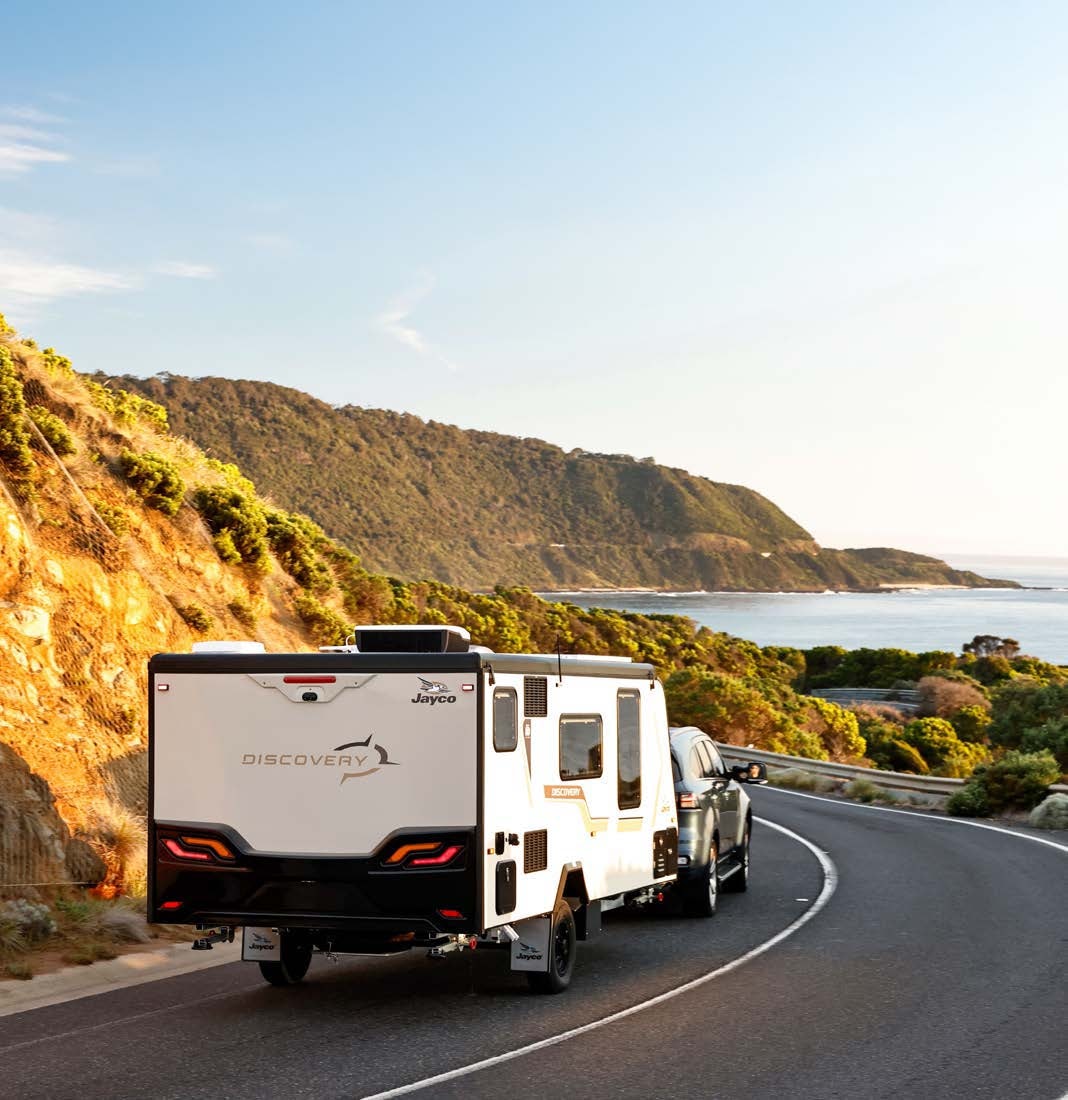
The main advantage of a caravan is they’re a set-and forget RV. Arrive at your destination, unhitch and you’re free to explore with your tow vehicle unencumbered by a big, bulky RV. You can roll out the awning, set up your outdoor table and other camping equipment, and know you won’t have to worry about packing it away until it’s time to move on. There’s also no chance of someone pinching your site while you’re out day tripping. If you’re out of town and forget the milk in a motorhome, your 'house' has to go with you to the shops.
Caravans are also a cheaper alternative to a campervan or motorhome. You can pick up a small van, like an Ezytrail Winton, for under $30,000 – even less if you buy second-hand – and there’s less servicing and maintenance required. A small base campervan starts at about $100,000 and if buying second-hand, you need to be confident of the vehicle’s mechanical integrity. Servicing a motorhome is also more expensive than servicing a caravan. Of course, a caravan requires a tow vehicle, so it’s not strictly a fair comparison, but remember a conventional vehicle has a function and purpose when it’s not on holiday towing a van. A large motorhome doesn’t double as a suburban runabout for picking up the grandkids after school.
Towtal Drag
The biggest downside of a caravan is it has to be towed, and this requires some driver skill and know-how, especially when it comes to weights. Not just knowing the trailer mass, but also the vehicle and tow ball weights and understanding the mathematical gymnastics of how these individual weights interrelate. Then you need to invest in towing mirrors and an electric brake controller (for
trailers over 2 tonne), and that’s after you’ve sorted a legal tow vehicle and hitch.
These are all considerations before you even hit the road. Then you have to learn about vehicle sway, wide turning circles and how to manoeuvre a heavy box on wheels that cuts corners and swings out at the rear. Let’s not get started on reverse parking a trailer that behaves counterintuitive to the steering wheel, and the marital barnies we’ve all witnessed in a caravan park come late afternoon…

© Jayco
All-in-one-fun
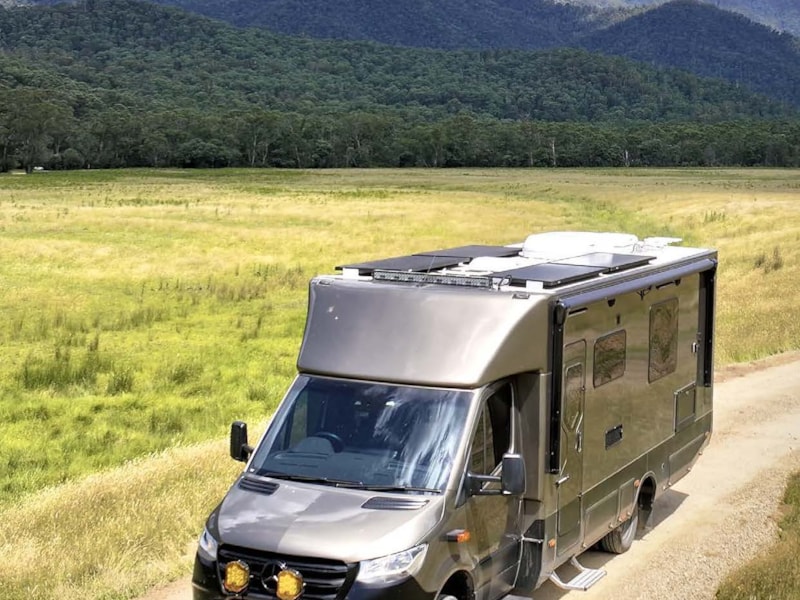
Motorhomes are a much simpler solution for road trippers who want the convenience of an all-in-one RV without the hassle of towing. They are typically easier to drive, park, set up and pack down than a caravan and can, especially with a small Class-B motorhome, be manoeuvred into tight campsites more readily than a van. Once you arrive, there’s no messing about with jockey wheels, stabiliser legs, levelling, unhitching and unplugging any electrical cables. Roll out the awning, plug in the power and water (if available) and you’re good to go.
Australia’s largest RV manufacturer, Jayco, produces more than 10,000 RVs a year. Of those about 1,300 are motorhomes and campervans. Jayco national head of sales and marketing Scott Jones says motorised RVs are attractive to buyers looking for a “drive-away holiday option”. They are popular among retired and semi-retired tourers, as well as first-time RV buyers and adventure seekers looking for flexibility.
“For this group, motorhomes are more appealing than caravans because they remove the towing element entirely, which can be intimidating or impractical for many people,” Jones says. “What they’re looking for is a turn-key holiday option with no hitching, reversing or towing challenges. They want the self-contained comfort of a bathroom, kitchen and sleeping facilities, with the freedom to set up anywhere with less hassle.”
Appealing to an Older Demographic
Ballina manufacturer Kimberley Kampers has been making camper trailers and caravans for more than three decades and branched into motorised RVs in 2023. The brand’s luxury Kruiswagen motorhome is now KK’s best seller. Owner James Cockburn says the business had to evolve with its ageing customers.
“What we have found is that after they had journeyed through our entire range, we were losing a large number of customers in the 70 to 85-year-old age bracket as they were now not comfortable towing anything – particularly the female partner," he says. "Analysis showed they still wanted to do the travel but needed convenience and ease of travel. A motorhome was where they were headed.”
Cockburn says with motorised RVs, the costs are singular as you are only paying for registration, insurance and maintenance on one vehicle. Free camping is easier and less conspicuous – especially for female solo travellers, and you have the benefit of having everything with you all the time.
“No packing lunches and drinks for the day, no packing bathers and towels for the day, no forgetting cameras or binoculars… a quick cuppa in air-con away from flies is nirvana.”
Safety and Storage
Another big benefit of motorised RVs over towables is safety. Almost every RVer has had that eerie feeling when pulling up at a deserted free camp with not another soul in sight. Is it safe? Am I going to be ambushed by a serial killer in the middle of the night? The great thing about motorhomes is you can access the driver’s cabin from inside the RV. This means if something untoward happens overnight, you can lurch out of bed, quickly jump behind the wheel and get away quickly. This is especially attractive to solo travellers, particularly women. In a caravan, even if you have left the trailer hitched overnight, you will still have to go outside to get into the driver’s seat, making you vulnerable to whatever or whoever is lurking in the dark.
Motorhomes are generally easier to store than caravans – depending on their size – but shouldn’t be left for prolonged periods with no use. When a caravan is not being used, it can be stored – at home or off site – and will be good to go when you next get the urge to hit the road.

© Kimberley Kampers
The Verdict
Choosing an RV is a personal decision. It comes down to what makes you feel safe and comfortable, the type of travelling you enjoy and your capabilities on the road and at camp. If you’re an older couple and spend most of the year on the road and value simplicity over adventurous day trips, a motorhome might be your preferred RV. If you’re a young family who travels intermittently and doesn’t want to tie up money in an asset that is inappropriate for the school run and spends most of the year in the garage, a caravan might be a better choice. If you want a bit of both, there’s always a slide on camper… but that’s a discussion for another day.