Each year hundreds of native animals are killed on our roads.
Each year hundreds of native animals are killed on our roads. While this is devastating for the wildlife that suffer or die, these collisions are also a safety concern for drivers and passengers.
Under the Prevention of Cruelty to Animals Act, if you hit an animal you must stop, render assistance or call someone who can help. It is important that you attempt to assist the animal as its injuries may be treatable. Where the injuries are too severe a registered wildlife officer can administer humane euthanasia. Female marsupials may also be carrying young in their pouches, these babies can be rescued and reared by foster carers and eventually released into the wild. Keep in mind that many of the native species that are commonly involved in road related accidents, such as the Tasmanian Devil, are actually endangered species as well. The ultimate aim of caring for wild animals is their successful rehabilitation and release. This begins with you, the rescuer, which is why it is important that you know what to do in an emergency.
Sadly, vets and rescue organisations see many injured animals all year round, however, these numbers dramatically increase during spring and summer when animals are breeding and new offspring are active. The end or beginning of daylight saving time also coincides with a higher number of accidents involving animals.
The following are some helpful tips to keep both you and wildlife safe:
- Be alert while driving. Pay attention to wildlife warning road signs; animals can appear quickly from the roadside and can be difficult to see at night.
- Slow down while driving between dusk and dawn in areas populated by wildlife as this is when nocturnal animals are most active and feeding.
- Driving slower is safer for both humans and wildlife. Reduce your speed where visibility is poor or where you expect wildlife may appear. This will give you greater reaction time and a better chance of avoiding a collision.
- Keep an eye out for animals on the side of the road where there is vegetation or where a creek bed might cross under the road. Wildlife often use these areas and may move onto the roadway unexpectedly.
- Young animals don’t recognise cars as a threat and don’t know how to get out of the way. Look out and give them time to cross.
- Where one animal is crossing, there may be more. Animals are likely to follow their mother or a mate across a roadway even if cars are coming.
- Never flash your headlights at an animal as this may shock and disorientate them.
- Never throw food or litter out of your car as it attracts animals to roadsides. Dispose of all rubbish responsibly, including biodegradable items such as fruit.
What to do in an emergency?
If you see an animal on the road, the first thing you should do is try and assess whether the animal is in fact injured. Each year many animals are brought into wildlife rescue centres and local veterinarians offices when they are actually perfectly healthy. The most common is baby birds who are learning to fly and are found on the ground and unnecessarily rescued by well-meaning people. If the animal appears stunned yet uninjured, move it to a place of safety off the road, make sure it is placed in a shady area and do not interfere with any young in the pouch. If they are a young animal and not injured, they will probably have a better chance of survival being left where they are and letting the parents care for them. If they are somewhere where they are likely to be killed or injured, you will need to move them to a place of safety.

Brushtail possum
If you find a flying fox or bat of any sort do not handle or attempt to rescue them. Instead contact a licensed wildlife rescue organisation. Although Australian Bat Lyssavirus (a disease found in bats) is very rare it can be transmitted by a bite or scratch from an infected bat, including a flying fox. If a person is bitten or scratched they should wash the wound with soap and water for five minutes and seek medical advice immediately.
If you decide that an animal needs to be relocated, the next step is to assess the risk to your personal safety. An injured animal will be frightened and most likely in pain. Wild animals are not used to being handled and may attempt to defend themselves from your approach by scratching, kicking or biting. Some animals may carry diseases, if you are bitten, scratched or come into contact with bodily fluids you should wash your wounds with disinfectant and seek medical attention.
If it is not safe for you to approach the animal or if it is in need of humane euthanasia you should contact a licensed wildlife rescue organisation. Improper rescue can hurt and distress the animal and also the rescuer. Wild animals are very susceptible to stress. If handled improperly, they are likely to struggle and hurt themselves even more. It is crucial to take care with the rescue of any native animal, and to reduce the animal’s stress as much as possible.
Note exactly where you have found the animal so that you can inform the wildlife carer, many natives are very territorial, and if not released back into their own territory they are often killed as intruders.
Before taking any action to rescue an animal you need to consider:
- Can you handle the animal or do you require assistance?
- What can you use to wrap the animal in when you pick it up?
- Do you have a box or cage that you can put the animal in?
- Are you able to safely transport the animal to a vet or rescue organisation?
- If you cannot transport the animal yourself can you phone for assistance?
How to safely assist injured wildlife on the road
Step 1
Remove any threat to the animal. This may mean locking up cats and dogs until the animal is rescued or removing the animal from the roadside. Keep noise to a minimum and do not shine any lights into the animal’s eyes. Use a towel or something similar to carefully envelop the animal to prevent any injured wings or limbs from moving; you can gently apply external pressure to help stop any bleeding. If small enough, place the animal in a box. It is best not to move large animals or birds with obvious fractures without professional help, instead call the closest rescue service for advice.
Step 2
Contain the animal in a small area such as a cardboard box or cage. Minimise stress by placing a towel or blanket over the box or cage. Place the animal in a warm, quiet, dark room and do not disturb. The stress associated with human contact can result in death for many animals. Please keep both children and domestic pets well away from the animal.
Step 3
Do not give the animal any food or water.
Step 4
Check the pouch of female marsupials for young. Be careful, some babies can still kick, bite and scratch. Do not attempt to remove young from a dead mother if they are attached to a teat. This is a job best suited to a professional as removing the teat can damage the mouth of a developing joey if done incorrectly. Make sure you have a firm hold of older joeys as they are likely to wriggle free and escape, and could die of starvation if left to fend for themselves. Recently furred or unfurred wallaby or possum joeys are unable to regulate their own body temperatures and will get cold very quickly, it is important that you keep them warm by wrapping them in a blanket or holding them against your own body. Check the area around the incapacitated animal for young. Joeys may have been thrown from the pouch and might be hiding injured nearby.
Step 5
Notify the appropriate organisation in your state as soon as possible. Please remember it is against the law to keep native animals taken from the wild. They must be passed on to an authorised carer with a licensed wildlife rescue organisation.
Who to contact
In circumstances where you cannot contact one of the organisations listed below you should take the injured animal to the closest vet.
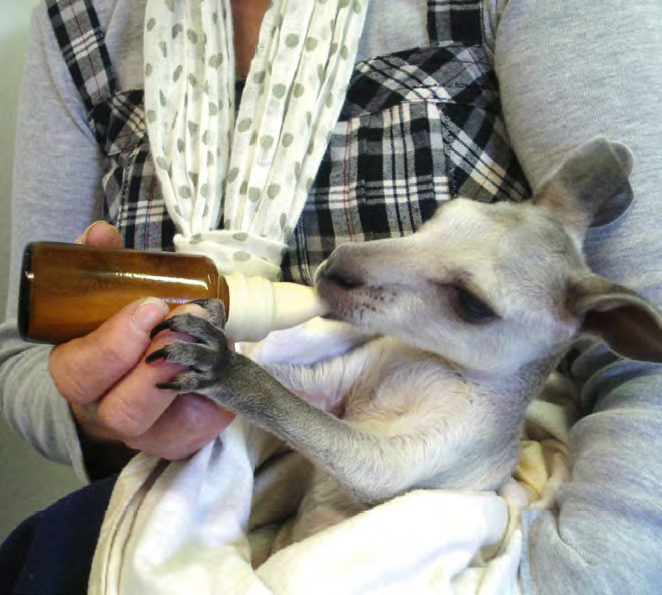
Eastern grey kangaroo joey