
“ It is busy with trees, with animals and with men. It is lonely and beautiful. It is a million wild acres. And there is no other forest like it.” Eric Rolls, A Million Wild Acres.
Through streaks of sunshine I catch a glimpse of something moving through nearby trees. To my delight, it’s a flock of emus, gracefully dashing through the bush. They track across a sandy dry river bed and up a gully, all too soon out of sight. For that moment, I am acutely aware that my surroundings are the quintessential bushland of Australian folklore, and I’m overcome by the realisation that the ‘Aussie’ in me is very much home.
Australian writer Eric Roles first brought to life the unique Pilliga Forest in his famous novel, A Million Wild Acres. Roles described a powerful landscape, with a vibrant timber cutting industry and cultural significance. Four and a half hours’ drive from the NSW town of Newcastle and just next door to the state’s North West town of Narrabri, it takes just a short journey to step into history and lose yourself in time, as you soak up the vastness and hidden surprises of the Pilliga Forest.
Visible from space, the Pilliga is the largest temperate forest in Eastern Australia. It has exceptional conservation significance, being home to abundant wildlife and providing a haven and irreplaceable refuge for plants, rare birds and animals that are now disappearing everywhere else. The Pilliga is the only place in the world where the tiny Pilliga Mouse is found and is internationally listed as an Important Bird Area.
While any time of year will guarantee a truly Australian experience, those who want to experience the Pilliga at its finest should make the trip during spring. The Pilliga literally bursts into life from late August to late October, with hundreds of little-known varieties of Australian native flowers blooming effortlessly across the landscape.
For those visiting the Pilliga in summer, be aware that the temperatures can soar into the 40s and that the area is prone to bushfires. Plan your walks for the early morning or dusky sunsets. Evenings are certainly magic, a time to watch the stars glide across the sky without the glare of streetlights. The Pilliga region is known for the clarity of the night sky and hosts Australia’s largest telescope at Siding Spring.
The roads are a mix of sealed and unsealed roads, but all are accessible with two wheel drive and caravans or trailers.
Healing waters of the Pilliga
Eric Roles is certainly not alone in his affection for the natural wonders and quiet significance of the Pilliga. Local Gomeroi Traditional Owner, Monte Nicholls, was born and raised at the Minnom Aboriginal Mission. He could talk for hours about his great affection for the Pilliga, its history, community, rivers, and the healing artesian bores on which he relies for his weekly arthritis treatment.
“I love this area. I can go fishing on the Namoi River in my kayak and then soak in the Pilliga bore bath to heal my arthritis. Why would I live anywhere else? If I moved away I would just have to come back every week for my knees!”
Indeed, the Pilliga Artesian Bore Bath is a popular destination with travellers, famous for its restorative properties. The fresh flowing waters sit at a constant 37 degrees, the bath surrounded by basic and freedom camping facilities for recreational vehicles. After a morning in the baths, visitors can walk along the Pilliga wetlands track that Monte himself worked to establish, and is home to countless birds and tranquil fishing.

Sunset at the Pilliga Billabong
Pilliga Discovery Centre
Travel south from the Pilliga bath through the old forestry towns of Gwabegar to Baradine and visit the Pilliga Discovery Centre. It’s a gateway to the Pilliga and a must stop for the opportunity to pick up maps, seek advice from friendly staff, and find out about guided tours and the best bird watching routes.
The Discovery Centre contains interactive displays providing a hint of the landscape, rich history and Aboriginal cultural heritage. It’s a rare privilege to observe the range of Aboriginal artefacts there. The Pilliga Forest is a very significant area for the local Gomeroi (also written as Gamilaraay or Gamilaroi) Aboriginal people. Their long-term ownership of the Pilliga is evident in many ways; through scarred trees, rock shelters and grinding grooves, but also through the stories and traditions that have their origins in this amazing landscape.
It is worth noting that the Pilliga region includes National Parks and Reserves in NSW that are jointly managed with local Aboriginal Traditional Owners from around the region. The Gawambaraay Pilliga Joint Management Committee oversees the Pilliga Nature Reserve, the Dandry Gorge Aboriginal Area to the west and Pilliga East (Willala) Aboriginal Area to the northeast of the Pilliga.
The Pilliga Discovery Centre is open seven days, 9am - 5pm weekdays and 10am - 5pm weekends (closed Christmas day). Call the Pilliga Discovery Centre on 02 6843 4011 or visit www.nationalparks.nsw.gov.au/pilliga-national-park
Spectacular scenery
Just a short drive across an unsealed road from the Discovery Centre, in the heart of the Pilliga is Dandry Gorge that hosts the award winning ‘Sculptures in the Scrub’. Accessible all year round, each sculpture is the collaboration between an artist, local Aboriginal Elders and young people, and tells a story of local Aboriginal history and culture. Sculptures in the Scrub picnic area and campground host a walking track which takes you down through the picturesque and wildlife-rich Dandry Gorge.
Further along the Newell Highway is another cultural delight; ancient sandstone caves with rock art and engravings painted thousands of years ago by the Gomeroi people. Enjoy the stunning rock formations and colours along the short walking track in Pilliga Nature Reserve. Take some time to read over the interpretive signage for more of an insight into this special place.
Local cedar old school house
Australiana gifts and accommodation
Not far from the Sandstone Caves is a special place to rest, recharge and acquire an unforgettable souvenir from your time in the region at Pilliga Pottery. Treat yourself with a stay and soak up its warm fires, cosy beds, rustic, wood fired pizzas, fresh coffee and lovely native gardens teeming with birds.
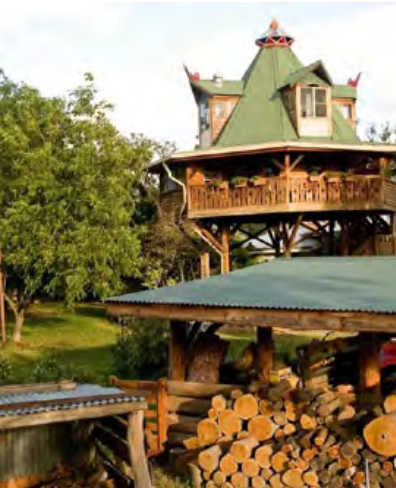
Established by German master potter Richard Rickert and his wife, Maria, over twenty years ago, this family owned business is now run by the industrious and friendly Maria and their eldest son, Johannes. This creative enterprise includes sprawling gardens, an on-site café, a team of highly skilled potters and artists, its own clay-making plant, a huge workshop, gallery and an array of intriguing alternative building styles.
Pilliga Pottery offers beautifully hand crafted pottery that ranges from kitchenware to decorative pieces with classic Australiana designs; each design is original and done freehand. Visitors to the workshop are welcome to watch free demonstrations. Inquiries can be made at Pilliga Pottery, phone 02 6842 2239 or visit www.pilligapottery.com.au
What lies below?
Visitors who stop to walk along one of the wide sandy creek beds of the Pilliga will see it is busy with hundreds of animal tracks, but there is more to these seemingly dry creek beds than meets the eye. Dig down through the sand and water flows freely and constantly. The Forest and wildlife are almost completely reliant on this groundwater below, particularly in times of drought. The Pilliga plays an important role as a water catchment area. Water that falls on the sandy soils of the Pilliga can run off into creeks and streams that feed the Namoi River, while deeper water recharges the precious asset known as the Great Artesian Basin.
Gasfield threat
Whilst the cultural and conservation significance of the Pilliga is a well-kept secret to many, the Pilliga is now in the spotlight as it faces the threat of the coal seam gas industry. Oil and gas mining giant, Santos, has big plans to convert the north-east area of the Pilliga into a coal seam gas field. This would mean a grid with hundreds of wells, compressors, flares, toxic waste water ponds, pipes, trucks, roads and workers’ camp’s. There are great concerns about the potential impacts of this industry on the beautiful Australian landscape and the local community.
In response to the threat, a strong alliance of local community members, the Gomeroi Traditional Owners, and local farmers have joined with environmental groups to protect the many values of the Pilliga Forest. As you travel across the North West NSW landscape, keep an eye out for the brightly coloured yellow signs that mark the roads where neighbours have teamed up to declare ‘gas field free’.
Be a Pilliga protector There are many ways Australians who love the Pilliga can help ensure the area remains the special travel destination and wildlife haven that it is today.
Stay in touch with the campaign and learn more about the issue, including perspectives from the local community and the Gomeroi people at www.wilderness.org.au/pilliga. For daily updates, like and follow ‘The Pilliga Mouse’ on Facebook or Twitter.

Threatened Eastern Pygmy Possum, photo Phil Spark
Most importantly, visit the Pilliga; enjoy its uniqueness, and its insights into an Australian natural history too often forgotten. Share your photographs and encounters far and wide to ensure this truly Australian landscape is protected and enjoyed into the future.