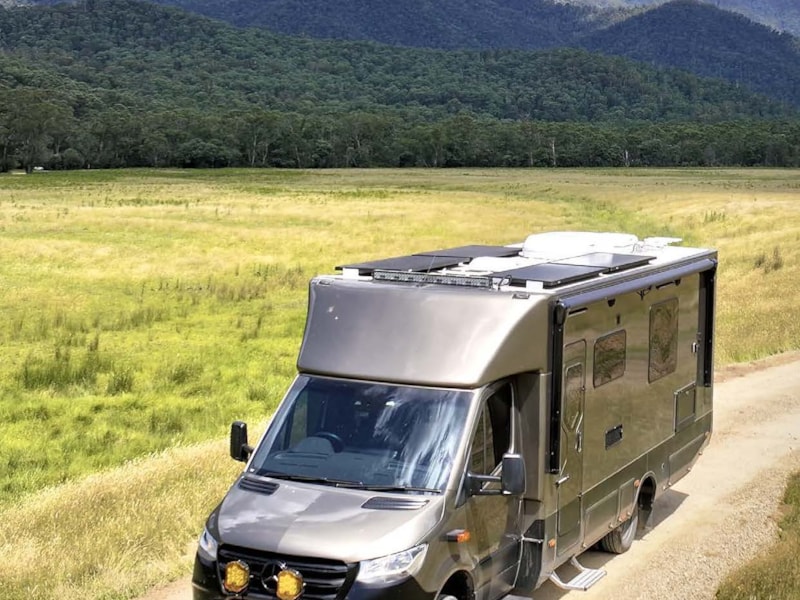
Apollo’s motorhome construction technique is very much based on experience and knowledge gained from operating its rental fleet.
Anyone familiar with the recreational vehicle (RV) industry will know that although there are many similarities between caravans and motorhomes, there are differences in how the respective products are built. Apart from the obvious one that motorhomes are based on a powered cab chassis, the time-honoured timber frame and external cladding techniques of many caravan manufacturers are not to be seen. Another difference is that while the caravan manufacturing industry is primarily located in regional Melbourne, the motorhome manufacturers are much more evenly spread, mainly across the eastern states.
One of those manufacturers is Apollo. Based in the north Brisbane suburb of Northgate, the manufacturer, over the last few years, has developed a very well set-up facility, not only for producing motorhomes and campervans, but caravans too. However, this article will solely focus on the motorhome production facility.
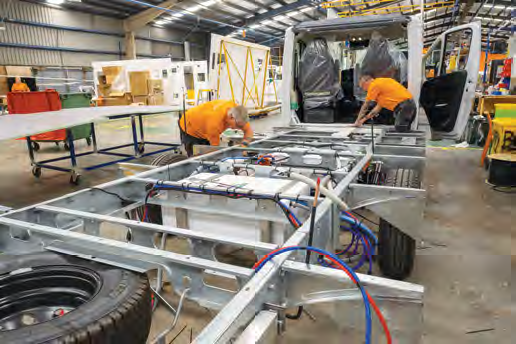
Before the body construction, items like the water tanks, plumbing and external storage tanks are fitted under the chassis
FAMILIAR NAMES
Currently, three different brand names are produced in the Apollo factory. One is Apollo itself; all these motorhomes are destined for the rental fleet around Australia. Winnebago is undoubtedly a familiar name to many who have only a basic understanding of the motorhome industry. Although the Winnebago name is commonly associated with the US, all Australian-built Winnebago motorhomes are fully designed and manufactured here. Included in the Winnebago range are models like the Iluka and Byron. The third brand name to emerge from the Apollo factory is Windsor. Slightly lesser known than the other two, Apollo has been steadily building up the Windsor range, including the Otway, Flinders and Simpson models.

Sub-floor assembly on motorhome chassis
DESIGN
One of the major benefits of building motorhomes for rental use is that plenty of experience is gained for use in the retail market. By their very nature, rental motorhomes tend to get much harder and more intense use than private owner vehicles, and there’s nothing quite like that for user experience.
Computer-aided design (CAD) is very much a part of Apollo’s build process, and that, along with 3D simulation, all happens before anything starts on the factory floor.
MOTIVE POWER
All the base vehicles used for the motorhomes that emerge from the Apollo factory will be familiar. Mercedes Benz Sprinter, Iveco Daily, Fiat Ducato and Renault Master cab chassis are all found under the motorhomes that emerge from the Apollo facility. In addition to the coach-built models, there are several small motorhomes, Apollo calls them campervans, which are converted Mercedes Benz Sprinter and Fiat Ducato vans.
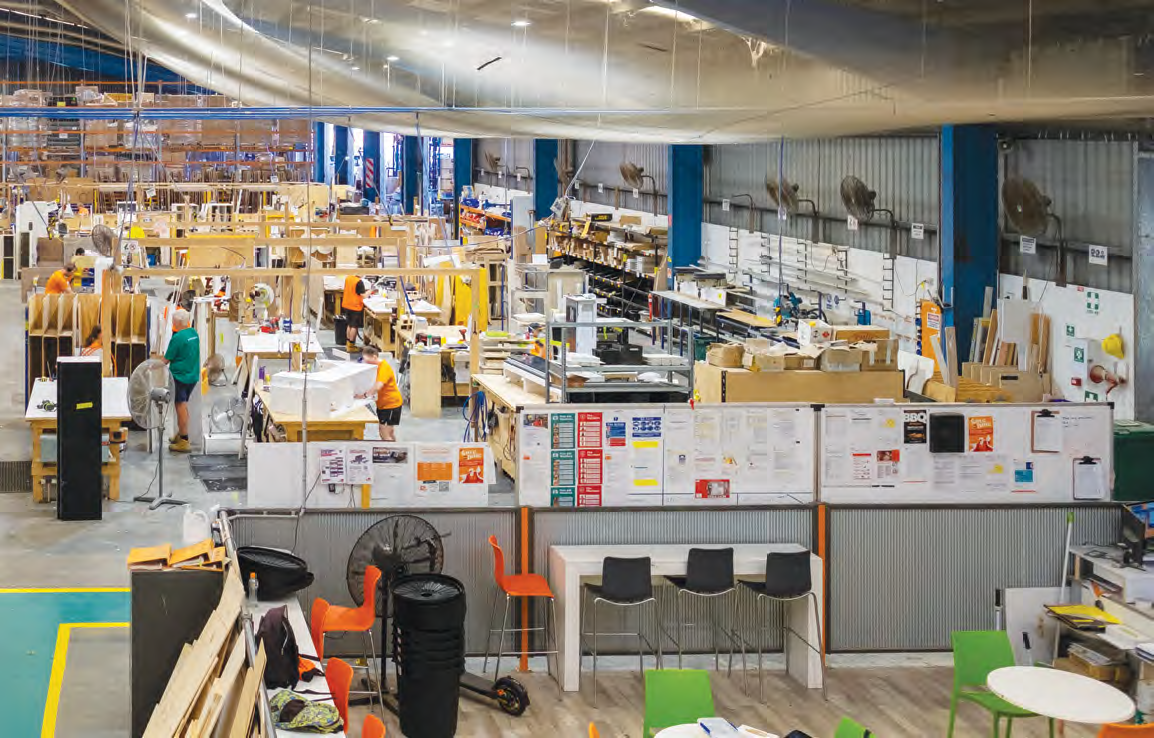
Assembly area for cabinetry
ROLLING CONSTRUCTION
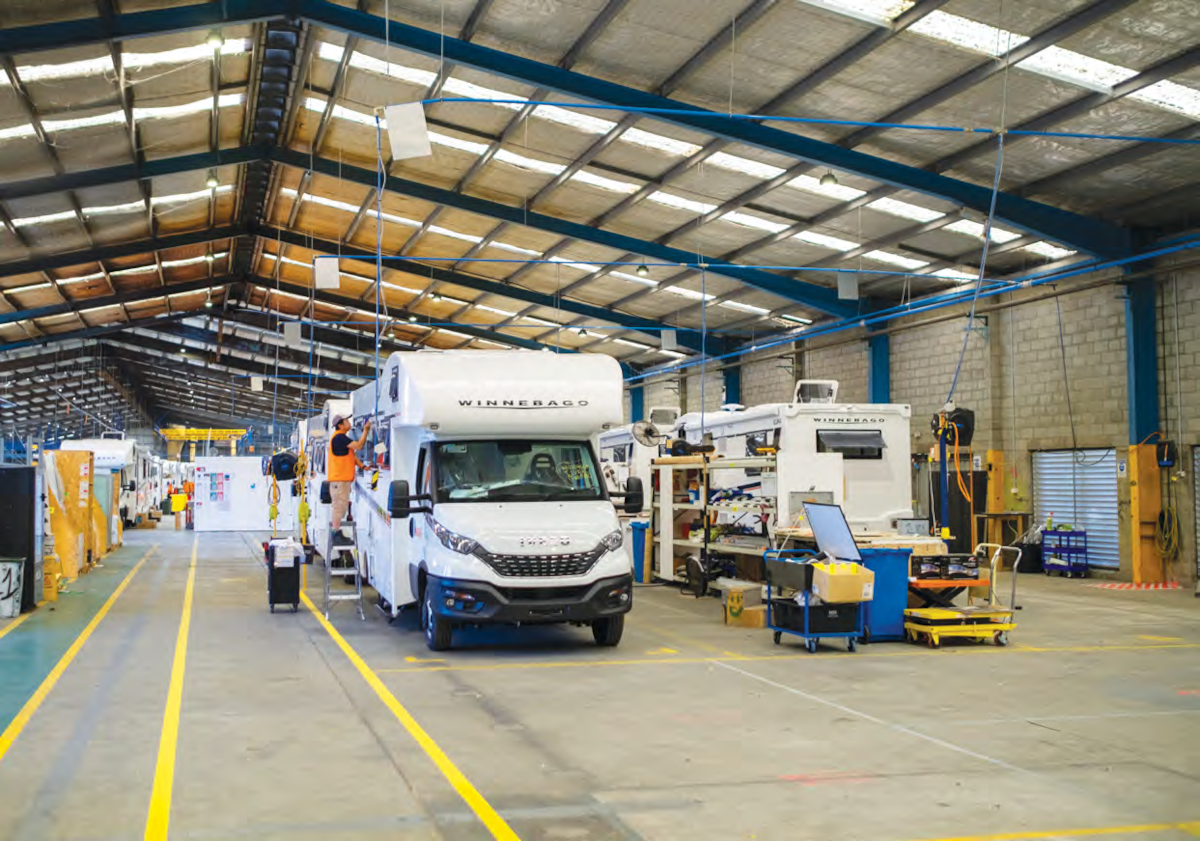
Apollo builds its motorhomes very much on a production-line basis. Being quite a complex piece of equipment, constructing a motorhome requires many components to come together in an orderly fashion as the production line moves along. Components, like the cab chassis, arrive at the factory as a complete item but differently, much of the cabinetry work is done in-house.
BASE VEHICLES
Starting with the cab chassis, it arrives at the factory in a semi-prepared state for motorhome construction. That means it’s driveable, but with the cab rear wall already removed and the swivelling seats pre-fitted by the vehicle manufacturer.
Once the cab chassis hits the production line, the fit-out starts with the steel floor frame, water tanks, external storage bins, plumbing lines and electrical cabling.
BODY CONSTRUCTION
Elsewhere in the factory, the walls, floor and roof are being prepared — a frameless monocoque construction technique using permanent adhesive and aluminium brackets at the edges. The composite panels, with gel-coated exterior and interior, have an insulative foam core. The floor, roof and walls are all one-piece items to minimise water leaks. A CNC machine cuts out all the necessary apertures for the door, windows, air vents and external storage bins. Being non-square, the Luton peak, when used, is moulded fibreglass.
As the body components are assembled, the roof is treated a little differently. Before it's fitted on the motorhome body, items like roof vents, solar panel, TV aerial and air-conditioner are fitted to the roof to minimise the need for working from heights.
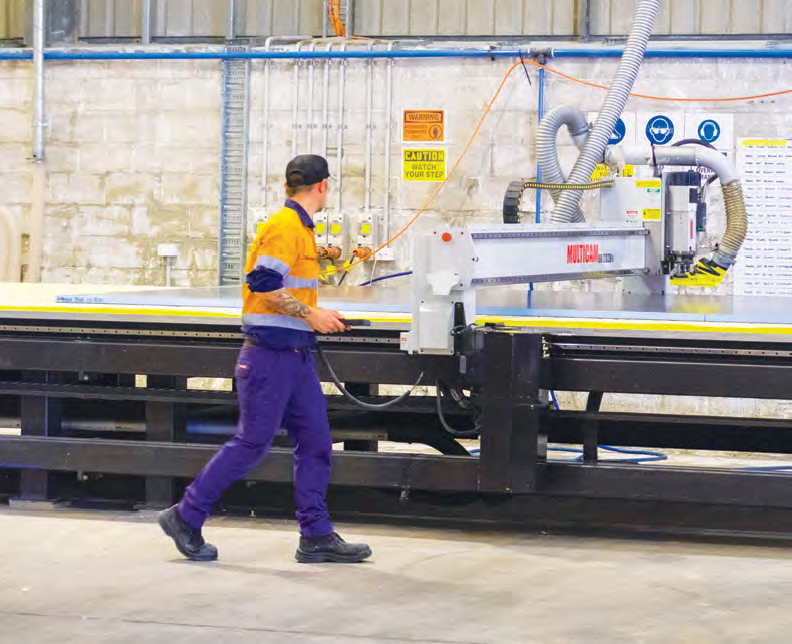
Composite panels being CNC machine cut
INTERNALS
An amazing amount of factory space is devoted to preassembling motorhome cabinetry. Like the body walls and roof, CNC machines are used to give consistent accuracy in cutting such that all the plywood components fit together neatly in the desired manner. Laminated plywood is used for all the bench tops.
While the cabinetry is being put together, the upholstery department is busy cutting and sewing materials for the seats, cushions and other soft furnishings. The floor vinyl is not so soft, being a heavy-duty item designed to give many years of underfoot use.
ON THE LINE
When a cab chassis starts rolling down the production line, it goes through various stages of manufacture at “stations” along the line. It starts with the floor and walls being added, and then the cabinetry and larger appliances. While the motorhome is still in construction, the electric cabling, 240V and 12V, has to be installed. That’s put together in looms away from the main production line. To ensure the accuracy and reliability of all the connections, the cabling is designed on a “plug and play” system.
As the motorhome rolls down the line, the fit-out, including the windows, door, storage bin doors and external vents, continues. When all the dirty work is done, the soft furnishings are included.
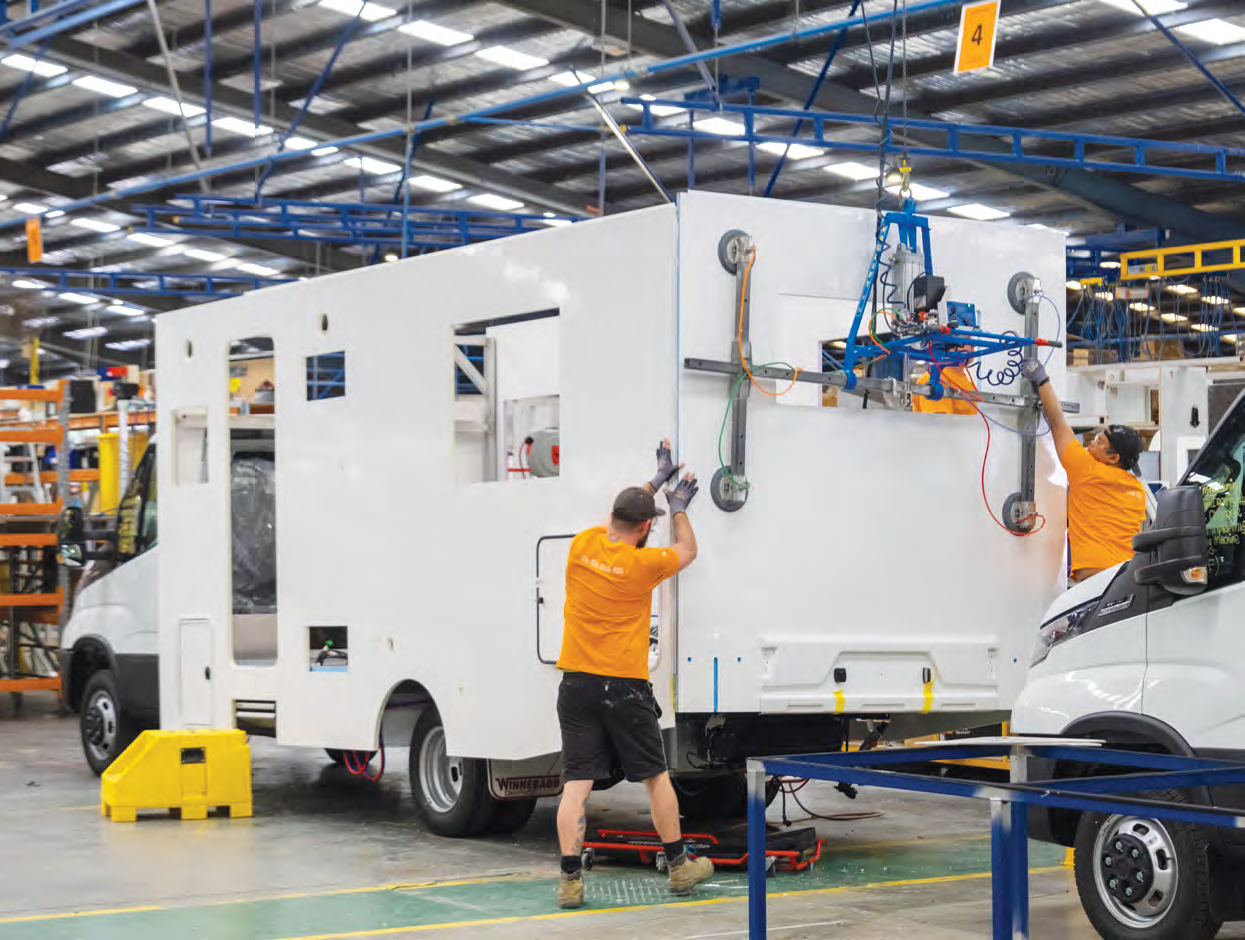
Installing the composite walls
VAN CONVERSIONS
Generally, van conversions like the Winnebago Bondi or Windsor Otway are treated similarly. However, since the van body is utilised, there’s far less construction and much more hole-cutting for the windows, vents and other necessary apertures.
CHECKS
Before any motorhome leaves the factory, the LPG gas and 240V wiring installation have to be signed off by qualified tradespeople. In addition, there’s a two-stage quality control (QC) that consists of an independent end-to-end inspection covering over 100 assessment items. The inspection includes running all systems and rectifying any necessary items before final delivery. After that’s completed, the motorhome is ready to roll out the factory door.