How to stay confident, connected and self-sufficient when you travel alone
“I’ve travelled with various partners,” says solo RV enthusiast Karin Kirk, “but I do prefer my freedom. I like to do what I feel like doing, rather than having to follow somebody else. Just being independent, really.”
Talk to anyone who hits the road solo and you’ll discover Kirk’s story isn’t an oddity. Whether they take off in their campervan for long weekends on a regular basis or spend most of their time on the road, they’re great advocates for time spent travelling alone. Here’s how to make it work for you.
Get set to go
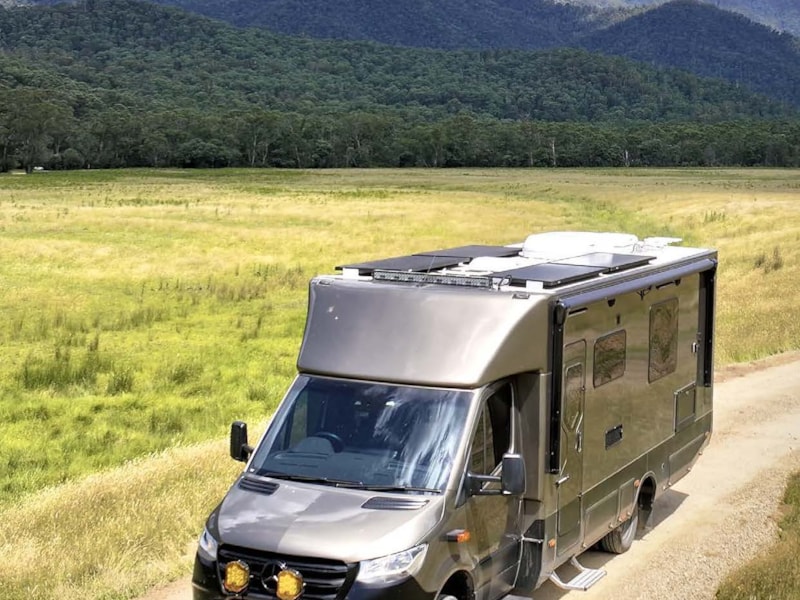
Choosing the right RV will depend very much on how long you intend to spend on the road. Kirk has been travelling full-time for 19 years and upgraded her motorhome to reflect her circumstances. “When this is how you live, you have to keep everything you own with you, so you need a fairly decent-sized motorhome,” she advises. “Mine is seven meters long and it’s got everything from a toilet and shower to a big fridge-freezer.”
That doesn’t mean you need to have a big RV with lots of expensive equipment. If you’re only a part-time traveller, you could easily make do with a smaller rig and less equipment. But being self-sufficient, particularly when it comes to power and showers, means you can free camp easily.
“I free camp 99 per cent of the time,” says Merron McEvoy, who is the president of CMCA’s Solos Network. “The CMCA app is really the best friend of travellers. It tells you where the campsites are, and people put reviews up so you can see what’s available.
“But the longer I’ve been on the road, the better I am at finding great little spots. About 10 kilometres out of a town where I think I might want to stay, I start looking for somewhere I can stop. Then I go into town, have a look around, and come back to spend the night.”
There are other online tools to discover new camping spots: the CMCA Traveller app is popular, while there are many Facebook groups – search for solo caravanners Australia for a selection – where you can swap tips with other people travelling around the country.
READ MORE: Caravan vs Motorhome

Safety first
If you worry that camping on your own might leave you vulnerable, both McEvoy and Kirk would like to calm your fears. “I might have worried for about the first 10 minutes,” Kirk says, laughing. “Sometimes I wake up in the morning and realise I haven’t even locked the door of the motorhome.”
“I’ve never really worried about it,” says McEvoy, “and I’m one of those solo travellers who likes to find a spot where it’s just me. Although that doesn’t bother me, I’m also sensible and use my intuition – if a place doesn’t feel fantastic, I don’t stay there. As you travel around and talk to other people, you hear about some spots that are not safe, so you know not to stop there.”
Always take the regular precautions, like ensuring your mobile phone is fully charged before dark and letting at least two friends or family members know of your plans.
Find your tribe
You might be on the road alone, but few solo RVers ever feel lonely. “I set out by myself to do a lap of Australia, and I did most of that on my own, although I met people along the way,” says McEvoy. “But then, when I got to Western Australia, I met the CMCA solos and that made a big difference to me.”
The group has a rally twice a year in different parts of Australia, but individual members also make plans to meet while on the road. Festivals are a favourite reason to gather.
“A lot of us volunteer at them, and a lot of the members are in Tamworth [at the country music festival] at the moment,” says Kirk, who’s also a member of the Solos Network. “Once I get down to Victoria, I’ll be volunteering at Echuca for the Riverboats Music Festival.”
Another rule many campers live by is to arrive at their next stop by 3pm. It allows time to set up for the night before it gets dark, plus you get to partake in the time-honoured camping tradition of happy hour. “When four o’clock arrives, it’s time to put your feet up and have a chat and a drink,” says Kirk “That’s when you gather most of your information.”
READ MORE: CMCA Solos Network Rally

Other helpful hints
Many people who travel on their own take along a trusty best mate: their dog. They can provide company and an inbuilt alarm system, plus most caravan parks now allow pets if they’re well-behaved and kept on a lead. Remember, though: dogs and cats aren’t allowed in national parks, which means you either have to avoid some of the country’s most beautiful natural areas or make plans for someone to look after them.
Kirk has something else with her that makes her solo travels easier. “A push bike,” she says. “Whenever I stop somewhere and need to go more than a few hundred metres, I just get the bike off the carrier. Some areas are perfect, like Cairns, which has a long esplanade with a cycle path. You can travel for kilometres that way, and it’s good for your fitness, too.”
READ MORE: Travelling Solo