Check out these great tips on how to capture your adventures in words.
WHERE DO YOU START?
Start with a journal, diary or notebook and the details. The who, what, where, when, how and why are the key elements but, remember, they don’t have to all come at once. Jotting down dot points can make note-taking easy.
Do you keep a journal? This could be your starting point. You may start with the day and date, what you did, and where you visited. As you get used to recording bits and pieces, you’ll discover you are covering the who, what, where and when. That’s the ‘nuts and bolts’ of your story.
But you are going to get bored with “we did this” and “we went here” style of writing. That’s when you add the flair — the how and why.
STEP 1 FIND YOUR LEAD
Your lead or the opening sentence is the highlight of the experience you want to write about — the best thing about that day or your tour, or the town you’re visiting.
Start writing the first thing that pops into your head. It can be a feeling, a sight, an experience. It can be someone you meet, because characters make great stories and give extra interest to where you might be travelling through.
Your lead is something striking and memorable, that will draw readers in.
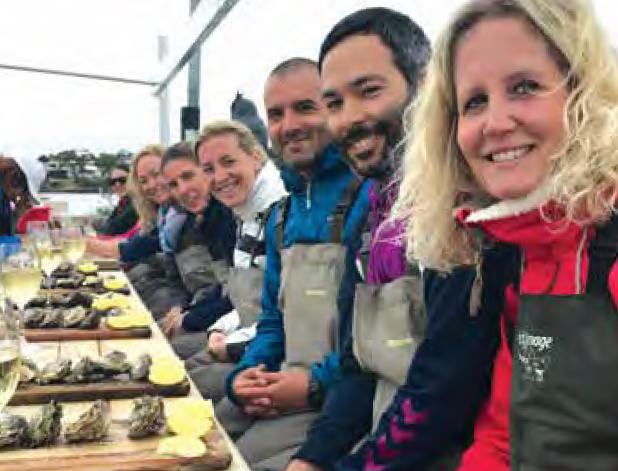
Food experiences are always good to write about
STEP 2 EXPAND ON THE LEAD
You have your introduction to the story, now expand on that lead by explaining the first sentence. It can be a narrative, description or a reason. Keep rereading this sentence and the rest will flow, whether it’s a new idea or more details about the original idea.
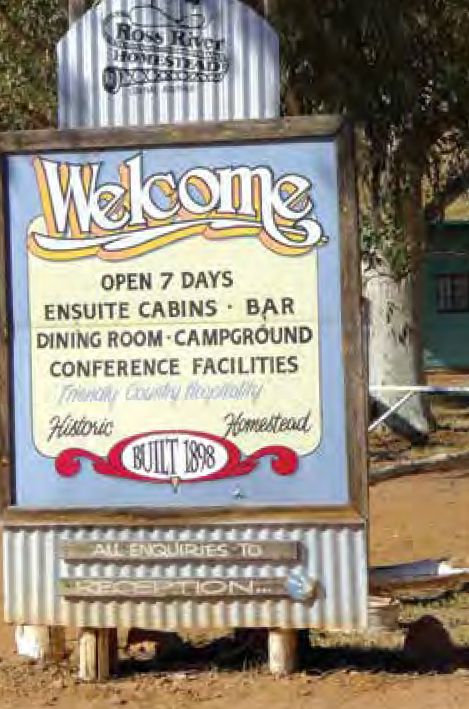
Sometimes photos can act as notes, reminding you about where you’ve been and what you’ve experienced
STEP 3 THE STORY ARC
Add some emotion. How were you affected by what you saw? Use all your senses — sight, smell, sound, touch.
Also avoid descriptions like ‘awesome’ and ‘amazing’ because then you will have to explain why it was awesome.
STEP 4 FILL IT WITH FACTS
These are all the bits you find interesting. It might be the number of steps you had to struggle up to get to the lookout, but wasn’t the view worth it!
It could be the unbelievable history you uncovered just by stopping to read a sign or the tidbits you discovered in the local museum, or a taste sensation you’ve never tried before. It could be the price of a caravan park, the number of people finally getting back on the road or the bargain you get at an RV Friendly Destination.
STEP 5 SIMPLE LANGUAGE
Often it’s the way you speak that comes across the best. Try to keep it simple.
STEP 6 ADOPT DIFFERENT STYLES
You can wax lyrical or use short, sharp sentences — there’s room for all sorts of writing styles.
Sometimes short lists are fine, especially for breakout stories when you are trying to include specific bits of information. For example, you might want to list the five things people should not miss in a destination.
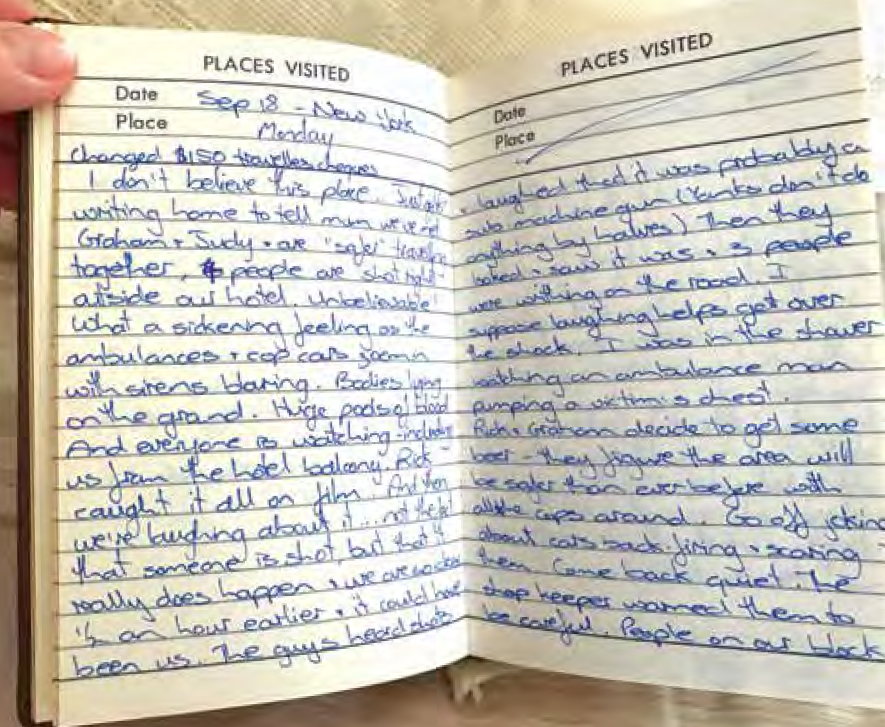
It all starts with your journal
STEP 7 QUOTES
Quotes are fantastic. Having someone comment about what they are doing or telling you adds credibility and a bit more interest to the story.
For example, you might have a guide telling you how to drive on a treacherous stretch of sandy beach. His advice is to drive near the water’s edge but not in the water. That’s a great line for your story. But, add what he actually said — a quote — and suddenly your story is singing.
For example:
“People make the mistake of driving through the water,” our guide said.
“Rainbow Beach has been known to ‘eat up’ between 20–50 cars a year because people don’t check high tides and drive in the wrong spots.”
STEP 8 INSPIRATION
Make people want to do what you are doing.
Your experience is your inspiration, and your story is a source of inspiration to other travellers. You must have had a great time because you want to tell the world about it.
STEP 9 WARNING
The flip side to inspiration is warning others to tread carefully. Maybe your experience comes with a proviso, for instance, about a fabulous hike that highlights an area’s wildlife and wilderness. But can anyone do it? Do you need a certain level of fitness? Is it suitable for all ages?
Use your story to tell everyone how wonderful or terrible or easy or hard your experience is.
STEP 10 DON’T STRESS
Go easy on yourself. This is an evolving process.
When you hit a roadblock, go back to dots and details until inspiration strikes again.
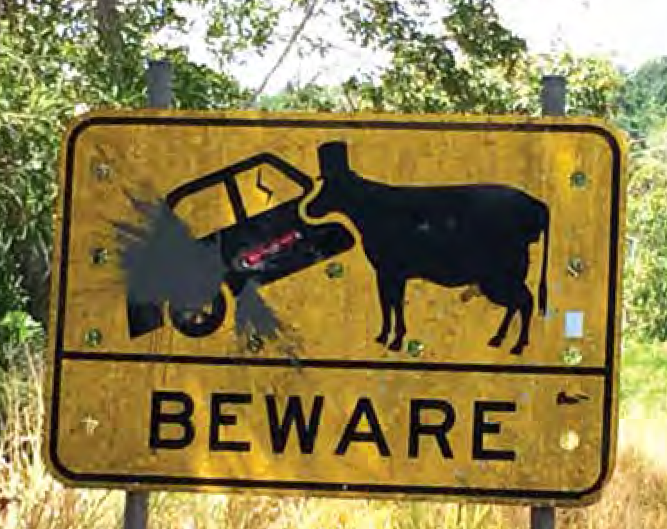
You don’t see that every day, so is it worth writing about?