Storage options to consider when purchasing your motorhome
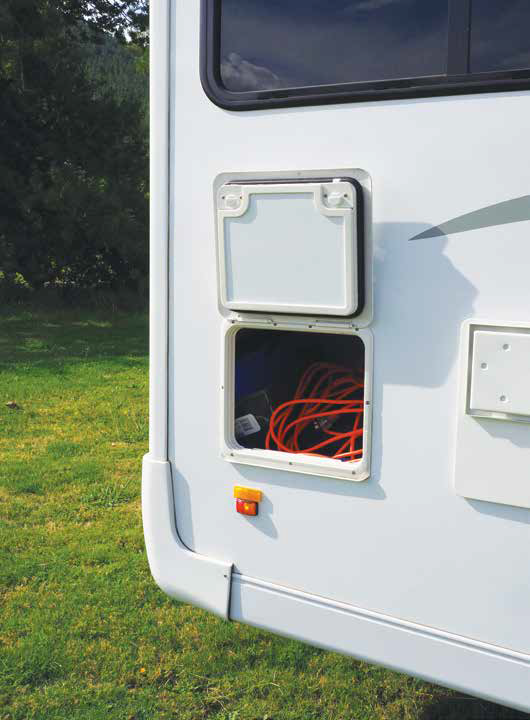
I’ve been looking over a few motorhomes of various sizes and weights lately and they all had one thing in common: minimal external storage capacity and/or limited capacity for larger items. All had the essentials for gas cylinders and cassette toilet but in some cases, space for little else like folding chairs. Something understandable in large van conversions where it’s not practical but a little less so in larger motorhomes.
It’s certainly a challenge for any motorhome designer, particularly rental operators like THL/KEA. Mostly because many motorhome hirers come from overseas, and their personal luggage is limited to what they can carry on the plane. No need for large storage spaces, yet when the motorhome is later sold into the retail market, it’s something buyers will look at. A useful feature that designers use is external access to the under-seat areas. Something there’s plenty of in four and six berth motorhomes and easily utilised by fitted an external bin door.
External storage is a consideration when purchasing any motorhome and there’s certainly a minimum number of items that are best carried externally, either for practical reasons or convenience. I reckon the essentials are camping chairs, folding table, power cable(s), freshwater hose, grey water hose and necessary tools. In the nice-to-have category are items like wheel ramps and a small barbecue. Then further up the size scale is gear like fishing rods, golf clubs and even bicycles, folding or otherwise. As with all things RV, to a great extent it depends on just how much storage is available as well as the motorhome payload. It’s the latter item that too often catches motorhome owners out. While having plenty of storage capacity outside and in is great, there’s always the temptation to overload. Tread more lightly is a good motto.
Will the camp chairs fit?
WHAT’S IN A NAME
Particularly for newcomers, RV (that’s Recreational Vehicle) industry jargon or lack thereof can sometimes be confusing. Take the caravan industry for example. At one time, a few decades ago now, there were just caravans and nothing else. Now we have caravans, pop tops, hybrids, tear drops and toy haulers.
Motorhomes are slightly simpler, usually just motorhomes or campervans, but which is which? The classification of motorhomes is generally regarded in terms of A, B and C classes. A class is quite easy, that refers to a motorhome that’s fully built on a chassis and looks more coach-like than anything else. These days very few are manufactured in Australia and there’s only a few imports for anyone who wants one. This is something that I heard lamented more than a few times at the 2022 Bingara rally by owners of older A class motorhomes that are looking to upgrade.
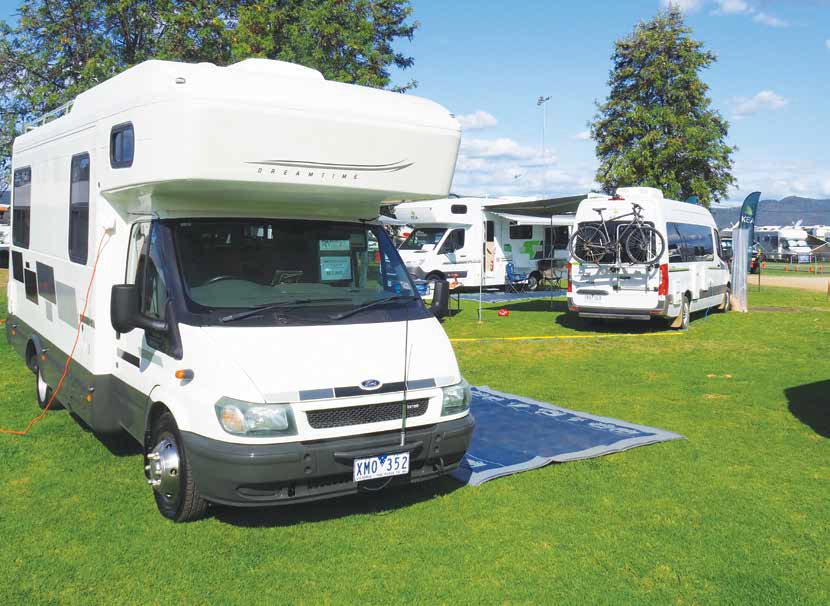
On the other end of the scale, C class refers to a motorhome built on a cab chassis and with a Luton peak – that is a bed over the driver’s cab. Definitely popular with motorhome rental operators but also anyone with a family, Luton beds occupy a space that would otherwise be used for storage. B Class motorhomes are generally the same as a C class motorhome, except that they don’t have a Luton peak and are more streamlined in looks.
Europeans, Germans in particular, use slightly different terms, something like “Integrated” (A class) or “Semi-Integrated” (B class) or “Alcove” (C class). Integrated is a reference as to how the OEM driver’s is incorporated into the motorhome, and Alcove is another word for Luton.
Just in case you are wondering where the Luton term comes from, it was from the old British truck manufacturer Bedford. Originally based in the town of Luton, Bedfordshire in Britain, Bedford is credited with first developing what became known as the Luton van, that is utilising the air space over the driver’s cab for extra carrying capacity. Motorhome designers followed suit but used the space for a bed instead.
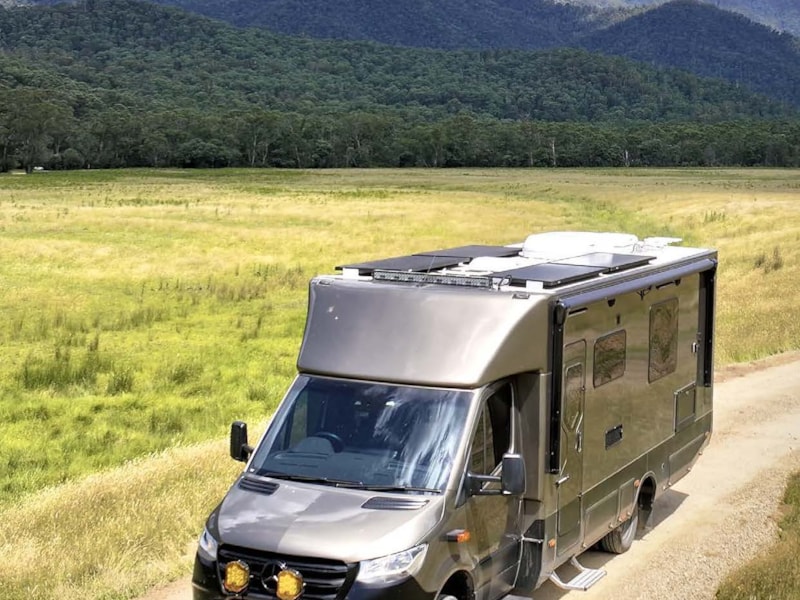
Things are a little blurrier with large van conversions like KEA’s Mercedes Benz Sprinter based Ultima. Larger than a VW Kombi or Toyota HiAce campervan conversion, some manufacturers call them campervans, others, motorhomes and I think one even uses the term B Class. All in all, very confusing for newcomers. To me, campervan gives the wrong impression because vans the size of the Sprinter are much larger than VW/HiAce vans and are frequently totally self-contained with an onboard shower and toilet. Which is why some call them motorhomes.
As always, in any purchase in the RV industry good and thorough research is the order of the day in all matters.