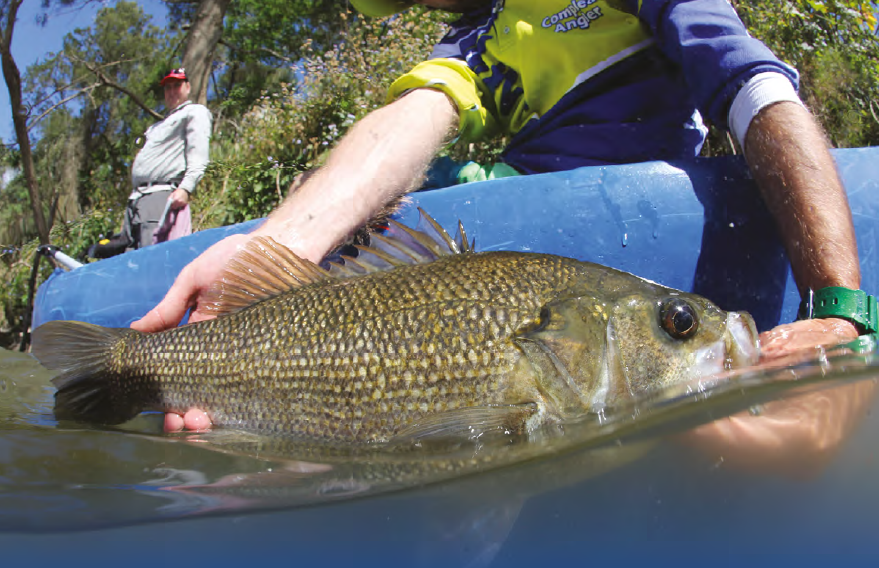
There is something very special about Aussie bass. For me, standing on the edge of a tranquil pool with nothing but the sounds of birds singing and the gentle rush of rapids in the background is special enough, but being able to fish in these locations makes it all the more appealing. Bass live in some of the prettiest country around and, better still, they happen to be a sensational sportfish.
Bass fishing is more like hunting than simply fishing. You don’t just pull up, lob out a bait and hope for the best. No, you have to study the water and pick out the prime real estate where these predators will be holding out. Then you need to cast a lure with pinpoint accuracy – right on the mark to tempt a bite. If it all comes together then chances are you get an explosive strike.
Bass are endemic to Australia. They are only found naturally in rivers flowing east out of the Great Dividing Range; from eastern Victoria right up the east coast into southern Queensland. They have also been stocked into numerous impoundments and dams artificially expanding their home range.
Primarily a freshwater species, they do migrate down into lower estuarine reaches of the river systems during the winter months. Sadly, dams and weirs have blocked up most rivers disrupting the bass’s natural migration in nearly all the major rivers.
There is one exception to the rule and that is the Macleay River on the midnorth coast of NSW. I have fished this river several times and it always seems to produce. On my most memorable trip I fished with locals Brent and Marty and canoeing up into a remote section we had some insane fishing. In one morning we ended up with several fish over 40cm and the best almost reaching 50cm. That is a serious bass when you consider they max out at 60cm.
Bass are ambush hunters so the key to success is not to just blindly cast lures around but instead really read the water and identify the prime real estate. Bass are structure orientated but they also need a bit of current to bring the food to them. They love steep rocky banks, drowned timber or weed beds; basically, anywhere they can hide and wait for the current to bring the prey past.
This is why lures are so productive – because you get to cover more ground. Bass don’t patrol a lot in search of food so you need to go to them. Being aggressive they will eat just about anything but deep divers like the aptly named Tilsan Bass or Halco RMG are prime; as are spinnerbaits like Icons and even soft plastics all work a treat. However, the most exciting way to fish for bass is with surface lures.
Bass take a lot of food from the surface, especially in the summer months when the insects are most active; especially the cicadas.
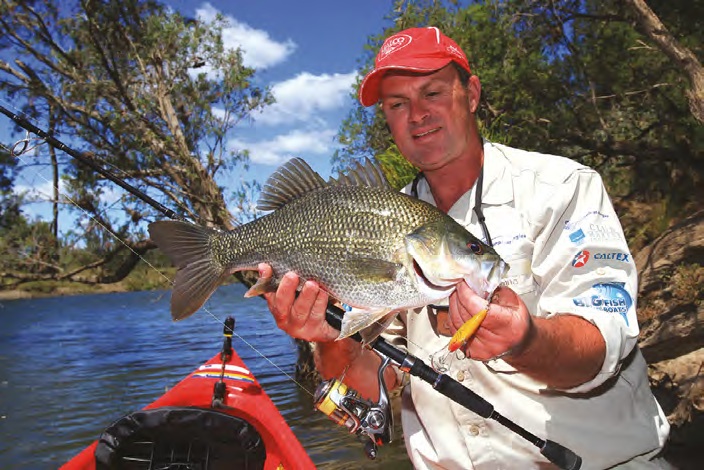
Small noisy poppers like the Roosta, cast in tight against overhanging foliage, will draw some explosive strikes. The only problem is that bass are messy eaters and are never very good at finding the hooks, so the number of misses is very high – but no one seems to care because the visual effects are always spectacular.
Bass fishing – like all fishing – is all about understanding their habits and environment. What this means is to seek local knowledge and the key is to always drop in at the local tackle shop to chat with the guys to see what the bass (or any species) are doing. This is particularly important when you are travelling and fishing new rivers. Chatting to people like Brent at his Compleat Angler store suddenly gives you all the latest up-to-date info on what is happening locally. This is exactly what I did on that memorable trip but I went one step further and invited them along.
Some of the best bass country is found where the rivers flow down out of the Great Dividing Range in northern NSW. Carving through granite-lined valleys these rivers are a mix of rapids and pools, surrounded by farmland and forest. Many are also relatively inaccessible which makes them perfect habitat for bass.
The best area to fish depends on the time of year and it is essential to plan your trip according to the bass calendar. In winter, when the bass are downstream in the estuarine waters, there is a closed season to allow them to spawn. However, by spring, just as things start to warm up they start to push back upstream. This spring migration is one of the best times to chase them, as they are hungry and aggressive after spawning.
During the summer months they push right into the rivers’ upper reaches. How far they get is largely dependent on the river levels, which of course vary greatly. To reach this backcountry, the best approach is to hike in. This means only the truly dedicated get to experience it, however, it’s always worth the effort.
Catching bass on lures is really addictive. It’s not just the fish but the country you catch them in. Australia is such a unique country that adds a whole new element to the fishing. If you want to catch those trophy-sized bass then you really have to put in the hard yards and reach those untouched waterways, or honey holes as anglers call them.
These more remote spots see little pressure and the fish are far less wary. This doesn’t come easily, though, and you have to plan ahead to arrange things well before you hit the water.