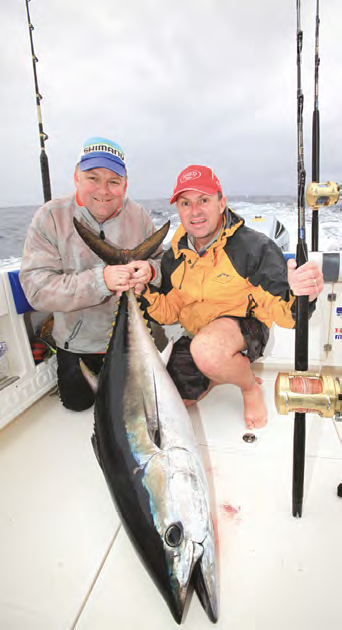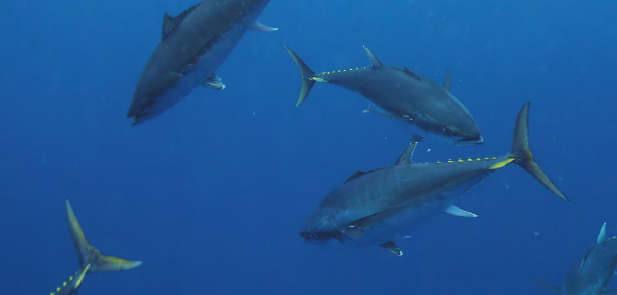
If there is one fish I obsess over it has to be tuna, especially big ones. I love that feeling of hooking up to a fish that is all power. Sure, marlin may jump or snapper taste good but for brute force, tuna are number one.
Sadly, tuna stocks around the world are being smashed to supply the dreaded canned tuna industry. However, one species that is making an amazing comeback is the southern bluefin tuna.
Once on the edge of extinction, numbers are now exploding and suddenly everyone is catching them – the good news is that the best fishing is right here in southern Australia.
Bluefin undertake one of the most amazing journeys in the world where they pretty much navigate the bottom half of Australia. We truly are the lucky country with bluefin being common in five states.
In WA, the smaller juvenile bluefin can be caught inshore. Moving across to South Australia the numbers and size jump up dramatically which is also the case for western Victoria.
Tasmania is the most consistent big bluefin destination. Every autumn bluefin are caught around the south western corner of the Apple Isle. The best part about Tassie is the fish often feed right in close to places like The Hippolyte Rock and Tasman Island which makes them easy to access amid some spectacular backdrops.
NSW is last on the list and kicks into gear later in winter. Unlike Victoria and Tassie, the NSW fishery is well offshore and bluefin rarely come inside the 1000 fathom line. The key to finding fish is all about understanding the currents and in particular the Tasman Front, which is the front edge of the East Australian Current.
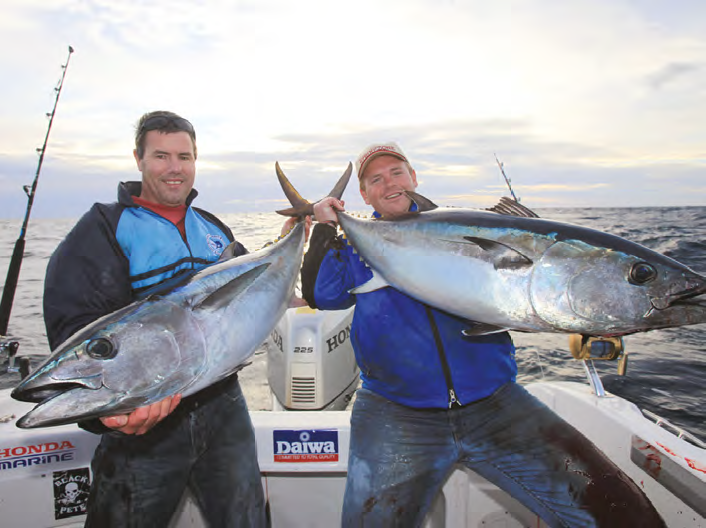
Chasing the big boys
The biggest question I get asked is when and where to fish. Well having now caught them in four states the most valuable lesson I have learned is that they are constantly on the move.
The current is critical and like an underwater highway the fish ride the current along Victoria’s west coast and around Tassie before being sucked up with the receding East Australian Current on the eastern seaboard. If they bite in one spot they will usually only stay a week before moving on, especially the bigger fish.
Finally, we have the seabirds. In Victoria and Tassie the birds will point you to the fish. Add seals and dolphins to the scenario and the tuna are almost a dead-set guarantee.
NSW is the complete opposite and there is rarely a single bird on the fish to give their presence away. This makes locating the fish a lot harder and as a result anglers work together more than anywhere else spreading out to find the fish. Once someone locates a school they call others in on the action which is awesome. As for temperature, I have caught them in water as cool as 14 and as hot as 20 degrees but it seems that 16-18 degrees is the prime range.
Lures And Bait
Bluefin are opportunistic. You can catch them casting, trolling or even on bait, however, trolling stands out as the easiest and not to mention best technique for big fish. All my jumbos have been caught on lures. In fact, they have all been on the same one: a Laser Pro 190. That said, a mix of small skirted lures and deep divers is pretty much the standard spread these days.
I like to keep it simple when it comes to trolling and never run more than four rods. Two skirts and two deep divers – that’s it. My favourite position that accounts for a vast majority of the big fish is the Laser Pro in the shotgun position. Instead of just trolling, what I want to cover is the new technique of incorporating bait.
In terms of tackle it really depends on where you are fishing but inshore schools are normally smaller fish in the 15-30kg range and can be easily handled on a 10-20kg outfit. Mind you, my biggest bluefin, a record 155kg, was caught in just 50 metres of water in western Victoria so they are not always small.
If you’re serious, you also need to upgrade the hooks on your deep divers. Treble hooks will straighten out on a big fish so you need to swap over to heavy-duty single hooks. This will offer a better hook-up rate and less chance of hooks pulling during the fight.
One trick we employ, especially in NSW, is to have a bucket of chopped up pilchards ready to go while we troll. The moment we get a bite I start tossing handfuls of pilchards out.
The bait usually gets the rest of school fired up and excited; bluefin love a free handout and will race up to the back of the boat. The trick is always use fresh Aussie pilchards, imported sardines are crud. While swimming with the tuna I observed first-hand how fussy they can be; the tuna would rush up eat all the pilchards but ignore imported or old bait.
When the school does come up it is incredible fun! They will eat everything you throw at them. For those who want to catch them on the surface – the key is to keep feeding them.
Whatever you try, bluefin are great fun to catch and awesome on the table. Better still, being a schooling fish, multiple hook ups are the norm not the exception, which only makes it more exciting when the rod starts screaming.