Make RV travel with your large dog enjoyable with these tips on sleeping, food, and exercise.
My first dog's name was Odie. A black border collie cross, I named him after the ever-lovable dog in the Garfield comics I collected when I was seven years old. Not having much money growing up, we didn’t go on holidays, but Odie and I had plenty of camping adventures together in the bush behind our house. Oddie passed away when I was 17 years old, and as far as deaths go, it was a good one. He went to sleep on the patio and never woke up.
I got my second dog, Guru, that same year, a newfoundland cross Labrador. At least that’s what I think he was, but being a pound dog, I was never really sure. When I moved out of home, I felt safe having a larger dog around the house, and my best mate stuck by me thick and thin. He went everywhere with me and we had a great time camping, swimming and being outdoors. He sat on the lounge and let me cry into his fur when my first boyfriend dumped me, and then again a few years later when the second one didn’t work out either. To be honest, I don’t think Guru liked either of them as despite being a friendly dog, he issued a few warning growls on several occasions. It was a case of third time lucky with the next one, and Guru seemed to approve. So I married him. The boyfriend, not the dog, that is.
Guru lived to the ripe old age of 17 years and I was, by now, in my 30s. We enjoyed a number of road trips over the years and he seemed pretty chuffed when two little people came into our lives. Because he had been by my side through my teenage years, my 20s, getting married, starting a family and nearly half of my 30s, saying goodbye to Guru was like saying goodbye to the last of my childhood and as far as deaths go, it wasn’t so great. The kindest thing to do at that point was to have him euthanased.
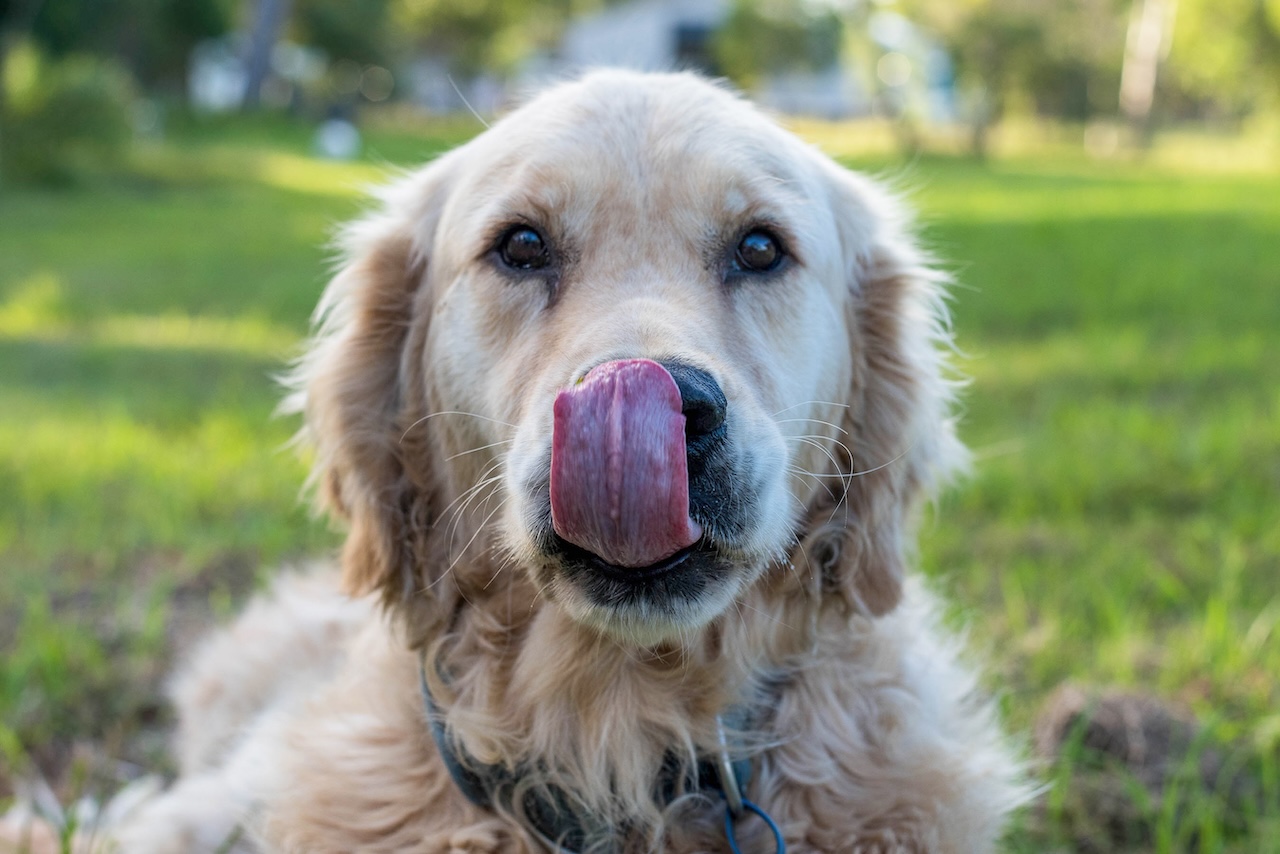
That brought us to Rusty, a purebred Golden Retriever and one of the most beautiful dogs I have ever seen. He was larger than most retrievers, living up to his breed’s reputation of being fantastic with children. Rusty would go down the slide with the kids and let them flop all over him without a care in the world. By now, we had a Jayco Swan at which Rusty slept by the door in a dog crate stuffed with soft blankets. He wasn’t so great as a guard dog, preferring to be everyone’s friend, but I think just the presence of a large dog at the caravan door is enough, don’t you?
Sadly, he only made it to eight years old and once again, we were faced with the kind of medical situation where it was kinder to have him euthanased. This time, thanks to a large inoperable growth in his abdomen. At this point, I announced that my heart couldn’t take another doggie death and that I wasn’t going to do it again. Rusty was buried on our property and we plonked a fig tree on top of him. To this day, I still talk to him when I water the tree.
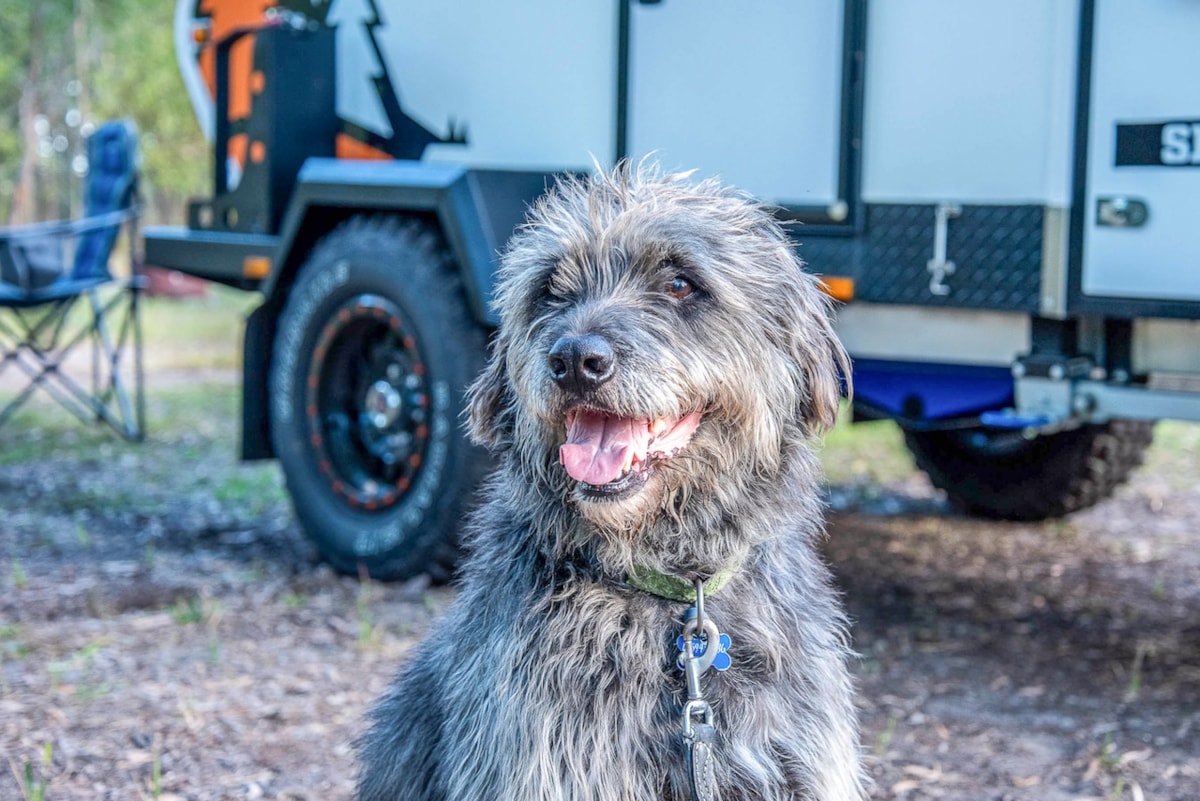
This takes us up to Kado, my wolfhound cross. I’ve had larger dogs all my life, and life just seemed empty without one. Turns out my heart could take another one. If, like me, you’re a dog owner for life, then you know exactly what I’m talking about. Travelling with a large dog, though, is not as easy as travelling with a smaller dog, especially one whose breed is often not welcome in caravan parks, despite being quiet and well-behaved. However, when HipCamp came onto the scene in Australia a few years ago, opening up private land camping to the public, road trips with larger dogs became more accessible as many HipCamp property owners don’t mind what the size or breed of your dog is, as long as you keep them on a lead and pick up all the doggy messes. Not being a fan of caravan parks anyway, this is fine by me.
Travelling with your larger dog can be really rewarding, trust me, I’ve been doing it on and off for decades now. Their presence at your van door is great security, they attract like-minded people to chat to, and in general, it’s been my experience that larger dogs are less ‘yappy’ than smaller dogs. However, it does take a little thought and planning as the reality is, they aren’t welcome as many places as a smaller dog and still need the appropriate amount of exercise. This means being a bit more organised and having the right gear to make it work. So if you’re new to large dogs or perhaps new to RVing, here’s what you should consider to make a trip with your larger dog go smoother.
1. Sleeping
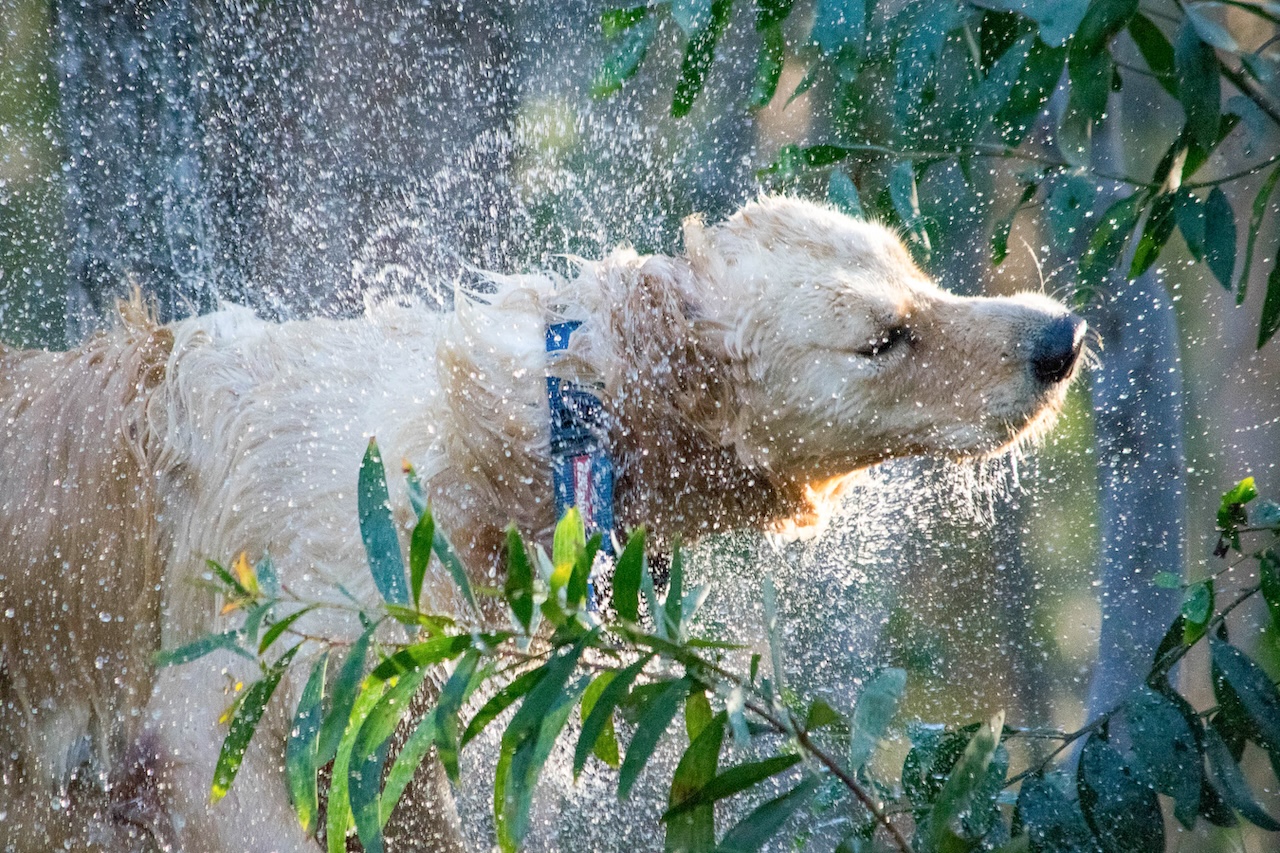
Many people are happy to share a bed with their smaller dog, who fits nice and cosy at the end of the bed. Letting a 45-kilogram Golden Retriever who malts three sheep’s worth of woolly fur every day in your bed is not so fun. One solution is to get a dog crate and crate-train your larger pooch. It provides not only a comfortable place to sleep with their own bedding but a place to chill out during the day when they need a break or a nap. Think of it like a portable kennel.
2. Food and water
RVing with a large dog means more food needs to be carried. Think 1.2-kilogram cans of dog food as opposed to petite 200-gram size delectable tins. Don’t even get me started on the bag sizes of dry food. If it’s going to be a long time between big brand supermarkets, this can be expensive, weighty and take up a bit of space in your RV cupboards. The same goes for water if you’re travelling off-grid. Do you have enough to fill up your dog’s water bucket every day if you don’t have access to a natural water source? Trust me, larger dogs tend to drink bucket loads rather than small petite dish-sized loads.
3. Constraint systems
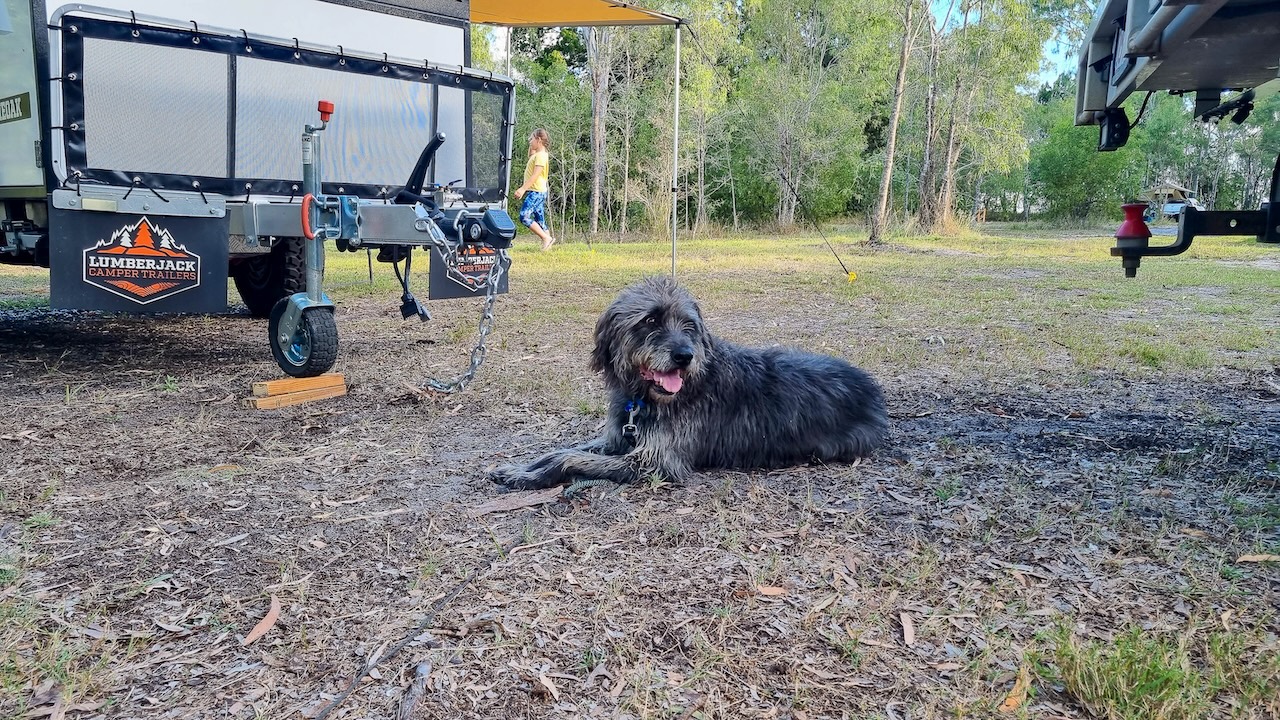
It doesn’t matter where you stay with your dog, most places require that your furry friend be constrained. Now, portable camp fencing for dogs often doesn’t work for larger breeds, they can jump right over it. This means you’ll need some kind of rope or chain constraint system for the campsite. Whether it’s a simple piece of rope or something fancier like the Zippet Restraint System, you’ll need something substantially longer than their regular walking lead so they can still move around freely within the confines of your campsite.
4. Exercise
Given that your large dog is now constrained at the campsite, you’ll need to find a way to exercise him. You’ll be the best judge of how much exercise your dog needs daily but you may need to look for an off-leash area in the town you’re staying in, or if you’re lucky like me, a 30-minute fast walk in the morning is enough to keep the naughty behaviour at bay.
5. Doggy clothes
You either love them or hate them, but if the weather is less than ideal, you should come prepared with some doggy clothes for your larger dog. By clothes, I’m not talking about dressing your pooch up in a ridiculous doggy tux, I’m talking about a weatherproof jacket that will keep your dog warm in colder weather and repel a bit of rain. My large pooch has an oil skin jacket that velcros up under his chest and it’s such good quality, it’s actually a three-times hand-me-down. If you can feel the cold and rain, chances are your big old furry friend can as well.
6. Travelling aids
Have you thought about where your dog will sit when you’re driving? If your pooch will be occupying a seat in your car, you’ll need to purchase a doggy seat belt for him. If he is travelling in the back of your ute, then you’ll need to get an appropriate weatherproof dog box so he’s comfortable.
Older dogs will need assistance getting in and out of your vehicle and caravan. Just like people, once you reach a certain age, jumping in and out of things easily is out of the question. Now, this isn’t such a problem with smaller dogs as you can easily pick them up to help them out. However, picking up a 45-kilogram wolfhound is no easy feat. This means investing in some dog ramps or steps.
7. First aid
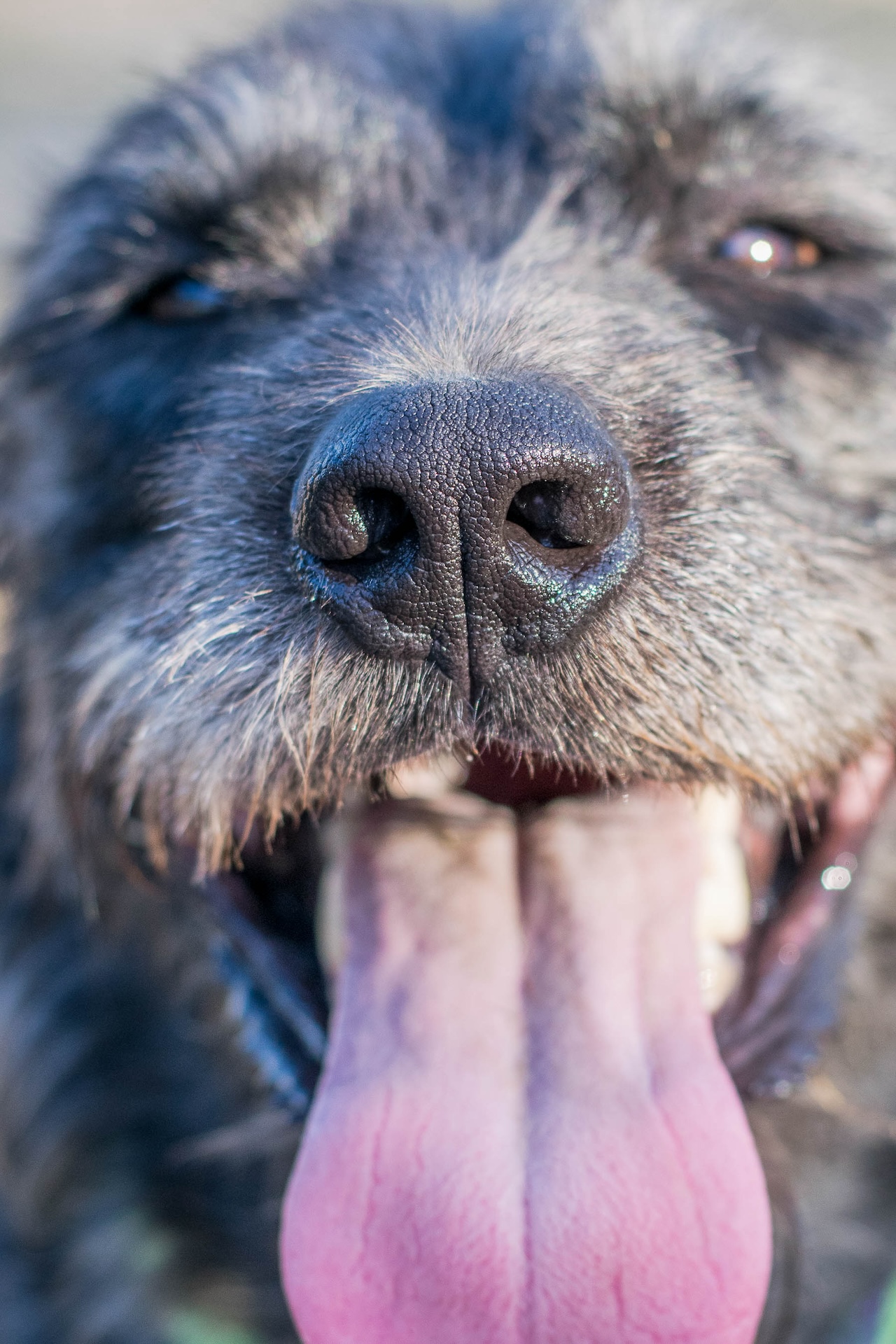
Just like you carry a first-aid kit for yourself and your family when you’re travelling, you’ll need to carry one for your large dog too. This will include a tick removal tool, bandages, ear cleaner, and any regular medication your dog needs.
8. Tools for finding dog-friendly campsites
Last but not least, you’ll need to have some tools for finding dog-friendly campsites. CMCA Traveller, which is exclusive to CMCA members, has a “pets allowed” filter that will help you find pet-friendly options, although you may need to phone in advance to check if they will accept your particular breed of large dog. Additionally, the HipCamp app also allows you to search for pet-friendly private campsites Australia-wide.