Tuck in to a veritable smorgasboard of scenic and natural delights in the Northern Territory

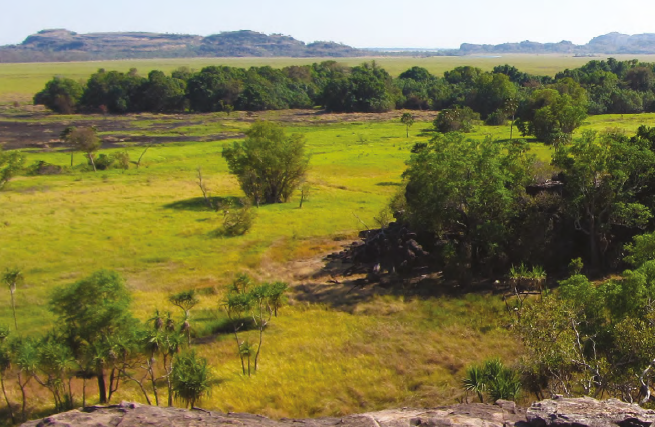
Iconic view over Nadab Wetland, Kakadu
The weather in the Top End during August was the same every day: hot, damned hot. It never varied during the month we spent in this region. Just as reliably we got some respite from the heat overnight when the temperature usually dropped to around 18°C. But it made a change from the cool to cold temperatures we experienced in the Red Centre.
When we arrived at Mataranka we renewed acquaintances with the Savannah Way which we had previously travelled on from Cairns to the Gulf Country. Mataranka is the town made famous in the book We of the Never Never and the 1980s film of the same name. It is also famous for its hot springs. The nearby Roper River reminded us of Lawn Hill with its cabbage palms and calcium rock formations.
A little way further up the Stuart Highway is the town of Katherine. The gorge in the Nitmiluk National Park is one of the iconic locations in outback Australia. We did the two-gorge cruise and it didn’t disappoint. To top it off, we found a beaut free camp on a spectacular ridge in the bush about 5km from the gorge and spent three nights there while we explored the region, including the lovely hot springs just on the fringe of Katherine.
We took the road from Pine Creek to Kakadu. This World Heritage-listed national park was much better than I had been led to expect. The entrance to the park from the south is probably the least inspiring way to go, but what else can you do when you are coming from Alice Springs. For tourism purposes, Kakadu is arranged into seven regions. We passed through all of them as we drove through the park.

Magnetic termite mounds, Litchfield NP
We decided not to attempt any of the 4WD tracks in Kakadu. We still did some dirt but stayed mostly on the bitumen. Our favourite regions were the East Alligator and the Nourlangie regions in the north east of the park. These two regions contain the famous Kakadu escarpment, the wetlands and some prolific rock art galleries.
To my untrained eye, the rock art sites we saw in Kakadu looked like the rock faces had been scrubbed and the artwork had been touched up. Even if that is true, it didn’t detract from the quality of the art on display, it probably enhanced it. The Anbangbang gallery near Nourlangie was the best of the three galleries we visited, but all three are a must-see. The highlight of the Ubirr region, even more than the rock art, was the view of the Nadab Wetlands from the rocky lookout. It must be an awesome sight during the wet season when it’s teeming with birds and the swamps are full. Even in the dry season it was one of the most memorable vistas of the trip so far.

Wangi Falls at sunset, Litchfield
The most unexpected natural phenomenon in Kakadu occurs every high tide at Cahill’s Crossing, the weir over the East Alligator River which connects Kakadu with Arnhem Land. At high tide the river runs upstream over the weir and the fish start leaping out of the water. This brings the crocs in for an easy meal. It was hard to count them all, but there were probably more than a dozen crocs having a feed within a stone’s throw of the tourists lining the river bank. Simply an amazing sight.
After that spectacle we did a cruise on the East Alligator River. It is an obvious misnomer. In 1820, the explorer Phillip Parker King gave it that name because he couldn’t tell the difference between a crocodile and an alligator. The cruise took us upstream and into Arnhem Land where our guide gave us some insights into the local indigenous culture. Along the way we saw so many crocs, we lost count. We have probably seen more crocs in the wild in the Northern Territory than kangaroos, strange but true.

Ubirr Gallery, Kakadu
For thousands of years the traditional owners of the Top End used fire to clean up the country and encourage natural flora and fauna regeneration. This practice ceased under European land management and the vegetation and animals suffered as a result. Patch burning has been resumed throughout the Top End in the drier months and the environment has benefited. For us tourists, it meant travelling through country which looked like it had been recently back-burned. It also meant a constant smoke haze and smell of bushfires. But if it’s good for the natural environment, then it’s part of the Top End experience. The smoke haze also turns the sun blood red at sun down.
We stopped off in Jabiru in the north east corner of Kakadu, just to say we had been there. From there we drove the extra 20km (round trip) to see the Ranger Uranium Mine. I’m still surprised that we could get so close to it. The road to the employees’ car park runs right alongside the open-cut pit with the processing plant on the ridge behind and a stunning rock escarpment just behind that. It’s a big operation.

Free camp outside Litchfield
On the way out of Kakadu, heading west back to the Stuart Highway, we stopped in at the Mamukala Wetland about an hour before sunset. There is a viewing platform which is designed to allow the tourists to spy on the wildlife without spooking them. We saw our first jabiru at very close quarters and it was quite an experience to see this magnificent bird.
From the northern exit (entrance) from Kakadu it is less than 200km to Darwin. I had never been to Darwin before and really had no idea what to expect. It’s a modern planned city which is spread out over a very large area with huge tracts of bushland between the residential townships. It’s as cosmopolitan as Sydney and, in August, it reminded me of Canberra in the middle of January; hot and dry. The city had a great feel to it.

The Cascade, Litchfield
Darwin has been hit by two disasters in living memory – WWII Japanese bombing on February 19, 1942 and Cyclone Tracy on December 25, 1974 – which have given it a heritage like no other Australian city. There is a lot to see and do. One of our highlights was the Mindil Beach Markets which are held each Thursday evening. They have an eclectic mix of food, music and market wares. At the appropriate time there was a mass migration onto the beach to watch the stunning sunset.
A great way to see and hear about the city of Darwin is to do a cruise of the harbour foreshore. We went on a 2.5- hour sunset cruise on the Charles Darwin which included an all-you-can-eat seafood buffet. It started from Stokes Hill Wharf, went up the coast to Fannie Bay and back via Frances Bay. Darwin Harbour is about 1000 square kilometres and, like Sydney Harbour, it was formed at the end of the last ice age when the ice melted, the sea level rose and drowned the coastal river valley.
I knew Darwin was bombed during WWII but I had never learned about the extent of the damage. The first attack was inflicted by the same Japanese fleet that bombed Pearl Harbour in Hawaii. The bombing continued. In total, Darwin was subject to 62 separate bombing raids until November 12, 1943, but none was more destructive than the first.

Crocs feeding at high tide on Cahill’s Crossing, Kakadu
If you like aircraft, Darwin has one of the best aviation museums you will ever see. The exhibits include an enormous B-52 bomber, an F-111 in showroom condition, a Mirage, a Hughie Cobra and a whole lot of military and other aircraft.
The Museum and Art Gallery of the Northern Territory is a must-see and its free. It has an excellent display about Cyclone Tracy, some wonderful Indigenous art and an interesting collection of regional boats and canoes, none of which looked like they had been confiscated from people smugglers.
The Cullen Bay Marina is a great place for a drink, something to eat and some real-estate eye candy. Speaking of food, the Stokes Hill Wharf is the place to go for good cheap seafood. While sitting on the wharf having our barramundi and chips we watched a couple of three-metre tiger sharks circling below us.
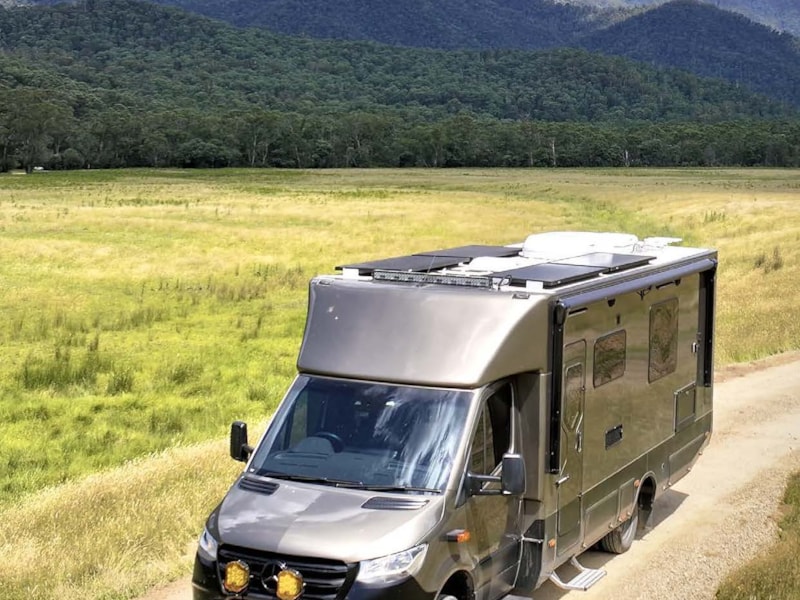
Before leaving Darwin we had the Vanbo serviced again and stocked up for the next leg of our Big Lap. At that stage of our journey we had been on the road for 21 weeks and racked up over 17,000km.
Our last stop before leaving the Top End was the famed Litchfield National Park. The park is bookended by fields of magnetic termite mounds. The mounds are broad and thin and are aligned north-south so that one face is always in the shade. This enables the termites to regulate the temperature inside. We entered Litchfield from the north via Berry Springs. It’s the shortest route from Darwin but involves 25km of pretty ordinary corrugated road (its condition probably varies depending on when it was last graded). Litchfi eld isn’t a big park and we saw all the popular sights (those accessible by sealed road) in two days, including the Wangi, Tolner and Florence falls. Despite the presence of freshwater crocs, Wangi and Florence have lovely plunge pools that are okay to swim in. We left the park through the southern entrance and headed back towards Katherine via the Douglas and Daly region. This is the scenic alternative to the Stuart Highway and passes more hot springs.

View from Arnhem Land across the East Alligator River to Kakadu
We loved our time in the Top End. We had never been to any of these places before. It would be a wonderful contrast to visit during the wet season to experience the ‘other side’ of this beautiful part of our country. After reaching Katherine we resumed travelling on the Savannah Way heading towards the Kimberley.
You can send us your comments or ask questions at robandslava@gmail.com