How to customise your ex-rental RV, motorhome, caravan or campervan to suit your needs.

So, you’ve made the decision to retire and travel around this great country of ours, but you’re not sure what you will need for a rig. Our experience over the last 55 years or so has been varied; and we have purchased many types of vehicles that include everything from a simple, home-made fit-out, to the modern motorhome we own today. Purchasing a new RV was not realistic on our budget, so we looked at many types of vans, campers, and RVs on the second-hand market, but none suited our needs. We even considered buying a Coaster and fitting it out ourselves, as we had travelled around Australia in one many years ago and loved it.
After scouring the market for months we decided on an ex-rental motorhome from a company in Brisbane. It is rear-wheel drive with dual wheels, so it has good carrying capacity at the rear. These ex-rental vehicles are not for the faint-hearted though, as they are poorly maintained and only fitted out with the basics - so you may want to consider an upgrade to the interior. There is also the possibility of the odd mechanical failure with ex-rental vehicles, but this can also happen with a new vehicle, and at least an ex-rental will be well ‘runin’. The main factor in making our decision to buy an ex-rental was to acquire a modern vehicle and one which had no modifications.
Our budget was $12,000 for refitting, on top of the purchase price for this seven-metre home on wheels. The standard layout is a double bed over the cab and café-style seating behind the driver which can be made into a double bed. These seats have four seatbelts, so it’s licenced to carry six people. There’s a combined bathroom and toilet, and a lounge area which also turns into another double bed. On the passenger side is the fridge, combined stove, sink, and plenty of cupboards and drawers. There are overhead cupboards throughout the motorhome, so storage is quite plentiful. And of course there is a 12V TV/DVD with a dubious mushroom aerial on the roof. I say dubious because it does not look adequate for the job, but does work quite well in most towns and cities. The outside has a tunnel boot at the rear which is great for storing chairs and other bits and pieces, and it also comes fitted with a rooftop air conditioner and awning.

There is also a house battery with built-in 12V and 240V charging system that requires no input from the user and powers the fridge, TV, pumps, and lighting system for those odd free stopovers. It also has a 22L gas hot water system, 100L grey water tank, 100L fresh water tank, and the toilet has a 20L black water tank, so it’s ready to go if you are planning on short trips staying mostly in caravan parks.
So what can you do for $12,000, which we spent back in 2015?
Well, in our case, quite a lot! I am a cabinetmaker and have had previous experience at fitting out campers and caravans, so labour is free. I started with additional water tanks because we planned to do a lot of free camping, particularly in Western Australia, where water can be a bit problematic in some areas. A dedicated 100L of water for drinking with a separate pump, lockable filling cap, and tap over the sink to avoid contamination was installed underneath at the rear. This was in place of the spare wheel which went to a bracket on the rear of the vehicle. A further 120L was installed underneath the drivers side, and both these tanks are supported on an aluminium channel welded frame that is supported by 12mm high strength all thread, as used in house tie downs with stainless steel lock nuts. The plastic food grade tanks are available made to order by a local tank manufacturer and have tags attached for bolting to the frames. Another smaller tank was installed on the drivers side and used as a toolbox by cutting the side out and mounting a lockable door to match existing doors. I should point out it is not necessary to have all tanks filled when on the move, only when you plan to be stationary for a few days.

The rear seating and the cupboards supporting the stove and sink were totally removed to make way for a larger 210L 12V-only compressor fridge with separate freezer, stainless steel sink with drain board, four burner gas stove with oven and griller, plus drawers and a cupboard
The rear seating and the cupboards supporting the stove and sink were totally removed to make way for a larger 210L 12V-only compressor fridge with separate freezer, stainless steel sink with drain board, four burner gas stove with oven and griller, plus drawers and a cupboard for the clothes needing to be on coat hangers.
The rear was turned into a double bed with gas struts to access the compartment holding the hot water service, solar regulator, inverter, and battery charger. A large drawer on heavy duty runners fills the remaining space under the bed, which is used for linen, towels, etc.
Drawers were also installed under the café seating, which can also be accessed from above by removing the cushions. Whilst on the subject of cushions; we replaced the original foam with a better quality mattress for more comfort. The queen size bed over the cab is only used for storing the satellite dish and other frequently used items, but is great to have when we have an extra guest staying.

The TV that was previously mounted on the kitchen benchtop was moved to a bracket above the entrance door so it can be viewed from the café seating area behind the driver and the bed above the cab. A second 12V VAST TV was mounted above the end of the bed, purchased along with a satellite dish and all the necessary equipment to watch TV and Foxtel anywhere we decide to stay. For those not in the know, both VAST and Foxtel beam down from an Optus 1 satellite to cover all of Australia. A trip to your local RV supplier of satellite dishes will explain all of these details and get you a great entertainment package for wherever you are. It was also necessary for us to install a 300W inverter to power the Foxtel unit.
A pull-out barbecue was constructed at the rear of the passenger side which is a must because cooking fatty foods inside small spaces is not the best, even with the small range-hood supplied.
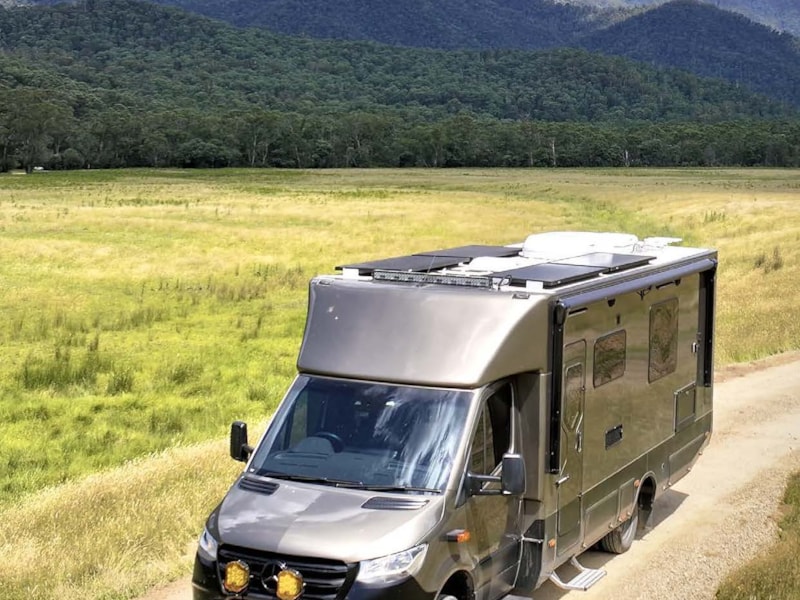
There are now two 120AMP deep cycle batteries with two solar panels on the roof providing 280W of power through an MPPT regulator. It is advisable to seek knowledge on the system you require because we all have different living habits, so whilst this may be enough power for us, it may be inadequate for others. However we can stay almost indefinitely without other means of charging in good sunny conditions and frugal use of lights, etc. If the batteries are getting low we head for a caravan park – which is also a good excuse to catch up on the washing! USB charging points were installed in strategic locations for recharging mobile phones, tablets, torches, etc. I opted to not have any other alterations made to the already installed 240V wiring because we prefer to free camp using the sun as our energy provider. I should point out that while you can do your own 12V wiring, poorly shielded wiring can still cause fires, so seek advice when adding appliances. Gas regulations vary from state to state too, so it is advisable to get this work done by a qualified gas fitter.

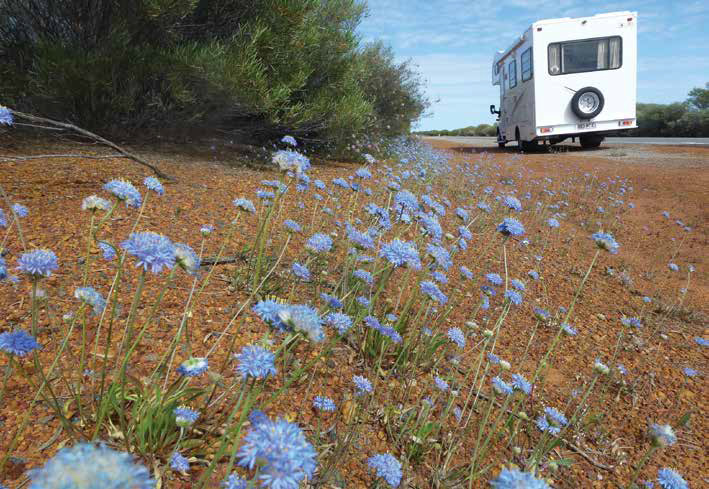
A tin horse on the highway of WA
When budgeting for improvements it’s important to be generous with estimating sealants, glues, fasteners, and the myriad of other small bits and pieces that tend to add up cost-wise, especially because we often tend to just think of the big ticket items. Since the initial refit we have added a rear window awning, diesel heater with the control by the bed (of course!), and a new gas/electric hot water system so we can have hot water while in caravan parks - which means we can also use our own shower without having to join the queue. Also added were outside flood lights on each side, which are great for those roadside stops in the middle of nowhere. Airbags have also been fitted on the rear axle to help stop body roll and assist with levelling the vehicle.
There will always be something else you require, like a small fold-out clothes hanger which we mounted in the shower for those small drying jobs whilst on the move, but that’s life!

Robin Klau having a beer at The Great Australian Bight, off the southern coastline of mainland Australia
At the time of writing, the clutch in our motorhome is being overhauled, so be aware funds should always be available for those unexpected breakdowns. Speaking of which, we have breakdown cover for vehicles up to 10 tonnes, most necessary as you can’t predict where and when a breakdown occurs. Finally, be aware of your vehicle’s GVM and the weight you are going to add, and it’s also a good idea to consult an Approved Vehicle Examiner (AVE) in your state, who, in some circumstances, can raise the GVM if your vehicle qualifies. Contact your Department of Transport for a list of these examiners.
Good luck in your hunt for the perfect motorhome and if you see the ‘Dolphin Inn’ (it has two playful dolphins on the front) then give a wave or stop by for a chat.

A side view of Robin and Helen Klau’s motorhome