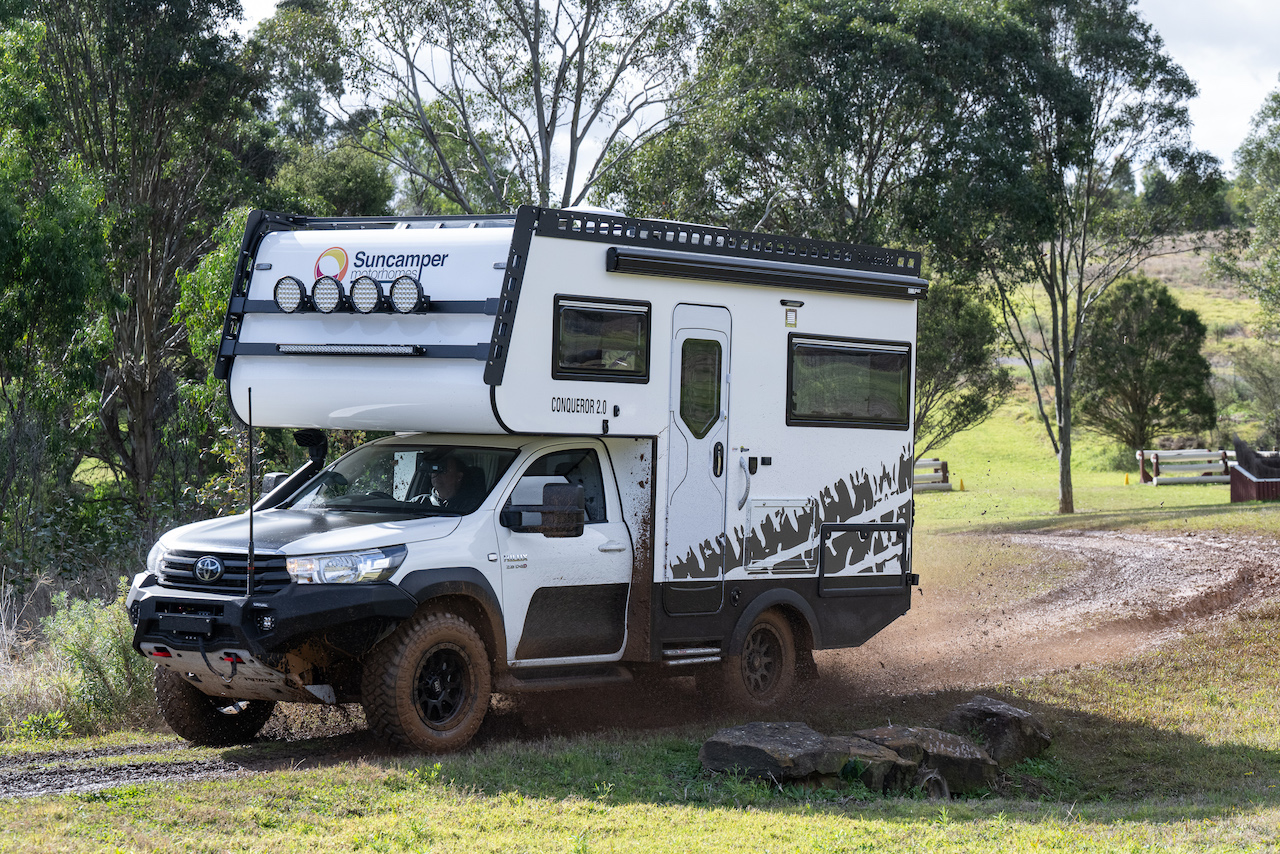
Top tips for off-grid travel, from water storage to safe driving and remote camp setup.
Leaving the bitumen behind and going somewhere remote, off-grid and uncrowded is a dream that many RVers have. These tips will help in preparing for adventurous journeys.
Off-Grid Travel Tips: Tyres and Maintenance
Have your van and car serviced and ensure tyres are in top condition before taking to the roads less travelled. An important early warning system to have is a tyre pressure monitor, which can be fitted to any car and van tyres. If pressures drop or rise outside of a set range, an alert is sent to an in-car display monitor – allowing you to check before problems arise.
For travels off-road, carry a set of tyre deflators and a portable compressor to enable you to reduce and re-inflate tyre pressure as needed … to make the ride safe and comfortable on corrugated dirt roads or in sand.
Carry a spare air filter for your car if you're planning to travel on heavily dusty roads, and change it over to improve your car's efficiency when it needs it.
Safe Driving on Remote and Off-Grid Routes
Drive with headlights on all day to improve your visibility to others. This is especially important for being seen in the distance in high-dust areas.
At the end of a day's travel on rough terrain, check and tighten screws if needed on your car and van light housings. It also pays to check and tighten wheel nuts if necessary and do a general check over the car and van for anything that may have worked its way loose.
If driving in deserts or on beaches where there will be dunes, a sand flag for high visibility is necessary to alert others of your presence in advance.
If in doubt about driving through any terrain, get out of your vehicle and walk the route first to make sure you know the safest line to drive on. This is especially true of water crossings and rocky terrain.
Download maps for your destination, or carry printed ones that can be referred to at any time; and if you're going remote, let family or friends know your estimated dates of arrival at different points, checking in with them when possible.

Caravan Water Storage Tips for Off-Grid Touring
Carrying enough water is one of the most important factors. Make sure to fill caravan tanks before heading off the bitumen, and carry extra drinking water in a portable container that can be refilled when the opportunity presents itself. Caravan water tanks can also be refilled if needed from the portable container.
Be frugal with water usage. Save dishwashing for once a day, keep some water in the bathroom sink for hand washing each day, and take short showers or sponge baths to help to conserve water.
Choosing a Safe Caravan Setup for Off-Grid Campsites
Never park close to river beds because flash flooding can happen unexpectedly, turning dry ground into raging torrents rapidly. Don't park under large eucalyptus trees, which can drop branches as a coping method during droughts.
Trust your gut when it comes to choosing where to stay; and if there are signs at a campsite that make you feel uncomfortable, such as broken glass and lots of car tracks, move on.
When staying off-grid, park where fixed solar panels will get the most of the sun's trajectory and use power-hungry appliances during the sun's peak. Mounted or freestanding 12-volt fans are handy in hot weather.
Take your rubbish with you and dispose of it properly when you can. If you're storing rubbish outdoors, make sure it's in a sturdy bag and off the ground to prevent insects, birds or animals from getting to it.

Personal Health and Emergency Gear for Off-Grid Travel
Have a first aid kit with useful bandages and dressings; and if you take regular medication, carry a little more than you think you'll need in case weather or other factors cause delays when you're touring.
Carry a UHF radio for communication when a mobile signal isn't available and know which channels to use for general communications or emergencies. As a guide, channels 10, 18 and 40 are most commonly used for general communications and channels 5 and 35 are for emergency use only.
Pack clothes for conditions – including long pants, comfortable walking shoes and a broad-brimmed hat. Lightweight and quick-drying clothes that you can layer are easiest for washing as you travel.
Watch the Weather on Remote RV Destinations in Australia
Keep an eye on weather conditions as you go, using reliable websites or apps to keep up to date with any warnings for the area you're travelling in. It can also pay to speak with locals who may be more familiar with any current or expected hazards in their areas.
Look for any warning signs as you're touring; and heed them. They've been placed for a reason and are there to help travellers who aren't familiar with the local environment.