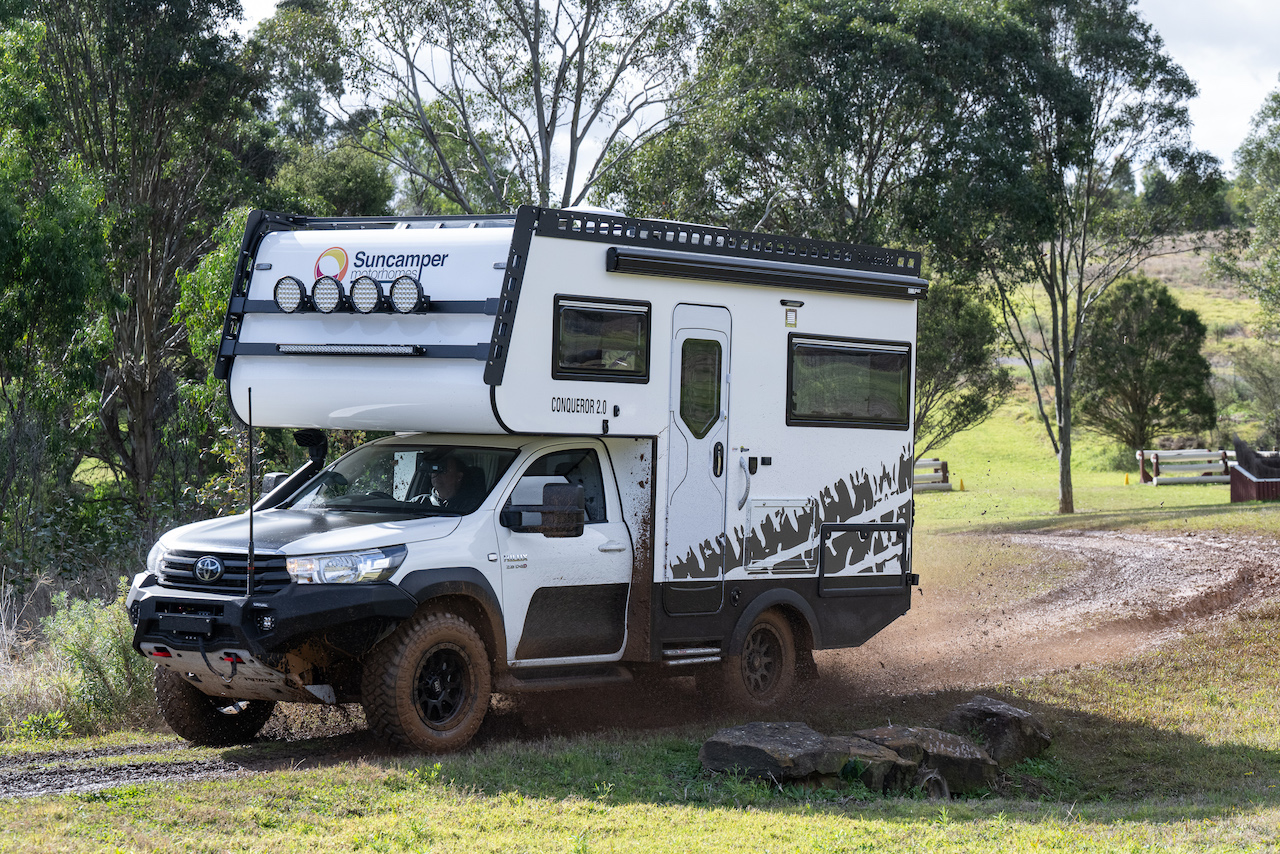
Get your RV ready for the north with key servicing tips on tyres, cooling, suspension, and more.

RV Servicing Guide
Whether it’s your tow vehicle or a motorhome, having a routine service and maintenance inspection is essential – and you should never leave it until the last minute. It’s far better to have all the mechanical work completed well in advance of your trip. Better still, try and get a few kilometres under your vehicle’s belt just to ensure no issues arise. When you’re making the booking, aim to have a chat with the service technician about your proposed adventure. Explain the possible climatic and road conditions you might expect to encounter while travelling north so it helps them have a better idea of what you’ll experience.
Engine Cooling System Inspection
The engine is going to be working harder on a big trip, and in a hotter climate. Arrange to have a thorough inspection of the vehicle’s cooling system as part of your vehicle servicing regime. Request a written and detailed report on the condition of all the hoses, drive belts, radiator and water pump. Err on the side of caution and replace these if necessary, as roadside service can be a long way away between towns.
Internal Temperatures and Air Conditioning
Staying cool while driving requires an air conditioning system to be working effectively. Poor operation can lead to hot days behind the wheel adding fatigue to everyone, but it’s also going to make your engine work harder and consume more fuel. Filters need to be cleaned and/or replaced, and drive belts should be inspected and adjusted. The system also needs to be appropriately charged with the right amount of gas, plus the compressor tested under full load operation. This is a specialised system and needs the correct attention from qualified technicians.

Outback RV Travel Preparation: Sub-Filters
Having all the filters replaced at the service is part of a general service. However, when you’re travelling up north, you can expect to occasionally travel on Outback dirt roads where dusty conditions prevail. So, it’s advisable to inspect them regularly in between the next full service. But when it comes to Outback fuelling stations, it’s not uncommon for fuel to be exposed to contamination. Carry some spare air filters and fuel filters on the off-chance things go pear-shaped. They’re not difficult to replace, so have your technician order extra at the time of your service; and ask them to show you how to change them. If you still don’t feel confident, at the very least you’ll have the parts so someone else can swap them out for you.
Insect Screen Protection for Northern Travel
Depending on your time of travel and route, it’s not uncommon to experience plagues of insects when travelling north. Dead bugs not only make a mess of your windscreen and paintwork, but the radiator cooling system could also quickly come to a stop if allowed to clog up. Have some sort of insect screen at the ready that can be fitted to your vehicle’s front, if needed, to better protect the radiator system. While it might seem a simple solution, a screen can easily be cleaned and save you big dollars in costly repairs.
Shading and Heat Protection for Your RV
Consider using some shade devices and insulating deflectors where possible to reduce heat transfer and penetration. Also, take into consideration how best these might be used on your vehicle’s glassware. Some universal screens can be slightly customised if needed, although investing in some specially manufactured screens to suit your vehicle model is our pick. It’s best to set this up now and test their holding mechanisms well in advance of heading off.

Vehicle Electrics Maintenance
Hot, dusty conditions mixed with an occasional rain shower put electrical connections to the test, and you need to ensure they’re making good electrical contact with no corrosion present. Start by inspecting your under-hood battery. Check its age and get it load-tested. It’s here where you’ll get a report of its condition and per cent usable life remaining. Next is your charging device, usually an alternator. This can also be load-tested to ensure it’s making the correct voltage and current; plus ensure all the pulleys, bearings and belts, are in good working order. Due to the nature of being a semi-sealed unit, it can be difficult to determine the internal workings unless they’re removed and tested on a bench with the right analytic equipment. From here, it’s all about the accessory systems that your vehicle’s electric systems manage, including any cables used to harness and connect a trailer at the rear. If you’re unsure how to test these connections using a multimeter, have your service technician complete a load test and provide a report.
Tyre and Wheel Inspection for Northern Journeys
Tyres face their biggest challenge in hot conditions, and it’s the tread that often outlasts the condition of the tyre. This is typically the case of a towed trailer of sorts, where delamination can occur – catching the driver unaware. You should always check a tyre’s age as it will often show no signs of wear in the tread. Also, be wary of tyre flat spots if your RV has been sitting around for a while. Check inflation pressures and ensure there are no hairline cracks or fractures within the side walls. Wheels and rims need a once-over as well, paying particular attention to wheel nuts and lugs. Ensure you have the correct tools to remove them and that they can be removed and re-secured to correct torque settings. Now is also a good time to rotate the tyres and have the wheels rebalanced. Have the tyre technician provide you with a chart of the specifications and wheel weight settings per wheel (and remember its location). Remember to also check spare wheels and tyres, plus test the holding mechanisms to lower the tyres if spares are stored underside of the vehicle. Lastly check your jack, wheel removal tools, puncture kit, and spare box for valves, wheel nuts, pressure gauge and inflation tools.
Suspension Systems and Road Travel
You need only talk with any northern Outback recovery company to know suspension is a big one to watch. Whether it’s a motorhome, a tow vehicle and/or a trailer, suspensions are complex pieces of equipment that require greater attention to detail than a lot of people give them credit for. Often the driver won’t notice any early warning signs behind the steering wheel until there’s a catastrophic failure. Things like a blown shocker, disintegrating bush, seized wheel bearing, or a collapsed spring. In these cases, you’re left stranded with no way of moving other than getting a tow truck. Get a full comprehensive detailed suspension service and ask for a written report of what’s been inspected, lubricated, adjusted and replaced. It’s mandatory to have wheel bearings serviced and packed correctly. But be aware, they may require re-adjusting once you tackle those northern Outback road corrugations.
Preparing Your RV for Northern Conditions
When travelling north, there can be significant distances between towns to get mechanical assistance. On top of this, road conditions vary the more remote you go. It’s worth investing some time ensuring your rig is in tip-top condition before you leave. The effort you spend up front could very well reward you with trouble-free touring … which is certainly the goal when you’re going to be travelling in the middle of nowhere.