Hard-Won Advice from Two Years on the Road
Thinking about the Big Lap of Australia but still stuck in “one day”?
Troy McLachlan and Areti Comino, a young couple who are tackling the Lap right now, reckon that’s the biggest mistake you can make.
After nearly two years of full-time travelling and working on the road, here are their seven no-nonsense tips to help you stop overthinking and start travelling.
1. Lock in a date and do it
Troy said their number one tip wasn’t complicated. “Just do it,” he said.
If you wait until you feel “ready”, you’ll never leave. Lock in a departure date and treat it as a non-negotiable. Because the reality is, there will always be a reason to delay.
“The week before it feels like an overwhelming challenge and some kind of game of survivor,” Areti said.
“You could easily push it out a week and then another week and you’ll never be ready. But you’ve just got to make it happen.”
Troy said family and friends would always be trying to book in for birthdays, parties and events.
Draw a line in the sand and go.
2. Pack light – you’ll ditch most of it anyway
Troy and Areti admit they started out with way too much gear – fire pits, extras, all the bells and whistles.
But, as they did, you’ll quickly learn what matters and what doesn’t.
Troy said they bought “so much stuff” but have got rid of 90 percent of it now and Areti said unless they’re out in the outback, a shop or two isn’t that far away.
“There’s always a BCF, Anaconda, Bunnings somewhere. You can buy it if you need it,” she said.

3. Forget the ‘perfect’ setup
It’s easy to fall into the comparison trap when planning the Big Lap, scrolling through Instagram setups and thinking you need the same.
The couple admit their set up is pretty up-to-date tech wise, but stressed you don’t need the “latest and greatest” to hit the road and enjoy your trip.
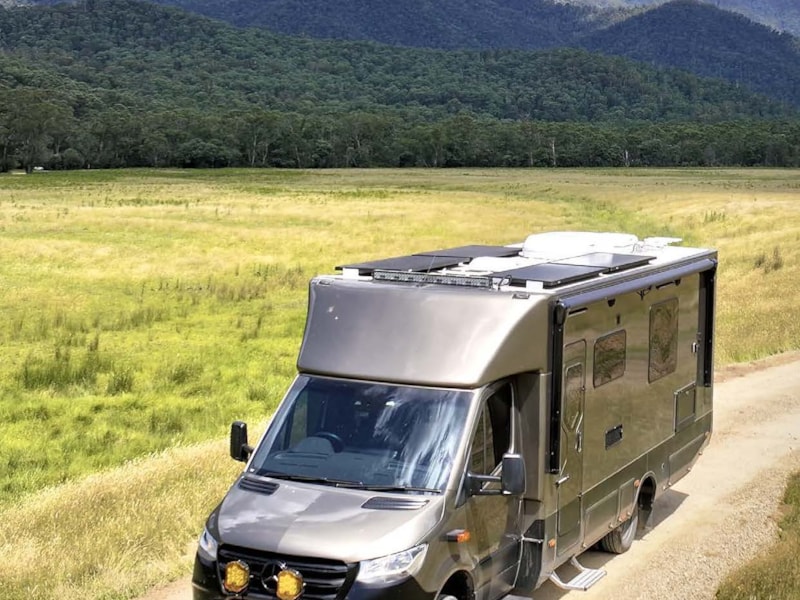
They started out in a big van, thinking they needed heaps of room and all the bells and whistles, but have downsized already and are planning on doing that again.
While they have a lot of tech and specs in their van to allow them for work and go off grid for long periods of time, they know that’s not for everyone and stressed that not everyone needs that to have a good time.
“But honestly we’ve met so many people that have just bit the bullet and done it in a tiny van or pop top and chances are everyone’s living the same and are happy living life on the road.”
So, just start with what you’ve got. You’ll figure out your ideal setup as you go.
4. Be flexible and don’t overplan
Research is helpful, but don’t lock in every detail. Some of the best experiences come from going with the flow.
Head in a general direction, take recommendations with a grain of salt and make your own call on what’s worth seeing.
Areti stressed trusting your own instincts.
She said there were plenty of times other travellers warned them off places, calling them “dodgy.” But when they arrived, it often didn’t match the reputation.
They’d check it out for themselves, decide it felt fine and stay. And if it didn’t? They’d simply move on.
Had they taken every warning at face value, they said, they would’ve skipped some places they ended up really enjoying.
The couple also warned against trying to cram everything into one stop, saying it quickly led to burnout. Instead of enjoying a place, you end up exhausted and running on no sleep.
Areti said a big part of that came down to “decision fatigue”.
On the road, you’re constantly thinking - where to go next, what to do, how long to stay, where to set up. It’s a lot more mentally demanding than people expect.

5. Budget for more and live with less
Troy and Areti are blunt about budgets on the road: “It’ll cost more than you think, no matter what.”
Once you’re on the road, it’s the everyday stuff that creeps up – fuel, food, park fees and all the “we’re here anyway” experiences.
And in their experience, whatever number you start with doesn’t really stick.
“If you want to spend $200, you’ll spend more… if you want to spend $1000, you’ll spend more,” Troy said.
It’s less about sticking to a perfect budget and more about expecting the spend to flex as the trip unfolds.
6. You need less than you own
Troy and Areti warned about one sneaky expense a lot of travellers don’t think twice about – storage.
They said paying for a storage unit to hold onto all your stuff could quietly drain your budget, often for things you’ll never use again. Almost everyone they met on the road who had one had been paying for years, only to eventually get rid of it anyway.
Instead, the couple took a much simpler approach, cutting their belongings down to just a handful of boxes spread between families.
But even that felt excessive.
After long stretches away, they’d come back, go through their things and end up getting rid of even more, questioning why they kept it in the first place.
Areti said if they decided they ever did want to go home, they’d probably want different things. That might mean a different house and different furniture.
Their advice: unless you’re only travelling short-term, be ruthless. The less you hold onto, the less you’re paying for and the less you’ll realise you actually need.
7. You don’t have to get it right the first time
The Big Lap isn’t a one-shot, all-or-nothing experience.
When the couple first embarked on their new lifestyle, they were pretty relaxed about the idea that things might not go to plan and that was okay.
If a place doesn’t live up to expectations, you move on. If you miss something, you can come back. If the whole trip doesn’t work the way you imagined?
You reset.
Areti pointed out you can always head home, regroup and hit the road again – there’s no rule saying you have to nail the “perfect” lap in one go.
It takes the pressure right off. Instead of trying to do everything perfectly, you can just roll with it - and come back to anything you missed later.