How to connect to the Internet off-grid
You may want Internet access while you travel, or you may need it. If you don’t, well, you’re one of an increasingly small number of people because life is pretty much digital and there’s no going back.
I will define ‘Internet access’ as the provision of a small WiFi network for your laptop, phone and whatever other devices you might have such as Chromecasts. There’s a number of different solutions which are all complementary, so let’s run through them:
Personal phone hotspot
The easy way to provide Internet access is to simply enable your phone’s WiFi hotspot feature – and there you go, instant WiFi. That works beautifully if you’re in a café and want Internet access for your laptop, and that’s exactly what I’m doing right now. But that solution has a few drawbacks. First, your phone is not designed to support lots of devices like multiple laptops, tablets and so on. The range of the WiFi isn’t very big, WiFi hotspots drain your phone’s battery, and if you walk away from your devices either you leave your phone or you take the WiFi with you. The WiFi speed is also typically slower than a dedicated unit, particularly when the number of devices increases. The phone hotspot is really designed for and best used as a personal WiFi for a very small number of devices close to the phone. Also, you need phone reception for it to work at all.
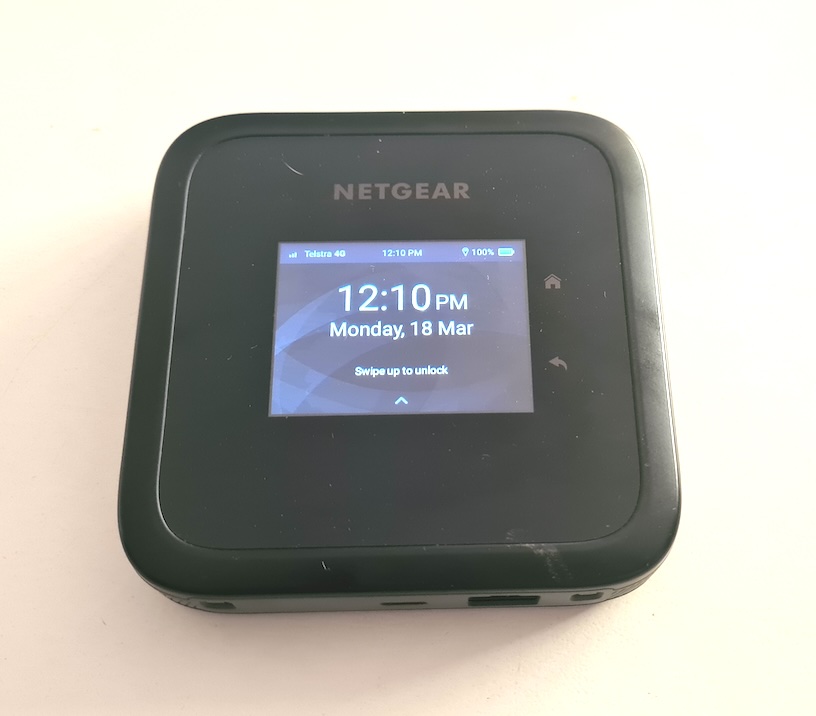
Image: Netgear Hotspot
Access point hotspot
This is like your phone hotspot, but it’s a dedicated device specifically designed to be a WiFi access point. Mine is a Netgear Nighthawk M6, and I find the battery will last pretty-much all day. The M6 can also easily handle multiple devices. As a dedicated device, it’s a better hotspot than my phone. Even better, in low-reception areas I can put it on the roof of my RV or even connect an external antenna to it and get reception that my phone can’t.
However, it still needs phone reception. The disadvantages? You need to buy it, and that could be a few hundred dollars. Then you need a plan. Telcos are always changing their plans, but you may need to pay another $10 to $30 a month, and data-bundle if you can so your data allowance is shared across the access point and your phones. My advice is to talk to your telco and see what sort of deal you can get.
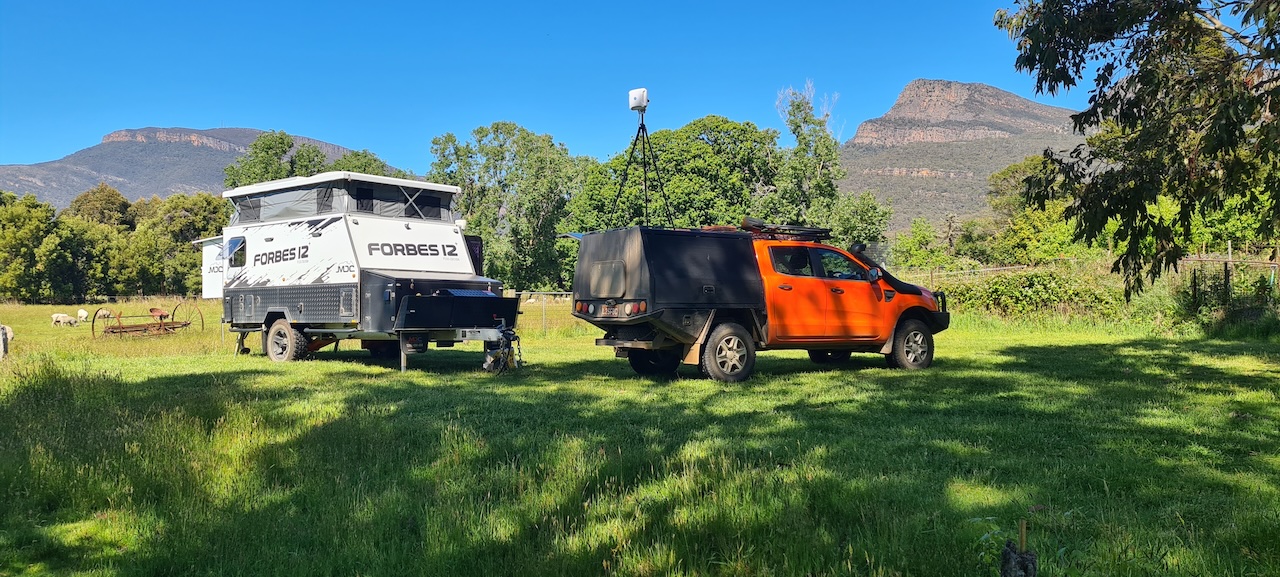
Image: Remote antennae
Spare phone hotspot
What about getting a data SIM and throwing it in an old phone, then using that as a hotspot? Yes, that works well; but won’t be as effective as a dedicated access point for battery life, range, or number of devices. And again, it requires phone reception.
USB data modem for your laptop
You can access the Internet by plugging the USB modem into your laptop, activating a plan, and connecting to the Internet. The advantage is that there’s no additional device to power, charge or lose. The disadvantage is that Internet access is only provided for the laptop, and the USB sticking out is something to break. Personally, I much prefer WiFi hotspots of some description.
Telstra or Optus?
I’ve received wisdom that says Telstra is ahead for coverage, and I believe that to be true; but there are areas where Optus has coverage and Telstra does not. The solution? A phone on each, or dual SIM. If I had to pick one, I’d still choose Telstra.
Satphone data
Okay, let’s move off the phone network now and look at satphone data products as Internet access for your usual net needs as opposed to emergency messaging. And … that’s done. They are all hopelessly slow and honestly not worth a second look because there’s something much, much better …
Starlink
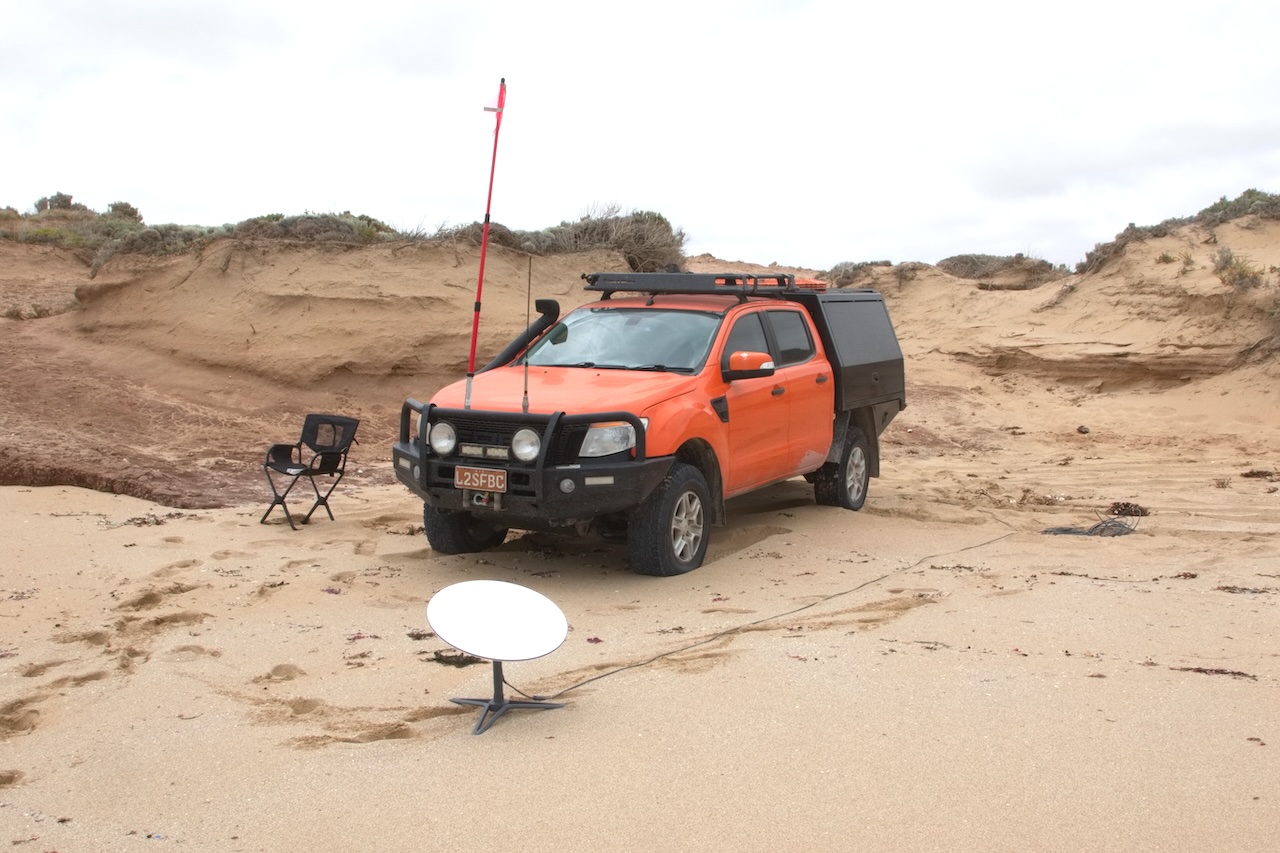
This is the game changer. Super high speed Internet access via satellite, completely independent of any phone system. Set up your dish, get the Internet and done. It’s revolutionised how people travel and work. But there are disadvantages. First, it’s expensive. Around $600 to buy the kit and $139+ per month for access, and you may want some accessories too. That’s actually amazing value when you consider how incredible it is; but then again, a Ferrari 588 might be amazing value but it’s also expensive! There are also periodic deals, so your start-up cost may be less.
Starlink is also bulky and fragile, so you need somewhere to store it. Those towing or travelling in RVs should have space, those people in 4WDs and tents will find it harder. Starlink also requires a pure-sine inverter and will steadily drain a battery at 50W-70W. However, there are now 12V kits available for it (for around $300) which eliminates the need for an inverter and therefore also reduces power draw. You may also need a mount, for example an extendable pole. Starlink does work in motion provided you have the right plan, but most people are happy with it working only when stopped. The dish also needs access to the sky, but I’ve driven my 4WD into a valley and found it still works well and it’s getting progressively better as Elon throws even more satellites into orbit.
Emergency communications
Now at this point I need to stress that, wonderful though Starlink is, it is not a primary emergency communications system because it is too big, fragile, power-hungry and hard to use compared to a small, robust, and long-battery-life satphone or distress beacon. If you need help and Starlink is working, great; but don’t ditch your emergency comms just yet.
The future of the internet off-grid
Starlink is rolling out network upgrades over the next two years which will allow your new mobile phone to operate as a satphone. This is (and I use the term again) a game changer – as it will destroy the satphone market as we know it. That’ll be happening in the next year or two. But for the moment, your mobile phone is not a satphone. The closest we’ve got to that is Apple’s emergency service for iPhone 14s and later (but that’s not full satphone functionality).
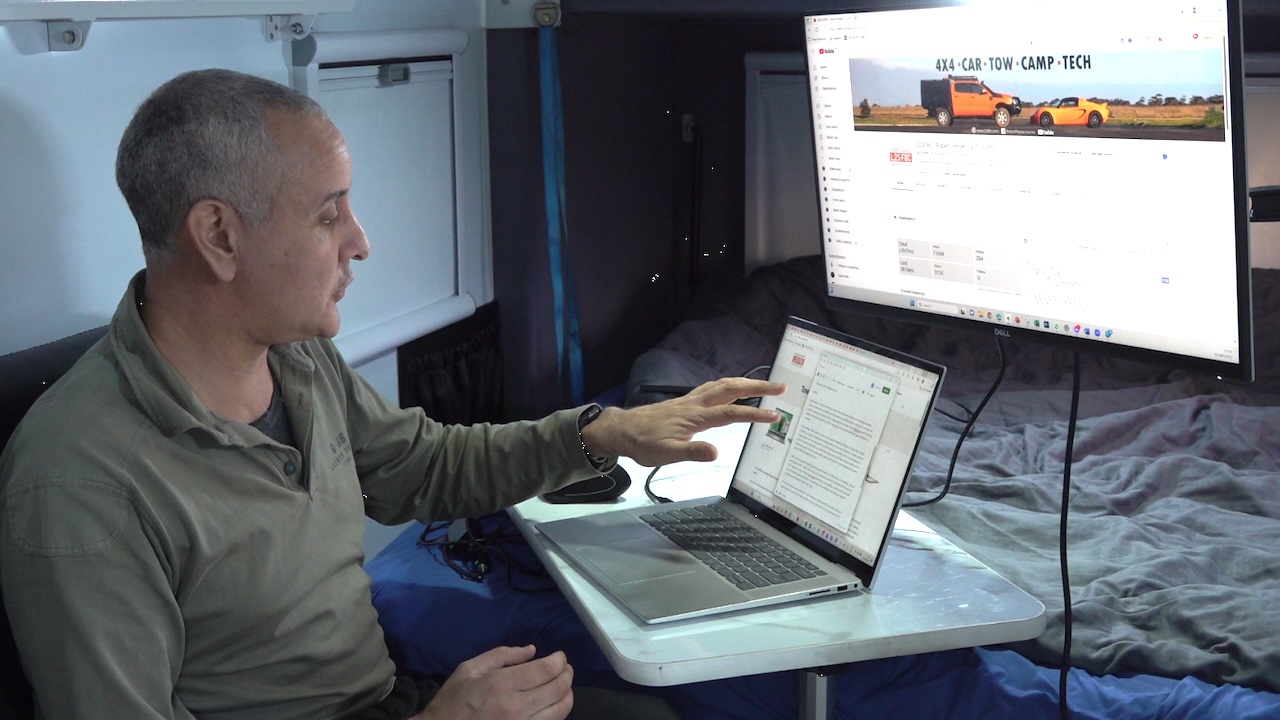
Image: Laptop with USB-C
Powering your laptop
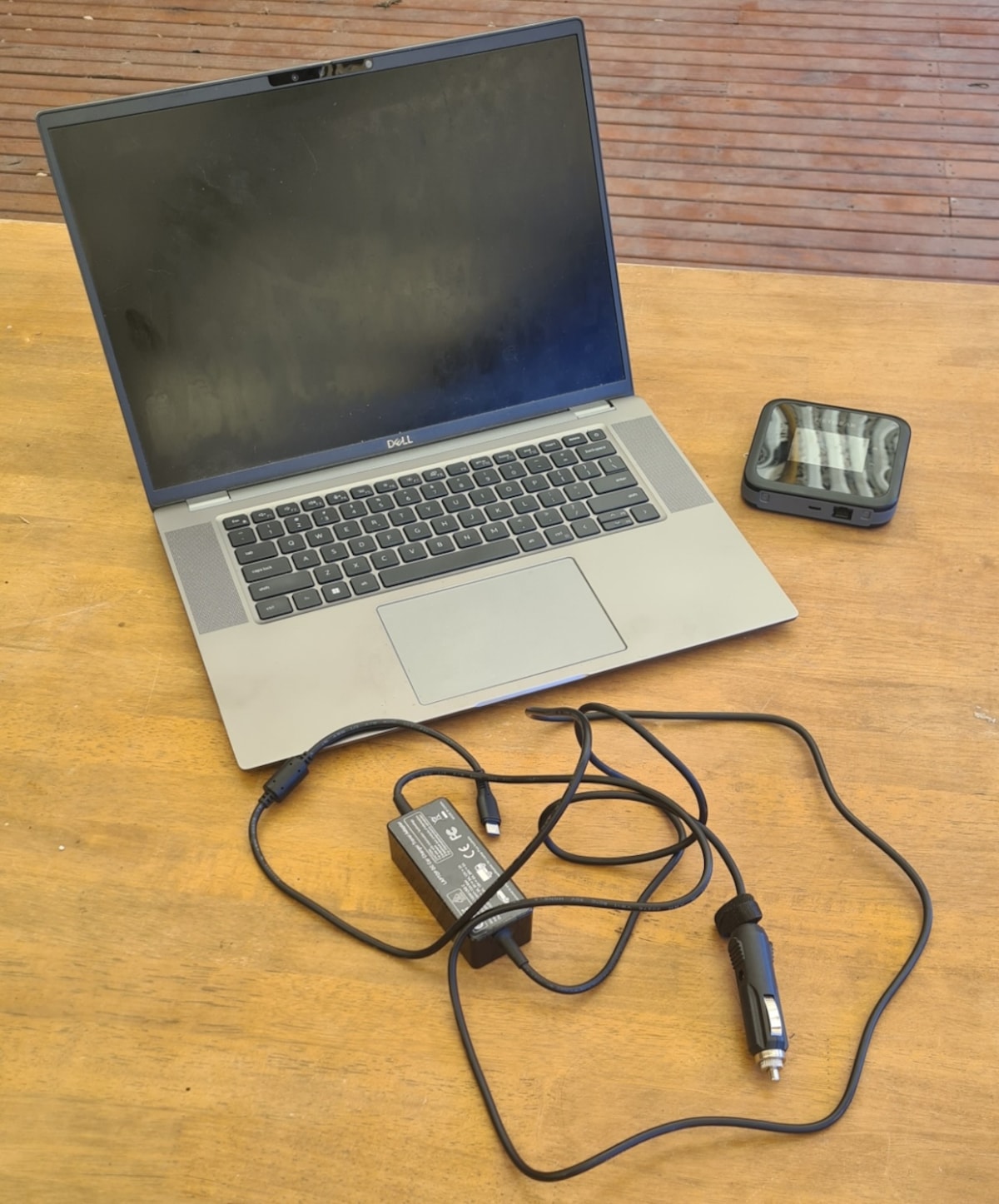
The laptop is a big part of remote working, and a huge tip here is to get one with a USB-C power input and run it directly off your 12V system rather than through an inverter. Why? Because the inverter saps power … so the less work it does, the better. Also, the less work it does, the smaller it can be. It also makes it easy to charge in your car, too. There are many aftermarket 12V USB-C power adaptors for laptops – so grab one – and the good news is that it’ll also fast-charge your phone and lots of other devices. I’m trying to standardise everything I own on USB-C.
You might also consider battery management for your laptop. It is better to run it down and charge it up than to keep it at 100%; so in the evening consider unplugging, let the laptop battery discharge whilst not draining your vehicle’s battery, and (next morning) charge again when there’s solar available. Better for the battery, and overall more efficient power use.
Summary
Internet access is getting easier and easier. I remember the days of stopping at small Outback towns and trying to get online at a local library or similar. Those days of Internet cafes are gone, and at some point everything will be connected all the time. But until then, you’ll need to put in some work for cost-effective Internet access.