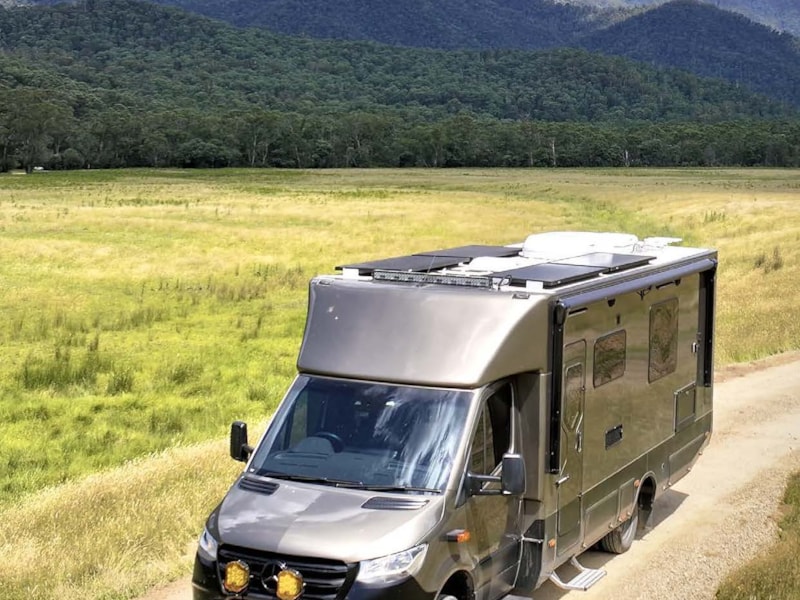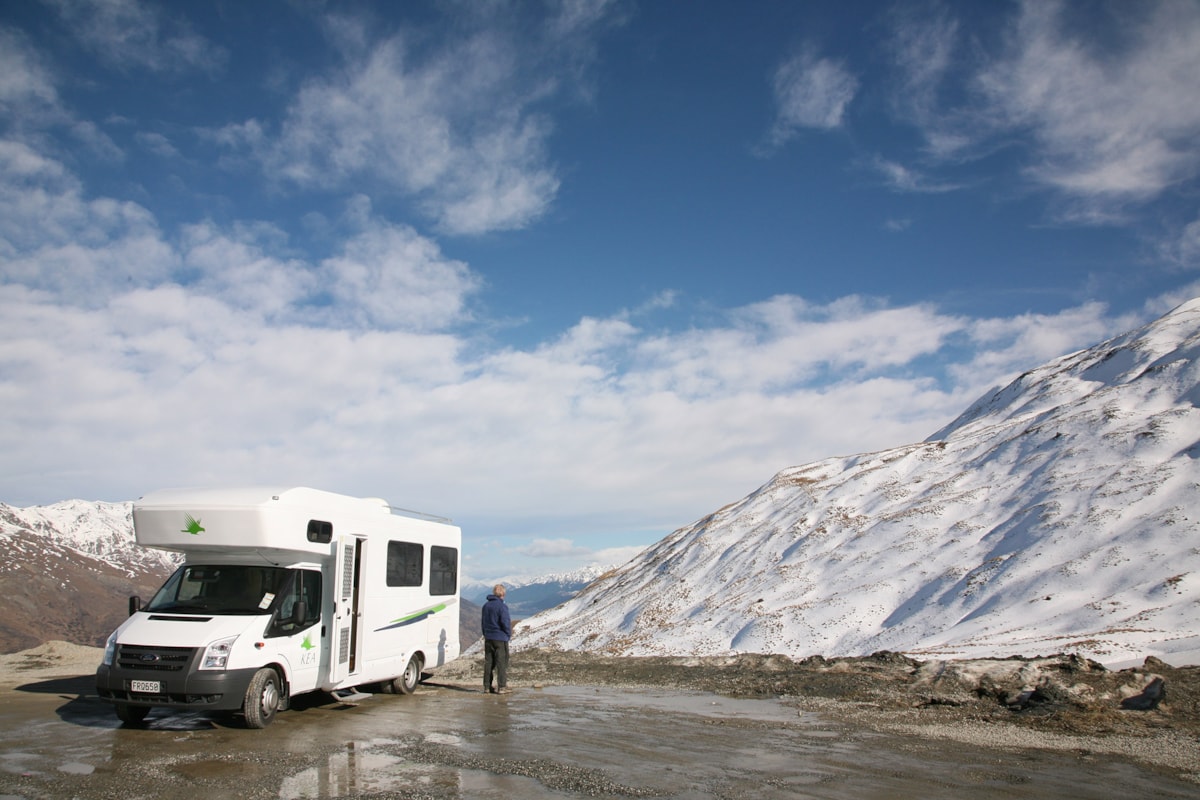
Get ready to explore overseas by motorhome with this guide.
Anyone who enjoys RV travel in Australia knows it’s not really practical to take your motorhome overseas. The alternative is to fly and rent. There are various countries where this is possible, but the most popular destinations for Australians are Aotearoa New Zealand, Canada, the USA, the UK and Europe.
As with any travel, particularly overseas, it’s important to do your research. Like Australia, there are numerous campervan and motorhome rental companies abroad – some big, some small, and there are pros and cons to both. Larger operators have bigger fleets and can provide greater convenience at major airports. However, smaller companies can offer a more personal service, local advantages and maybe better pricing. Many companies charge one-way fees, but it’s prudent to check whether the hire cost varies by direction.
For example, Christchurch to Auckland can be cheaper than the other way around. As with any travel, booking off-season or during shoulder season will save money. Even if you’re using a travel agent, understanding what’s included in the hire rate is important. In some cases, the daily rate looks good, but there may be extra charges for items such as linen, towels and kitchen utensils. There may also be extra mileage charges, so it’s helpful to calculate your expected travel distances.
Insurance excess also requires careful understanding. Paying multiple (in some cases) excess waivers can add a considerable amount to the daily rental cost. Carefully weigh up the options, preferably before check-in. Travel insurance will often cover the vehicle excess in the event of an accident, thereby saving you money. But it’s important to check the fine print.

Considerations
If planning to travel off main roads, check the rental company’s travel restrictions first. For instance, in Iceland last year we were advised that insurance cover didn't include gravel roads. These are mostly in the country’s interior, so we really weren’t affected. However, a couple of years earlier during a winter skiing holiday in New Zealand, we belatedly discovered that our vehicle insurance did not cover some ski-resort roads. It wasn't clear-cut, so, if in doubt, ask and try to get email confirmation outlining exactly what is and isn’t covered.
Before your trip, find out if an international driver’s licence is required in your destination country. This is not always necessary, but I have been asked to produce one twice. You can apply for an International Driving Permit online through the Australian Automobile Association, or in person at state-based motoring bodies such as the NRMA and RACV.
Wherever you are driving, especially in big cities, be aware that some cities (particularly in Europe) have restrictions, such as low-emission zones or limits on vehicle sizes. It might sound overly cautious, but if you’re planning to visit large, unfamiliar cities, it’s often less stressful to find campgrounds on the outskirts and use public transport to get around. It’s a good idea to ask about any unusual local rules, for instance many countries require motorists to always drive with headlights on. Toll road fees can be costly; it is always useful to know how much you will be charged and how fees are paid.
Unfortunately for Australians, left-hand-drive countries are far more common than right-hand-drive destinations. In the latter case, the obvious exceptions are New Zealand, Britain and Ireland. Almost everywhere else is left-hand drive. Don’t be phased by this. It takes a few days to adjust, but GPS navigation reduces some of the stress. If you are really nervous about driving a large motorhome (particularly in North America), consider hiring a car for a couple of days before a long trip to get used to driving on the ‘wrong side of the road’.
In New Zealand, Britain and Ireland, it’s not uncommon to come across right-hand-drive motorhomes with the habitation door also on the right. German manufacturers, in particular, don't build mirrored layouts for right-hand-drive vehicles. It's not as bad as it might sound, though. In many cases, you end up with a decent motorhome.

New Zealand
Undoubtedly, Aotearoa New Zealand is a very easy RV-friendly destination for Australians (just three hours across the ditch). Rental brands like Maui, Britz, Mighty, Apollo and Indie will be familiar to many Australian road trippers, as will the motorhome models and layouts. However, if you feel like something more exotic, operators such as Wilderness and McRent have European rental fleets.
Travel distances in NZ are much shorter than in Australia, so you can expect driving times to also be shorter. Caravan parks are generally good and range from resort-style to rustic. All will have a camp kitchen of some sort, and many are quite well equipped. As in Australia, free camping is possible in many places, but in areas like Wanaka/Queenstown, it's only allowed far out of town.
The New Zealand Motor Caravan Association (NZMCA) has a reciprocal arrangement with CMCA. There’s no joining fee, and by becoming a club member for a year, you can use NZMCA Park Over Properties (POP), which are usually on private land.
Europe
Europe (including Britain, Ireland, continental Europe and Scandinavia) covers a wide spectrum. For Australians, the landscapes can look very crowded. Still, there are plenty of open spaces and, unlike Australia, you don't have to travel far to experience changing scenery. Roads in Europe can be narrower than Australians are used to, and it does take a little time to adjust. That said, rental motorhomes are generally narrower for this reason.
For finding campsites, apps like park4night are helpful. Free camping or ‘wild camping’, as it’s better known, varies from country to country. For instance, in Iceland and Denmark, wild camping is generally not allowed, while it is permitted in Germany and Britain. In the latter case, free camping is allowed at some pubs and farms and even in some supermarket carparks. The best advice is to check the local regulations and keep a low profile by parking rather than ‘camping’.
Formal campsites are often just a strip of grass with an electric pedestal. Like Australia, black water drains are rare; you rely on your tanks and dump stations. Most campsites will have a water filling station, grey-water dump site and/or place to empty your toilet cassette.

North America
Both the USA and Canada are great for motorhome touring. Rental operators like Road Bear RV, El Monte RV and CanaDream are well-known companies. Just about everything is bigger than Australians are used to – motorhomes, travel trailers, tow vehicles, RV parks, road widths, supermarkets and power cords. Unlike many countries where motorhomes have economical Euro or Japanese turbo diesels, US and Canadian motorhomes are often built on a Ford E Series chassis with a big petrol engine – think something like 6.8 or 7.3 litre. Keep this in mind when calculating fuel costs and travelling distances.
Many RV parks offer a ‘full hook’, that is power, fresh water and drain hoses for black and grey water. US-built rental motorhomes tend to have black tanks rather than cassette tanks for the toilet. Electrical leads are much thicker than in most other countries because the domestic voltage is 110V. That effectively doubles the cable diameter, and the 35A and 50A plugs are quite large.
Unless you have a good reason, it’s best to avoid the stress of big-city driving. Free camping, or ‘boondocking’ as it’s known in the US, is possible, but it varies from state to state. National and state parks are frequently good places to stay, and some Walmart stores offer overnight parking. Websites like Camper Champ and HipCamp are good resources for finding places to stay.
Go For It
Like any trip, you will benefit from doing your research. In Australia, we are used to travelling long distances in underpopulated areas. When abroad, it’s a mistake to overestimate how far you will travel each day, even in North America where there’s much to see and do between destinations. Renting a motorhome is a great way to travel overseas and there are numerous companies to help you complete your dream journey.