

Heading into the cold? A little preparation goes a long way to keeping your winter RV adventures safe, warm and comfortable.
We have enjoyed many caravanning trips by the seaside: brushing off sandy feet before stepping into the van, barbecues under the awning, balmy evenings playing UNO outside, and sticky nights winding out the windows to capture the breeze. When my husband suggested we take our caravan to the Snowy Mountains for our annual family snow trip, I scoffed at his silly suggestion.
Despite my apprehension, we did it, we survived it and we loved it – and have since enjoyed many mid-winter trips in our caravan. It’s an experience filled with alpine adventures and the promise of bluebird days, crisp evenings stargazing around a campfire, hot chocolates and cosy caravan nights – not to mention fewer crowds and cheaper rates.
But throwing a few clothes in a bag and packing the fridge with wine, cheese and bickies will not cut it (though it will help). Here are some tips to help you prepare your RV, and yourselves, for the big chill – and equally big adventures.
PREPARING YOUR RV
Make sure your tyres are in good condition. Legal tread depth is 1.5 millimetres but in cold and icy conditions, at least 3 millimetres is recommended. Consider winter tyres, which are softer and have specialised tread patterns to maintain better grip and reduce the risk of hydroplaning.
You’ll want to avoid cold drafts and snow or rain seeping in, so check the seals on all your windows and doors are working. Add a draft stopper at the door for extra protection.
In extremely cold climates overseas, people ‘winterise’ their RV by purging the water pipes and running non-toxic RV-safe antifreeze through the plumbing. But this isn’t helpful if you actually want to use the water in your RV. If you’re going somewhere really cold (-7°C and below) and you’re worried about bursting pipes, you can use antifreeze to protect your plumbing and instead store water in a portable jerry can inside.

HEATING SOLUTIONS
Most modern caravans and motorhomes have reverse-cycle air-conditioners that provide both heating and cooling. Before you leave, check your heater is working properly.
It’s also recommended you have a second heating solution as a back-up, especially if you need to unexpectedly stop somewhere off grid. Diesel heaters come as standard in some RVs, otherwise you can install one aftermarket. They can be noisy, but they’re powerful and worth it in freezing temperatures. Alternatively, gas heaters like those made by Truma are quieter, can run off the gas line and are fuel efficient. They are quick to warm up the RV, too.
A portable heater is handy for extra comfort, particularly when a split system takes a while to heat up the RV. We place a fan heater just outside the bathroom for extra warmth when getting dressed after a shower.
There’s also nothing worse than stepping from a hot shower (or your cosy bed) onto a cold floor. Put a mat or rug on the floor of your RV to add warmth underfoot and insulation to the floors. Double up on your insulation with thermal coverings on the windows, from which a huge percentage of heat escapes. They can be easily installed and removed with magnets or suction cups.
PACKING FOR WARMTH
Thermals, beanies and gloves come in handy on any RV trip in winter (even in the outback in autumn or spring – speaking from experience). Add waterproof shoes and jackets for those times you’re setting up and packing down in cold temperatures, especially when it could be snowing or sleeting.
If you’re anything like me and have cold hands in summer, hand warmers are a must. You can purchase disposable or reusable versions (the latter is much kinder to the environment). They stay warm for hours and can be placed in your pockets, gloves or even your shoes.
Always, always, always pack extra blankets and make the beds with thick, warm bedding. Throw some hot water bottles in for good measure. We forgot a doona on one of our snow trips, and cleared the local Woolies shelves of blankets to compensate. Lesson learned.
When you have the heaters blasting in your rig, condensation can occur on the ceiling and walls overnight. Having a window cracked open can help but near-zero temperatures can make this uncomfortable (especially for the young folk sleeping on the top bunk). In this case, a small dehumidifier is a better option.
Sitting around a campfire on a cold night is what all RV dreams are made of. Consider packing your own fire pit and marshmallows, be sure to check national park regulations or holiday park rules before starting a campfire, and extinguish the fire completely when finished.
A shovel is useful in case of a heavy snow dump overnight. On that note, don’t leave any shoes or clothing outside or they will be soggy or icy in the morning. I woke to find my ski poles were frozen to the outdoor table after it dropped to -10°C overnight.

ROAD SAFETY
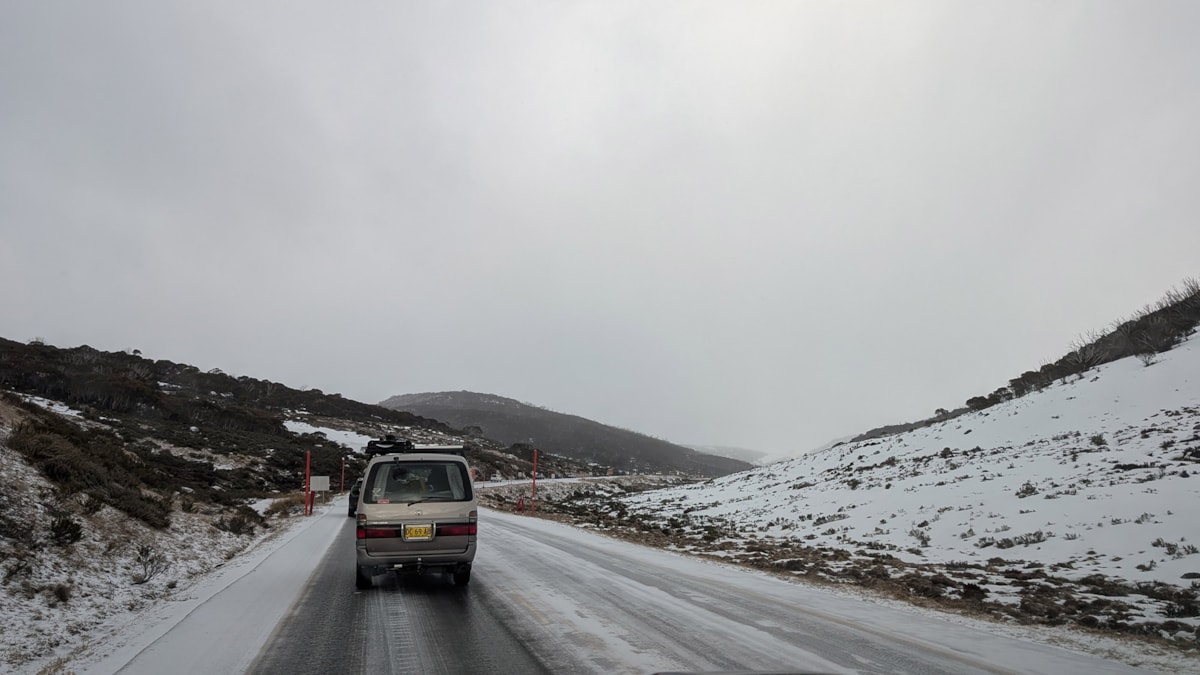
When towing a caravan, it’s always recommended that you travel below the speed limit. But when it’s raining, sleeting or snowing, you should drive even slower. Double your distance between the cars in front of you, avoid sharp movements, turn on your headlights and pull over when adverse weather becomes unsafe.
Also check if the roads are suitable for caravans or large motorhomes. Some alpine roads are closed to towed trailers during winter, in which case you will need to base yourself off-mountain.
If you are driving a motorhome in the snow, ensure you pack snow chains. These are mandatory in most alpine areas during the snow season. Drivers will be directed by traffic signs, police or national park/resort staff, and fines apply if you do not carry chains or fit them when directed.
Black ice is hard to see (the road looks smooth and shiny, like it has a glaze) but if you hit it, you will feel your vehicle slide. If this happens, ease off the accelerator, don’t brake and calmly steer to regain control.
Avoid driving at dawn and dusk when wildlife is most active. Kangaroos and wallabies jump out towards headlights, so slow down if you spot any ahead.
OTHER TIPS
Pick your site wisely. A site that gets plenty of sun during the day will make the world of difference, helping to maintain a warm and dry RV.
If you’re planning on hitting the slopes, you’ll need somewhere to dry your snow gear overnight. Many holiday parks in alpine areas will have a drying room where you can leave your gear. Otherwise, you’ll need to lay out your thermals and outerwear inside your caravan to dry – consider packing a retractable clothesline for this or you’ll be buried in snow gear. When you’re not using your gear, large tubs are handy for storing snow layers and equipment outside or in your car boot.
Pack right, be prepared, and your winter wanderings will be just as enjoyable as your summer sojourn.


