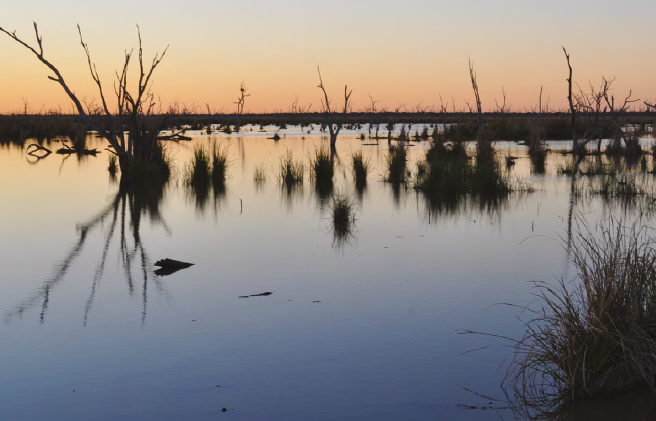
Gwydir holds one of the most significant inland wetlands systems in New South Wales. You now have the chance to visit and explore
Since records began in the 1920s at least 75 waterbird species (50 breeding) have been recorded in the Gwydir Wetlands. Colonially-nesting species, including straw-necked ibis, intermediate egrets, glossy ibis and nankeen night-herons have nested in large colonies when heavy upstream rainfall and floodwaters cause floods to extend across the wide Gwydir River floodplain.
At one time, this wetland extended over 100,000 hectares, west from Moree to the Barwon-Darling River in the far west. Today, it exists as a mere remnant, being only 15 percent of its former extent. In a move to halt continual wetlands loss, four local landowners listed portions of their wetlands under the International Ramsar Wetlands Agreement in 1998. At the time, the listed area – 823Ha at 29°18’S 149°14’E – was entirely privately-owned. Today, these wetlands are preserved as the Gwydir Wetlands State Conservation Area (SCA).
The public is now invited to visit the Waterbird Lagoon, north of Watercourse Road in the SCA. The Lagoon will be open this year during April and May. A second open period may be run in September and October, subject to water conditions. Access is as a day visitor only. No overnight camping is permitted on the SCA, however, a local property owner has facilities close by (see Journey Planner, below).
A simple bird hide is located at the Waterbird Lagoon, where visitors can observe the wetlands birdlife and possibly the threatened, endangered and migratory species that call these wetlands home. If you are really serious you can explore further afield but be prepared for wet conditions. The shallow lagoon varies in depth, but can reach up to 90cm. A lightweight canoe is a great way to get around. The National Parks and Wildlife Service provides a toilet and shaded seating area for your comfort. Don’t forget to pack your lifevest and be sunsafe at all times.
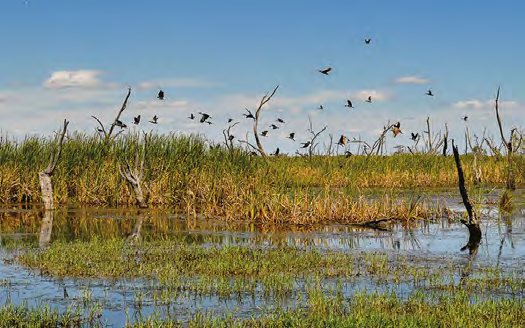
Flocks of waterbirds
The owners of the nearby private property Boyanga South cater for visitors at all times of the year and are prepared to take interested parties to their nearby lagoons and wetlands upon request. A map is available from local visitors information centres and shows the route from Moree and distances to the reserve and relevant sites. This trip is recommended in dry weather only.
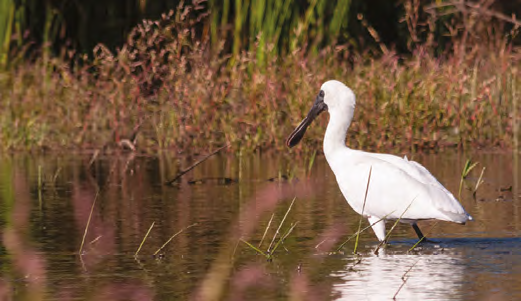
Young feeding spoonbill
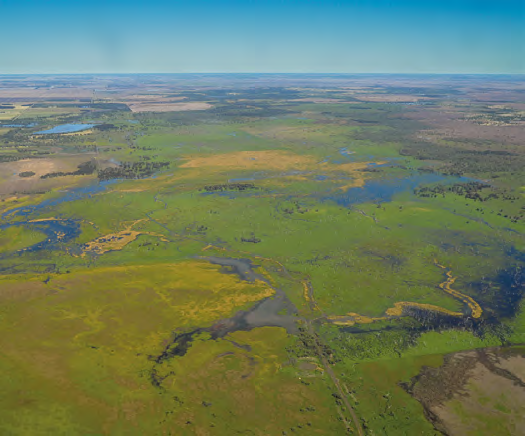
Gwydir Wetlands aerial view
SEE MORE
An internet webcam has been installed at the Waterbird Lagoon.
Pictures are uploaded every 10 minutes and viewers can scroll through gallery pages via time and date.
Go to: www.rmcam.com.au
Username: Gwydir Waterbirds – Password: 1234