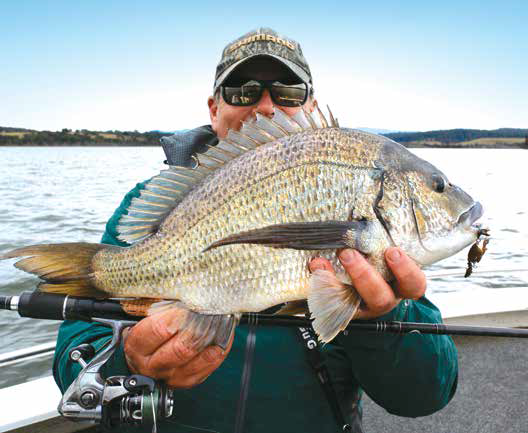
It’s one of fishing’s most commonly asked questions – what’s best: real natural bait or man-made artificial lures? In reality, there’s no one-size-fits-all answer to this timeless quandary. Each approach to catching fish has its particular strengths and weaknesses, and each is better suited to certain conditions, environments, target species, and levels of competence on the part of the angler. With that in mind, let’s have a look at the pluses and minuses of the real thing versus clever counterfeits.
Based on the evidence provided by angling magazines, books, videos, and TV fishing shows, you could be forgiven for assuming that lure fishing is the dominant style of recreational angling undertaken right around Australia.
Without doubt, lure fishing receives the lion’s share of angling media coverage. However, this perception is far removed from reality. Day in and day out, many more Aussie fishers use natural baits than artificial lures. The angling media’s heavy bias toward lure and fly fishing is a clear reflection of the personal preferences of most writers and presenters – myself included – not to mention a tacit acknowledgement of the fact that lure and fly fishing generate far more in the way of advertising revenue than ‘humble’ bait fishing.
But does that mean that lures are inherently better than bait?

Modern lures come in many different styles
THE GETTING OF WISDOM
There’s also a widely held belief that the getting of fishing wisdom follows an upward evolutionary trajectory, one that sees most beginners start out with bait, only to move on to lures, and perhaps even flies later in their angling careers, as their skill levels and expectations grow.
Implicit in this picture is an almost inevitable value judgment concerning the relative worth or merit of each fishing style. Under angling’s informal but historically entrenched class system, fly fishing is typically seen as being the absolute pinnacle of the sport and therefore somewhat superior to lure fishing, with bait fishing languishing at the bottom of the pile. In Great Britain, this angling snobbery has been further reinforced over the centuries via the use of value-laden descriptions such as ‘game’ and ‘coarse’ fishing to describe the different disciplines. For better or worse we’ve inherited a fair chunk of this class structure Down Under.
In reality, there’s nothing to be gained from the imposition of such an archaic class system to the egalitarian world of fishing. Each style of angling has its strengths and weaknesses, and expertise in any particular form requires significant dedication and skill – we should celebrate them all!
LEARNING THE ROPES
There’s no question that the best and most consistently successful anglers are generally those who cut their fishing teeth using natural baits. Bait fishing teaches newbies the absolute basics of the sport – which food items different fish prefer, where they expect to find those food items, and how and when they prey upon them. Whether you remain a dedicated bait fisher for life or go on to try lures or even fly fishing, understanding these absolute fundamental basics of the sport will always stand you in great stead.
Better still, finding, gathering or catching your own bait rather than buying it from a shop magnifies all these important lessons. Bait collecting teaches an angler a great deal about where the food items that fish prey upon live, how they behave, and what they look like. If you ever move on to try lure or fly fishing, these lessons will prove to be invaluable. And even if you don’t, catching your own bait will definitely save you lots of money!
HUNTING V TRAPPING
In many ways, fishing with lures is akin to hunting, while bait fishing is more like trapping. Bait fishers set out their ‘traps’ (baited hooks) and wait for the prey to stumble upon them. By contrast, lure fishers are capable of covering significantly more water in less time, taking the game to the fish rather than waiting for the fish to come to them. Like a hunter using a rifle or a bow, the lure caster or troller actively seeks out prey.
Clearly, these different approaches will have varying levels of appeal for different anglers, and also comparative strengths and weaknesses under changing conditions. There’s really no best method overall, just better choices on the day. Personal preferences must also be factored into your decision - do you want to be a trapper or a hunter?
AND THE WINNER IS…
Personal preference is especially important in recreational angling. We fish as much for pleasure as any other motivation – or we should! For that reason, choosing the method, tackle, and approach you enjoy most is ultimately far more important than how many fish you actually end up catching.
In the final analysis, there is no winner in the ongoing bait versus lures contest. Each approach delivers strengths and weaknesses, and each will dominate under certain conditions or on a particular day. Smart and consistently successful anglers will strive to be adept at both forms of fishing and use them to their advantage.