The Big Lap Has Changed. Here's How
Forget the colour-coded maps and neatly planned clockwise loops.
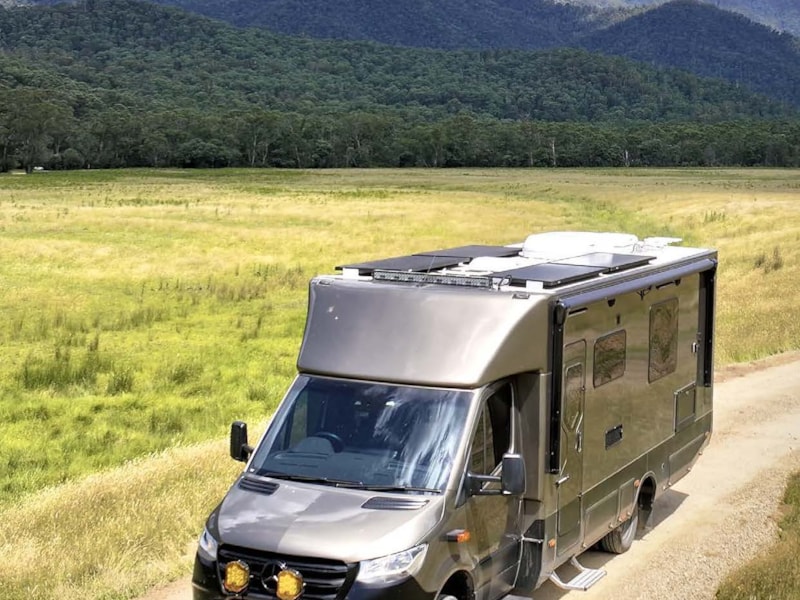
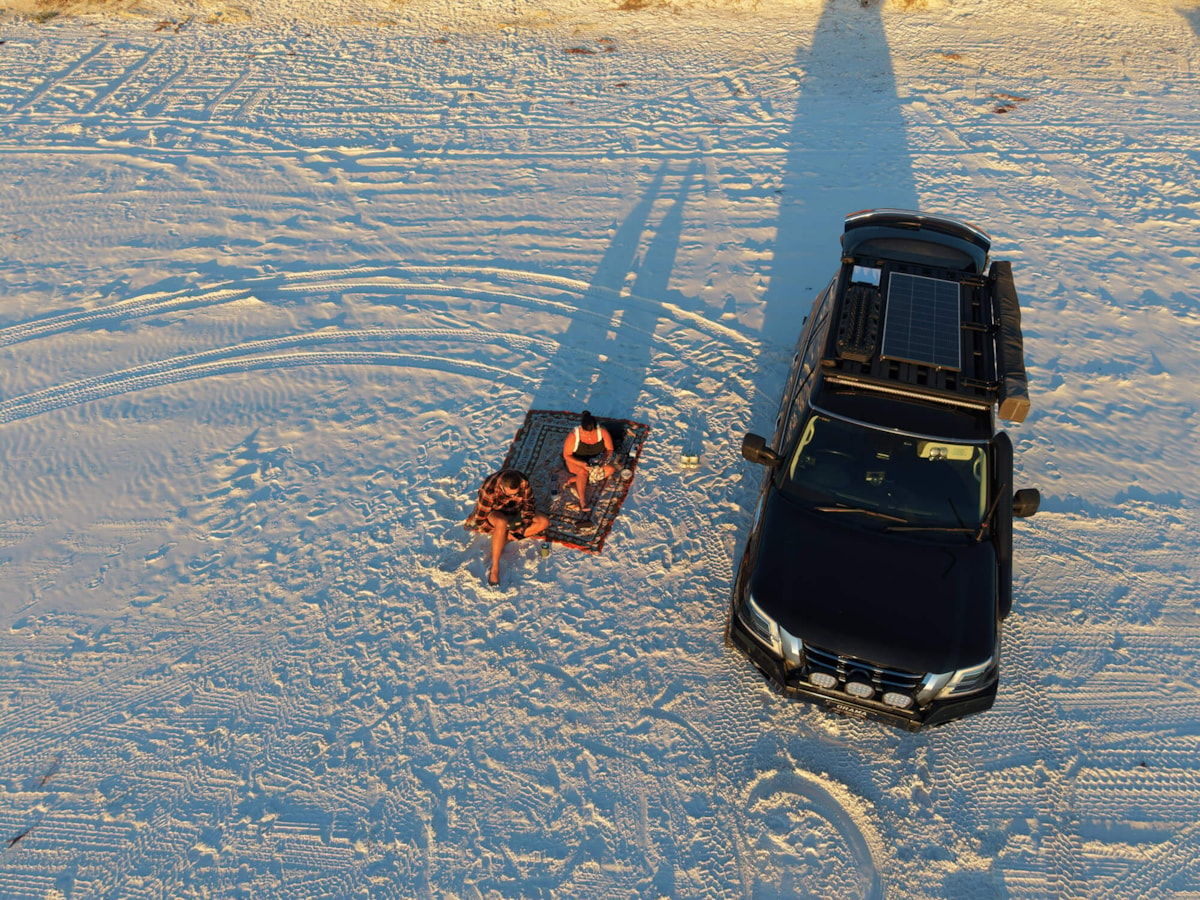
Troy McLachlan and Areti Comino are doing the Big Lap the opposite way – loosely, freely and without much interest in the traditional “must-do” checklist.
“We just go where we want to go,” Areti said simply. “That’s it.”
Why These Two Said Why Not?
The couple’s new lifestyle started two years ago, after a simple question: why not us? They were inspired by the vans they saw parked up at the Esplanade during their morning beach walks.
But this isn’t just a holiday. COVID taught everyone that work from home, well, works, so they decided to run their separate businesses (Troy owns a mortgage business with staff all around the country and overseas and Areti owns gyms) from the road.
Some days are structured and focused. Others are shaped by weather, location, what’s on their schedule, or the simple decision to stay somewhere a bit longer because it’s worth it.
“The hardest part is probably focus,” Areti said, “because you’re sitting there working while everything outside looks way more fun.”

The New Rules of the Road
According to The Big Lap Bible author Rose Foster, one of the biggest shifts in travelling trends is that people aren’t “doing the lap” anymore, they’re living it, just like Troy and Areti.
Ms Foster said that’s why the Big Lap Bible, a comprehensive guidebook and planner for “the greatest road trip of your life”, prioritised different Lapper types in their content.
“While there is still a large percentage of Lappers who plan a six or 12 month lap and go back to their normal life, the trend towards indefinite travel is undeniable,” she said.
“Many people no longer say they’re doing a lap, because they are simply living a nomadic lifestyle without a specific plan to do a ‘complete lap’. Sure, most of them want to see it all, but there is no pressure to do so because they’ll see it when they see it.”
Ms Foster said the days of rushing around the country to tick it off were fading.
“We’re seeing more people plan longer trips, spending weeks in a single region rather than just passing through. They want to actually explore a place properly so they can find the hidden bush camps, connect with local communities, discover things that aren’t on everyone’s Instagram,” she said.
“And often, those who aren’t able to extend their trip, choose to do a smaller loop than feel pressured to see it all.”
After two years, thousands of kilometres and who knows how many places, what stood out to Troy and Areti wasn’t just a single destination, it was how much there was to see.
“You don’t realise how big it is,” Troy said.
They’ve travelled up and down the east coast, have spent time in Darwin, outback Queensland, the South Australian coast and Uluru.
The plan is to stay in the west until October, making the most of the long distances and wide-open stretches that come with travelling WA.
“We just love it over here, there’s so much to see,” Areti said. “I think that’s the thing – you feel like you’re so far away you may as well make the most of it while you’re here.”
But beyond how long they’ve stayed, it’s the constant sense of being surprised by what they find that has defined their time in the west.
“Yeah. And I think just the amount of beautiful locations that are just all around the country, everywhere you go, you sort of have wow moments all the time,” Troy said.
Alongside the landscapes, travelling also reinforced something else for them – the difference in the way people connect outside of city life.
“Probably just the people we’re meeting as well,” Troy said. “Just a lot more genuine. Coming from the Gold Coast, you walk past people in your unit complex and no one would even talk or say hello in the lift.”

It’s regional Australia’s time to shine
Ms Foster said the Big Lap was quietly becoming one of Australia’s most important travel ecosystems and believed long-term domestic caravan travel would become more mainstream in the next decade.
“One of the key things that will happen is how regional towns will become the hero of domestic travel,” she said.
“There’s already a sentiment that avoiding busy tourist hotspots is the best way to go with an increase in Lappers on the road, regional towns will be the star of the show. And with that, these towns may put themselves on the map for domestic travellers with or without a caravan.
“Ultimately, I think the Big Lap will become less of a ‘trip’ and more of a category of travel like backpacking in Europe once was.”
As for those considering whether or not the Lap was for them in 2026, Ms Foster said the biggest barrier to people saying yes to the Big Lap was the mindset that the Big Lap was for other people.
“There’s a socially accepted norm to how life should be done - you go to school, go to work, retire - and many people have a really hard time going against that. They would love to do a Lap but they have to work and climb the corporate ladder, they have to send their kids to school, they have to do life in a certain way,” she said.
“But for most people, it’s when they challenge the norms of what they should do, and tell themselves they can do whatever they want to do, that they realise the Lap is absolutely something they could do.”
She said the other thing was people thought that you need to have everything figured out before you go.
“The truth is, you don’t have to have the perfect setup, an iron-tight itinerary or enough money to do it ‘properly’. In reality, most people figure it out on the road,” she said.
“But the real risk isn’t being unprepared, it’s being so scared that you’re not prepared that you never do your lap.
“Even I, someone who spends all day every day promoting Big Lap as a way of life, have had many of these fears. It was different when we travelled before we had kids but when you have more responsibilities, the ‘what ifs’ really make you pause. However, last year, I took some of my own advice and reminded myself that the only ‘what if’ I really needed to focus on is ‘What if it’s amazing?’. So look out for us on the road in 2027 until who knows when…”
As for Troy and Areti, they too had these fears when they first decided to embark on their journey.
“We were like, let’s just try it. If it doesn’t work, we go home,” Areti said. “Two weeks in, we knew we weren’t stopping.”
Now, more than two years later, they’re still on the road and home is wherever they park it.
Follow Troy and Areti's adventures as The Thrivin' Wanderers on Facebook and Instagram.