How the Bentley Family Turns Australia into a Classroom
For most kids, a school excursion might mean a once-a-term bus trip. For the Bentley children, it’s just life.
One week, they’re standing inside Parliament House learning how laws are made. Next, they’re running through experiments at Questacon or walking the halls of the Australian War Memorial.
And then it’s back to maths workbooks at the kitchen table.
It’s all part of travel schooling and for mum Gayle Bentley, it’s working.
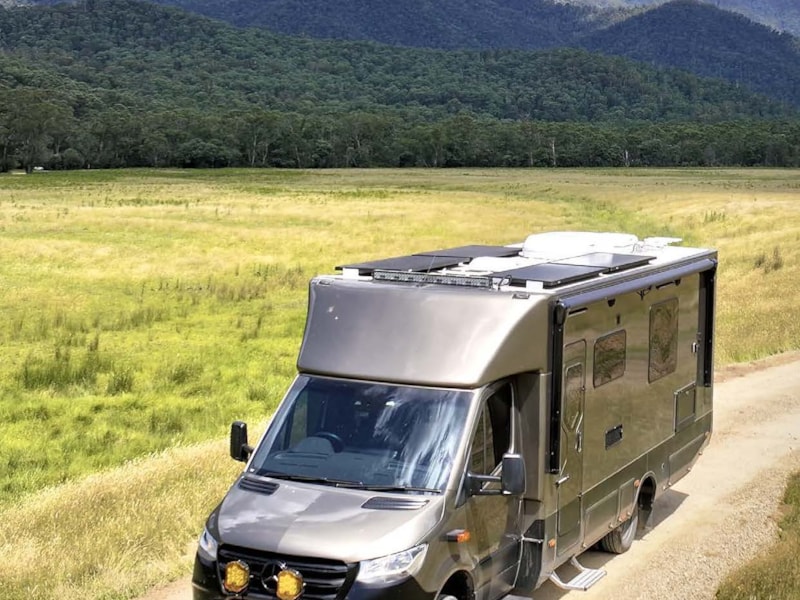
The term refers to home schooling children while living on the road, often in a caravan. The Bentley family, currently at their homebase in Hervey Bay, have spent the last five years doing just that: living on the road in their caravan, travelling and giving their kids an education on the road.
It’s different from distance education, or school of the air as some call it, in which kids are still taught by teachers.
Queensland has seen the sharpest increase in parents deciding to homeschool their children, with a 2025 report noting 11,800 students registered for home education.
From 2021 to 2025, registrations grew by 110.4 per cent for primary year levels and by 167.1 per cent for secondary levels.
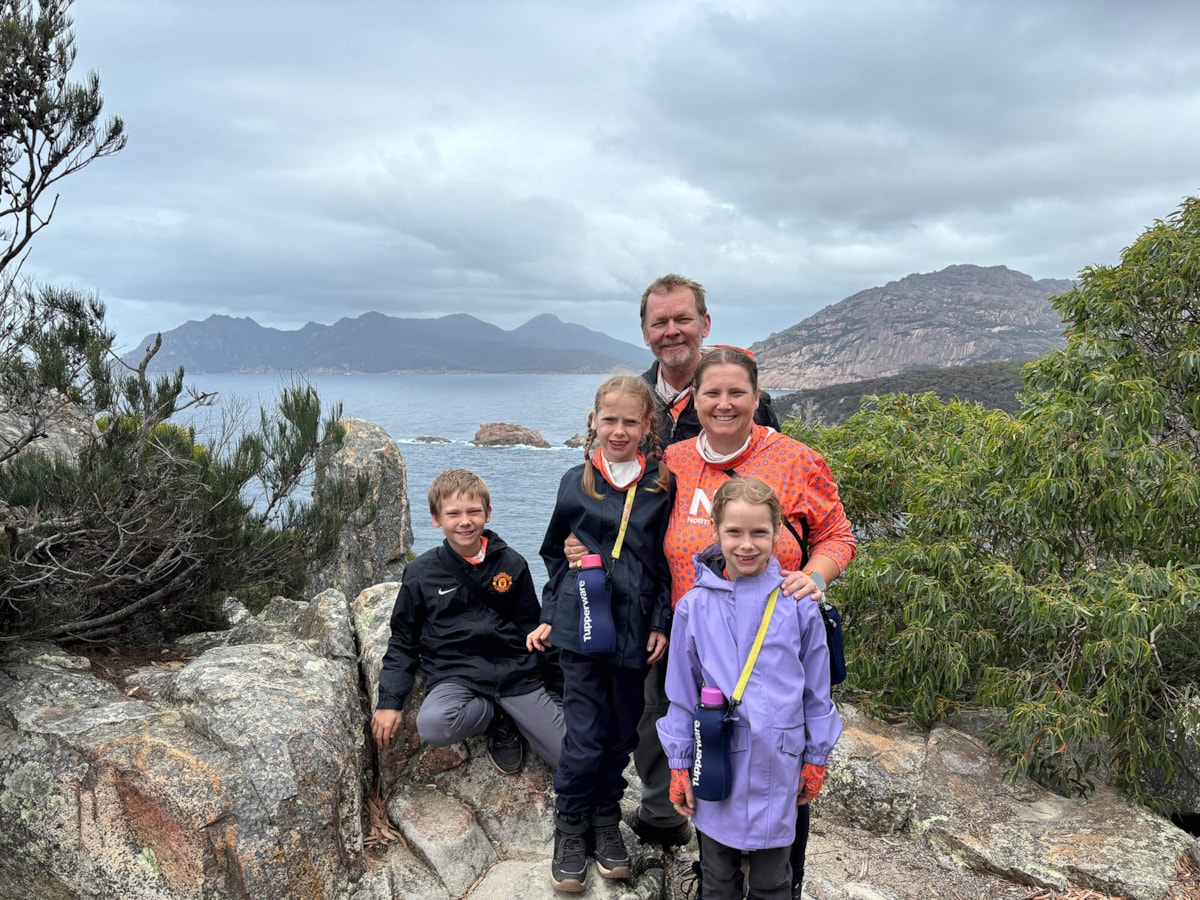
Gayle and her husband Russell originally decided to start home schooling their children – Elliot, 10, and twins Tracey and Megan, 8, about five years ago when Gayle’s health declined.
She has a condition similar to multiple sclerosis that will eventually affect her ability, so the couple decided to buy a caravan and explore the country together to make the most of their time as a family.

From Workbooks to War Memorials
Gayle is registered with Education Queensland, which means she plans, delivers and reports on the children’s education each year. On paper, it covers the same curriculum as any traditional school, however in reality, it looks a bit different.
History isn’t just something they read about, it’s standing inside the Port Arthur Historic Site and trying to grasp what life was like there. Geography isn’t a worksheet, it’s mapping out a park they’ve just explored or figuring out where they are as they move from place to place.
HPE becomes parkruns on Saturday, swimming lessons and gymnastics classes, as well as hiking wherever they travel.
“Canberra blew my mind,” Gayle said.
She said there was so much there for the kids to see and do and it was all hands on learning. The family visited places like Questacon, the Australian War Memorial and Parliament House, gaining the same kinds of hands-on experiences that children at traditional schools get during excursions.
The flexibility meant the kids could lean into whatever grabbed their attention: a passing interest in trains once turned into a deep dive into how they’re built and restored and a walk down the street became a reading exercise.
Then, when they’re back home, or back in the van, they catch up on the more structured book work.
“If you try to do too much all the time, it just doesn’t work, so we balance it,” Gayle said.
For Elliot, Tracey and Megan, that balance seems to be paying off without the pressure of keeping up with a whole class.
Gayle said it was especially important because her children were neurodivergent and a traditional classroom environment just wasn’t the right fit.
“They’d struggle in that setting,” she said. “This way, we can meet them where they’re at.”
But it’s not all about the academics; the Bentley kids also learn important socialisation skills when they regularly meet and talk to people of all ages.
Parkrun has become a bit of a staple. The family turns up on Saturdays, the kids run with their dad Russell, Gayle volunteers and everyone ends up chatting to locals.
“You find out what’s around, where to go. It’s a good way to connect,” she said.
What the Research Says
Rebecca English, a senior education lecturer at the Queensland University of Technology, said there were growing numbers of parents who wanted “something different” for their child’s education.
She said while there wasn’t much research on the outcomes because travel schooling was often a short-term experience, it was hard to compare to traditional schooling.
“But there is research that shows that the learning that happens in real life and that is of interest to that young person, is more ‘sticky’, in that it stays longer and is more deeply learned,” she said.
“Showing an interest in a historical site while you’re at the historical site is likely to trigger that type of learning.”
Ms English said homeschool students tended to have a deeper engagement with the learning and be more engagedbecause it’s real and situated in their real life.
She said overseas studies of homeschoolers showed they tended to do better than their mainstream schooled peers and reported more satisfaction with their education and happiness about the experience, finding it more relaxed and easier than school, particularly if they had a negative school experience.

Thinking About Travel Schooling Your Kids?
Ms English said she expected the travel schooling trend to increase.
To potential travel school parents, she advised them to decide if the child was going back to school after and to figure out your state or territory’s rules and regulations on missing large chunks of school or homeschooling, as you may need to register with the department in your state.
“You’ll need to pack your sense of adventure and learn to leave some things behind. You’re going to be living in close quarters, working and learning and living together. Prepare for it to be a bit messy at times but the memories are going to last a lifetime and the skills you will all learn (especially around negotiation and relationships) are going to be invaluable,” she said.