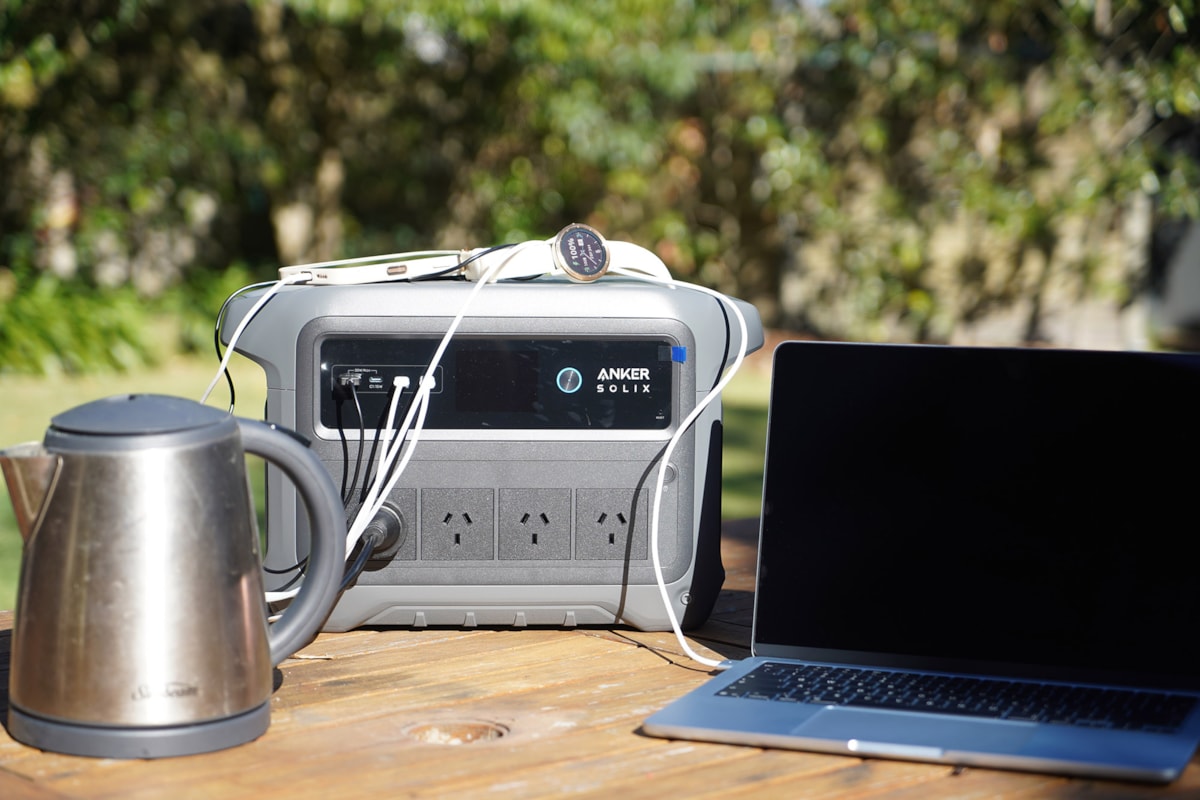
Let's put the Anker Solix C1000 Gen 2 Portable Power Station to the test.
Portable power stations are more sophisticated than ever. Lighter, more compact and with greater energy capacity, they have revolutionised off-grid camping, especially for road trippers travelling light. Where once powering 240V appliances meant investing thousands of dollars in a solar, battery and inverter solution, travellers now have all-in-one systems that are lighter and more compact than a carton of beer. And some start from less than $1,000.
In February, Anker SOLIX unveiled the C1000 Gen 2 with a bold claim: it’s the world’s fastest-recharging portable power station. That claim is backed by a Guinness World Record. The official endorsements went even further, with Anker partnering with the Hawthorn Football Club in a marketing bonanza.
But does the C1000 live up to the hype?
I tested it out over a long weekend away; here’s what I found.

PINT-SIZED POWER
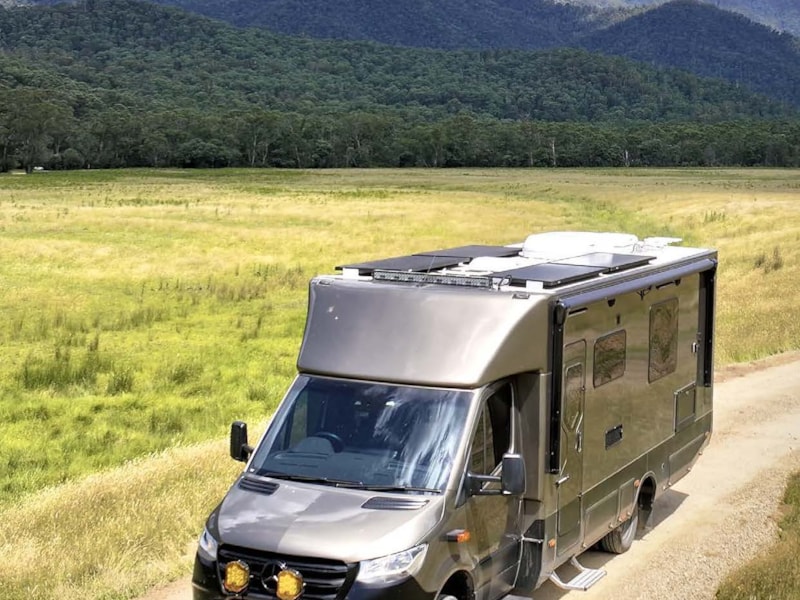
Straight out of the box, the Anker SOLIX C1000 arrived with 100 per cent charge, thanks to the long-lasting power of lithium. The unit is about the size of a 12-can cooler bag, with sturdy grab handles either side. Weighing 11.3kg, it can be carried by one person in one hand. We stored the power station under the bed in our caravan, but it would be just as happy in a boot or foot well.
The unit has nine output ports – four AC, three USB-C (two fast charging), one USB-A and one cigarette socket. This may be overkill as I feel like the AC points are more about aesthetics. There are more than you could ever use simultaneously, as the output is capped at 2,000W.
This is, however, still a decent volume of power and will run 99 per cent of appliances with a peak surge of 3,000W. That’s got things like camping fridges, toasters and coffee machines covered. The catch? You can’t use them all at once.
For example, I was unable to run my 1,700W kettle at the same time as using my induction cooktop (drawing upwards of 800W). But I could happily charge multiple USB-powered devices at the same time. At one point, I had a laptop, phone and smart watch charging simultaneously with negligible drain on the battery – about 23W. At that rate, the battery would last more than 24 hours, discharging around the clock, or several days in a realistic usage situation.
Where the power longevity struggles is when using heavy-draw AC (240V) appliances. My daughter was cooking pancakes outside (a little too leisurely) and our induction cooktop, pulling 1,000W, depleted the battery to 50 per cent capacity after 30 minutes.
You can monitor the power input and output on the unit’s digital display and also via the Anker SOLIX app. In addition to providing real-time monitoring, the app also enables you to set charging/discharging limits and activate Time of Use Mode, which is more applicable to in-home off-peak charging. We didn’t really need the app, but it would be useful for monitoring on long drives if the power station was inaccessible, for example in the back of a ute.

CHARGING UP
Where the C1000 really excels is in its super speedy recharge time. I drained the battery and it was fully recharged (off 240V) within 50 minutes. This is remarkable for a battery of this size and capacity.
What it means is that you can recharge fully with only intermittent access to power. Go to the amenities block at a campground, plug her in, and by the time you have showered, the C1000 will have enough charge to dry your hair – and then some. Swing by a cafe for breakfast, plug it in under the table and it will be at capacity by the time the bill arrives.
The unit also charges off solar and an alternator charger in less than two hours (600W input). These accessories are sold separately. Trickle charging from the car cigarette socket is possible but it takes more than 12 hours at 100W.
THE VERDICT
This is a really impressive piece of kit. For long weekends away, the Anker SOLIX C1000 could comfortably run a fridge and whatever 12V devices you need – lights, phone, camera etc – without running out of charge. For 240V appliances fully off-grid, you would need an alternative power source, such as solar or an alternator charger. I found the power drain when using appliances such as a kettle quite sharp, especially when the battery was running low. It’s also a little noisy to recharge. That said, this is a compact, highly portable power solution that takes up minimal space.

SPECIFICATIONS
CAPACITY: 1,024Wh / 2,000W
WEIGHT: 11.3kg
DIMENSIONS: 384mm x 208mm x 244mm
PORTS: 9 including 4 x 2,000W AC, 2 x 140W USB-C, 1 x 15W USB-C, 1 x 12W USB-A, 1 x 120W cigarette socket
SOLAR INPUT: 600W
CHARGE TIME: 49 minutes AC
LIFESPAN: 4,000 cycles, 10 years
WARRANTY: 5 years
UPGRADE: Anker SOLIX C2000 Gen 2 (2,048Wh / 2,400W)
RRP: $1,599