From hot springs to camel country, this outback journey is full of surprises.
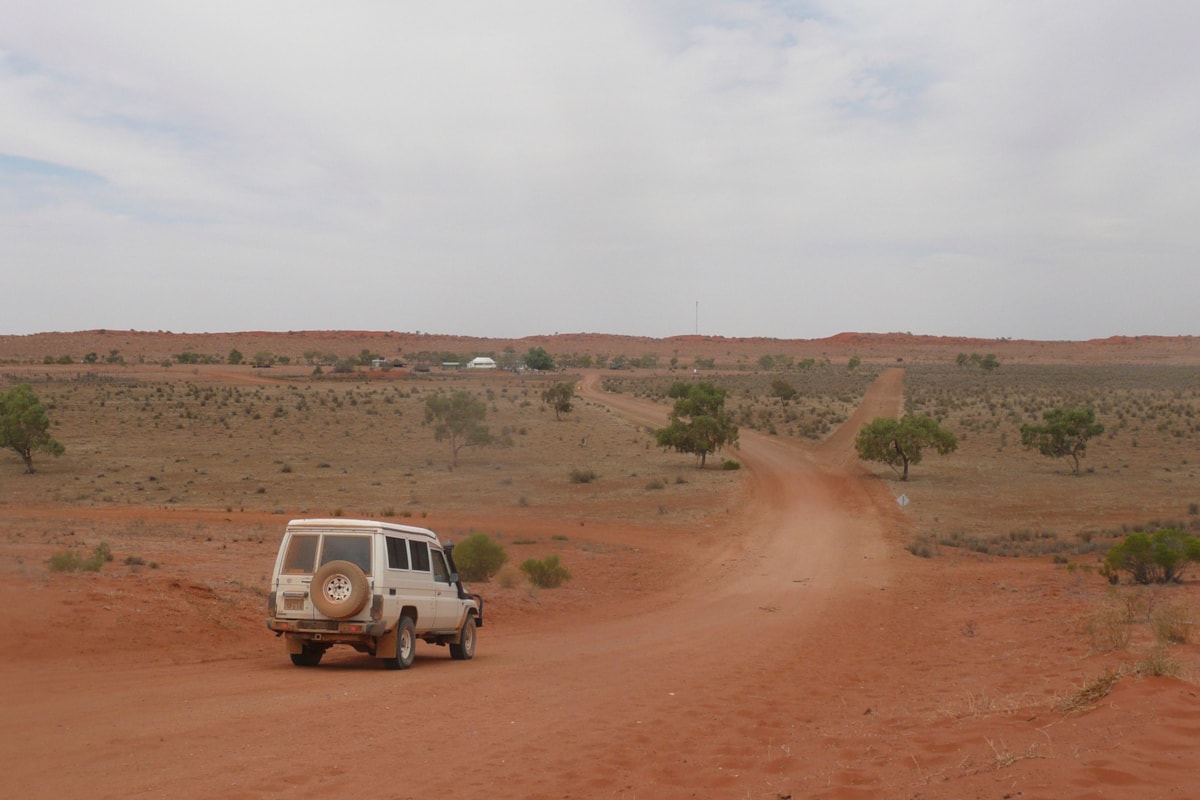
First, a little about us before I relate yet another travel adventure in our LandCruiser. We purchased our 1996 Toyota Troop Carrier in 1999 from an RV hire group in Melbourne. The hi-top roof was removed and a poptop fitted. We then joined CMCA and commenced the first of many great trips taken over the next 25 years. We are also keen motorcyclists and have managed a lot of rides throughout the country as well. It’s a busy life in retirement!
This Troopy trip was in 2015, up through Dalhousie Springs and the Simpson Desert to Alice Springs. From there we travelled to Uluru, taking the Great Central Road – Australia’s longest detour – to Laverton in Western Australia, then on to Kalgoorlie and Margaret River to catch up with family who have a small winery there.
Leaving home in Corowa, and with one of our sons and his family travelling with us, we set out for Oodnadatta via the Flinders Ranges. On the way we passed through the Dog Fence, which restricts the movement of dingoes and wild dogs to prevent them from attacking sheep. It was established in 1946 and runs through South Australia, New South Wales and Queensland. Arriving in Oodnadatta, we stayed the night and the next day travelled north to Dalhousie Springs, spending time in the lovely therapeutic hot springs.
Onwards we travelled to Mount Dare on the edge of the Simpson Desert, stopping for food and fuel before carrying on to Old Andado Station and the century-old homestead. After a quick re-visit (we’d been in 2006), we drove west along the edge of the desert to Alice Springs. We lost a bit of time on this track as the GPS got confused (as did we), however it sorted itself out and we eventually arrived in Alice.

A Town Like Alice
Established in 1871, Alice Springs was named after Alice Bell Todd, the wife of the telegraph pioneer Charles Todd. It’s an interesting city with lots to see, and the shops selling Aboriginal art were impressive. We stopped by the Alice Springs Desert Park, seeing lots of native plants, birdlife, dingoes, nocturnal animals and other wildlife during a nighttime visit.
Farewelling Alice, we drove down the Stuart Highway where we turned off to Uluru and continued on to Ayers Rock Resort to set up camp. Here, we did the touristy things: walked around Uluru and captured great photos at sunrise and sunset. Climbing the rock is no longer allowed out of respect for the Aṉangu Traditional Owners, who have inhabited these lands for tens of thousands of years. Our family did the climb back in the seventies, when it was permitted. On this trip, we also visited Kata Tjuṯa (formerly The Olgas), where we spent a few hours tackling the walking trails. It was well worth the effort but be sure to take plenty of water.

Next on our journey was Docker River and the Great Central Road, a 1,100-kilometre journey connecting the Uluru township of Yulara with Laverton in Western Australia. Off we went. It was a reasonable road for four-wheel-drive vehicles towing off-road caravans. But EV owners, beware: I don’t imagine there are any charge points out there currently (no pun intended), but the road was not too bad if you take it steady. There were a few signposted information boards along the way. We saw lots of camels during the journey; some of the lone animals were happy to be photographed but not the camels in large groups.
Hitting the West
The first major landmark of interest after leaving Uluru was the Giles Weather Station, about 340 kilometres west of Uluru, just over the border in Western Australia. The station is a historic site with a small adjoining museum. It is the only staffed regional weather station in the country. There is a campground at nearby Warakurna.
Finally, we arrived at Laverton. Originally known as the British Flag Mine during the gold rush, Laverton was gazetted in 1900, and today has a population of just 900-odd people. The town is about 950 kilometres north-east of Perth. We fuelled up there and motored on to Leonora and Kalgoorlie-Boulder, before camping further south in the Stirling Ranges, and finally making our way across to Margaret River. This is a beautiful area with lots of wineries, a couple of chocolate factories and spectacular beaches.
After a week with our family, we commenced the long trip home via Pemberton where we climbed the iconic Gloucester Tree. We visited Albany, Esperance and Norseman, then travelled across the Eyre Highway, calling in at the Old Telegraph Station at Eucla before crossing the Nullarbor. We’ve done this trip about 12 times and always enjoy it.
At home, we farewelled our son and family and settled back into normal life, only to start thinking about our next trip….

Journey Planner
The Great Central Road extends west from Uluru and is unsealed. Expect gravel and sand with corrugations. The route can be travelled in a robust motorhome and, of course, with a four-wheel-drive vehicle and camper trailer or off-road caravan. The road is part of a longer, 2,800-kilometre touring route known as the Outback Way, linking seven interconnecting roads that extend from Winton in Queensland to Laverton in Western Australia. Dubbed ‘Australia’s longest shortcut’, the whole route will eventually be sealed to create an all-vehicle road through the heart of the country. The eastern section from Winton to Boulia has already been completed and work has started on sealing the Alice Springs leg. So, if you want to have a transcontinental off-road adventure, don’t leave it too long.