When travelling around a town, what is your go-to method - car or bike?
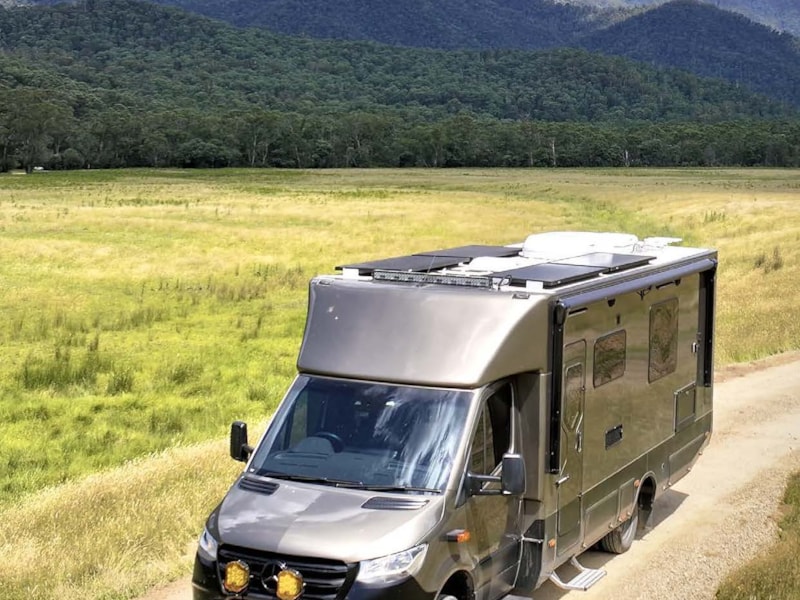
We have been owners of our 2008 Winnebago Leisure Seeker since 2010.
In that time, we have done two full laps of Australia as well as many other trips. We’ve also used it as our home base while doing relief duties for work, before enjoying life as retirees. This has led us to putting over 210,000km on our vehicle and given us a lot of time to reflect on the benefits and disadvantages of taking our car verses just taking our bikes and using the motorhome on the odd occasion we need to drive somewhere.
In the last five years, the only time we have taken the car with us is when we are attending motorsport events. We often include these meets as part of a larger trip or holiday and we know that it adds a level of difficulty to finding nice campsites and visiting some tourist spots and let’s face it, just locating a suitable parking spot.

The Winnebago Leisure Seeker has done several Big Laps
One surprise is that towing the car generally makes no difference to our fuel economy. I think this is because it improves the aerodynamics of the rear of the motorhome, so travelling at higher speeds becomes far more efficient.
The obvious plus of taking a car is if we want to go into areas where there are rough roads, we can use the car rather than missing out because we do not have an offroad motorhome. However, we have found that this is a very rare occurrence and is so uncommon that we have decided we will hire a car or 4WD on those occasions or go on a tour if one’s available. We’re currently discussing selling our car entirely prior to our next trip. The money saved on rego and insurance will easily cover any hire car costs and the odd tour. If we don’t have a car then we don’t need a car trailer, so perhaps this will go as well — more money for hires and those brilliant tours!

Cycling has many advantages
GETTING CLOSER TO THE ACTION
Another consideration was that when we are staying in an area, we tend to stay close to what we want to do, be it cycling, kayaking, stand-up paddleboarding or just walking and hiking.
Again, many of the nicer places we have been don’t have room for a motorhome, car trailer and car, so taking the car off the trailer can be an issue. Our first car trailer was quite large and was a problem everywhere we went, so we sold that and bought a trailer that was just big enough for a small car. This certainly improved travel, but it still seems more trouble than it’s worth, and this is with a trailer that only takes about two minutes to load or offload the car, including the tiedowns.
I’m very good at reversing trailers — it always gets noticed when you reverse parallel park a trailer. So manoeuvring a trailer is not an issue for us, but I have sure seen some protracted attempts to back trailers into simple spots. If you’re not good at reversing, maybe the headache isn’t worth it. Our Iveco is an automated manual so if I wasn’t confident in reversing I could sure do some damage to the clutch as these gearboxes need to be used well to achieve a long service life. We are very happy with this gearbox, but I wouldn’t say no to one of the new fully automatic, torque converter eight speed boxes!

Ready for adventure
FLAT-OUT NO
An option we looked at before buying our first car trailer was to flat tow our car. The main reason we didn’t like this option is that you can’t back a flat towed vehicle, so you must disconnect the car every time you need to go backwards. This is a simple process, but so is taking a car off a trailer.
The cost was the second barrier. It would have cost over twice as much to set up to flat tow as our car trailer cost, and you are wearing out the car as you travel. It also involves vehicle modifications, requiring an engineer’s certificate — you can’t just decide that you want to tow and off you go. As we also race our car, the ability to carry a broken car was attractive to us. Another minus for flat towing is you need to get a special permit to use an A frame in Western Australia.

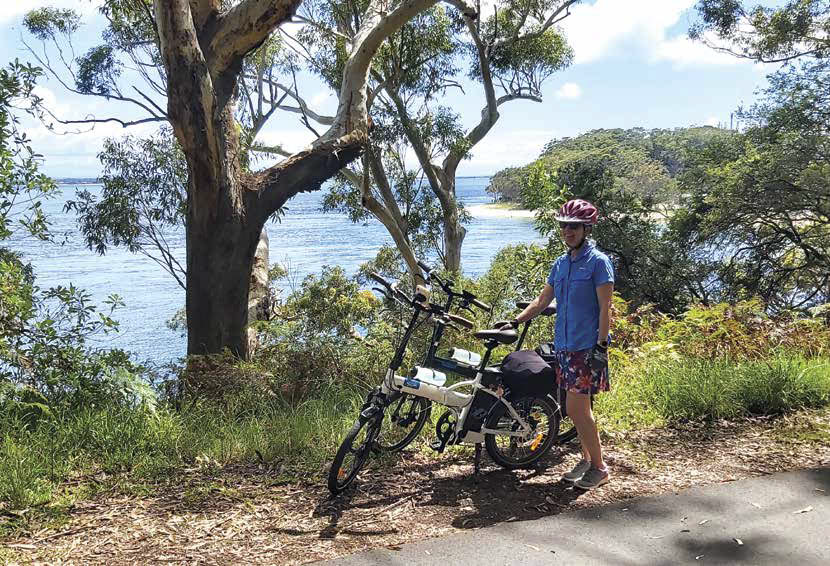
Electric bikes make life much easier
HITCHING CONCERNS
One thing a lot of people don’t think about is the need for a sprung tow hitch if you are towing with a truck, which is basically what most motorhomes are. The problem is that as you increase the distance from the rear axle to the ball/mount you increase the effect of any vertical movement. The rear axle rising and falling has its effect multiplied by the distance to the tow connection. This allows the trailer to have a greater effect on your rear suspension, giving you a rougher ride, but the reverse is that a 2cm vertical movement at the rear axle becomes a 6 or 7cm movement at the ball. This causes a whiplash effect on the front of the trailer due to the speed at which the hitch rises and falls. Over time, this will cause something to stress and potentially fail.
In the USA, where monster utes are the norm, so are sprung and air ride hitches. Our unit is a Shocker Hitch which we are very happy with, it has not only given us a better ride but also improved our already great fuel economy while towing. If you look on their site, or any of the other company’s websites, you will see more details of the benefits, why they work and the added safety these units provide.

Packing bikes is a lot easier than towing
ON YA BIKE
We took our bikes on a carrier on the rear of the motorhome during our first lap of Australia, but this also has issues for long term traveling. We made sure to put plastic wrap around the shifters, brake levers and seats, yet by the time we had made it half way around the bikes were a lot worse for wear. I had to clean the chain every time we went on a dirt road, even if this was only going through roadworks. Heavy rain always managed to get into the seats and left many a dirty, soggy bottom along the way. By the time we got home I needed to totally rebuild our bikes and we had missed some of the rides we had planned to do.
Now we have a box on the back of the motorhome and folding bikes. It’s simple, easy and quick to get the bikes in and out which is the litmus test that everything we take must pass. The bikes stay in good condition and stay clean no matter how much dirt and dust we drive on. A big win. The other nice thing about our folding bikes is that they are really nice bikes, so we don’t feel like we’re compromising our enjoyment when we head out on long rides. Now that we have upgraded to electric bikes with suspension, this is even more the case. (Make sure you ride lots of bikes before making a decision, electric and standard, as some are terrible.)

Biking means not having to find a parking space
Going electric really has made towing a car redundant. They have a range of over 100km of lazy riding, but we have done 300km without needing to charge them. When they do need a charge, we just use our inverter, which easily does the job running off our small solar system when free camping. If we do run short on power for our devices, the bike batteries can be used to charge them via their USB socket, another big plus for us.
With our electric bikes we now cycle places that were once off the menu. If the weather’s hot, who cares? If there are lots of hills, who cares? Thinking something might be too far away and we’ll be too tired to get back is now a thing of the past. We never have the issue of finding or paying for a parking space. If we feel like exercising rather than just tourist cruising, we can. If we don’t turn on the power they ride like an everyday pushbike.
So there you have it, we are much happier travelling without a car. When we have hired, we have only ever taken a big 4WD that we would never want to buy, maintain or fuel (the Nissan Patrol used more fuel than our motorhome). When we finished with the now muddy and dirty 4WD, we just gave it back for the hire company to clean. Almost feels dishonest, but always makes us feel great about our decision.
Happy travels, see you on the road.