Have you considered taking your own RV across to NZ?
For more than 25 years, Australia has been home for us – Frank and Christine Borlase. We’re two Kiwis who crossed the Tasman, raised three children, and built a life in the sunburnt country. But in 2021, a new dream began tugging at us. We wanted to retire early, hit the open road and explore the places we’d only skimmed past during busy working years.
Like many Aussies, we’d always imagined doing the legendary ‘lap’ of Australia. But our hearts also pulled us back to the rugged coastlines, emerald hills and small-town gems of our homeland. So, we expanded the dream: before circling Australia, we’d make a full lap of Aotearoa New Zealand – rediscovering the places we loved in our youth and venturing into those we’d never reached before emigrating. That decision marked the start of a four-year journey of research, planning and logistics to bring our travel fantasy to life.
DRIVING A LINE IN THE SAND
The scariest moment came first: setting a date. December 2024 became our official retirement deadline, with wheels forecast to start rolling in February 2025. Once the date was fixed, everything else suddenly felt real.
We devoured travel channels, blogs and social media – soaking up inspiration, practical advice and tips from fellow wanderers. Yet, when it came to the very specific topic of transporting a vehicle between Australia and New Zealand, we discovered a surprising knowledge gap. There’s endless information on Europe-to-the-USA vehicle transport, but almost nothing about the Tasman.
Eventually, we struck gold when we discovered Kim and Lyn Bolton of Australian Adventure Vehicles (AAV 4x4). Their blog, goannatracks.com, became our compass as we mapped out the nuts and bolts of a trans-Tasman adventure. We also gained a lot of insight on vehicle preparation for New Zealand regulations from Wayne Hunt of Motorhome Solar & Electrical in Hamilton, New Zealand.

WHY WE CHOSE TO BRING MYRTLE
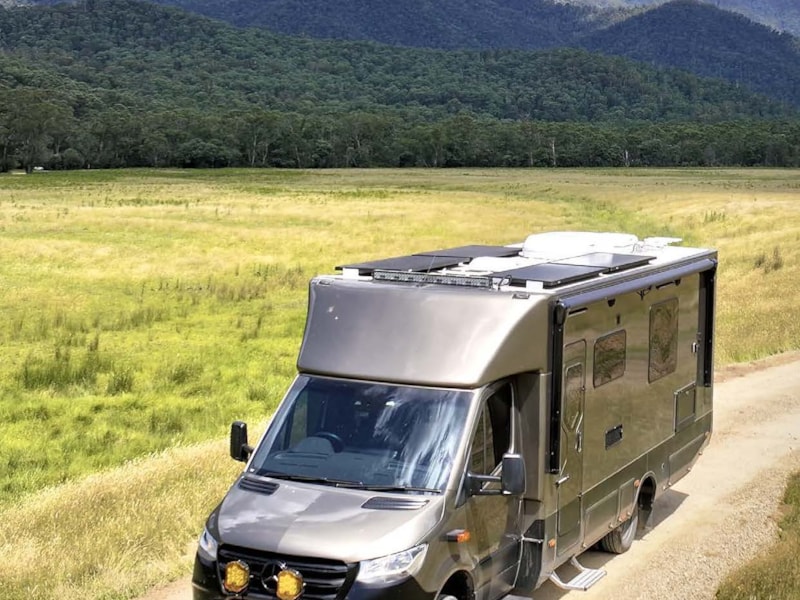
Spending 12 months on the road in New Zealand ruled out hiring a motorhome – the cost would have soared beyond $100,000. Buying a vehicle in NZ made little sense either because rebuilding one to suit our travel style would consume time and money. And we already owned our perfect travel companion: Myrtle the Turtle, an Isuzu NPS 300 four-wheel-drive truck camper, purpose-built for long journeys and off-grid living. At 6.5 tonnes, 6.5 metres long and 3.4 metres tall, she’s our home on wheels – both for New Zealand and the Australia lap to come.
THE CARNET: OUR TRUCK'S PASSPORT
To travel overseas with your own vehicle, you need a Carnet de Passages en Douane – essentially a vehicle passport. It lets you bring your vehicle into another country for up to 12 months (extensions are possible), and avoid import duties. The catch? The vehicle must remain registered in its home state and must leave the country before the carnet expires. Selling it overseas is not allowed. Western Australia’s registration rules worked in our favour, as no annual roadworthy is required, but travellers from other states may need additional checks.
CHOOSING A SHIPPING OPTION
When it came to shipping Myrtle, her size narrowed our choices quickly. The main methods are:
- Container – too small
- Flat rack – feasible but pricey
- RoRo (roll-on, roll-off) – ideal for oversized vehicles
RoRo was the clear winner. It’s cost-effective, simple and designed for large rigs. We chose CFR Line, a New Zealand company with a Brisbane office, and their team made the process smooth. However, not everything went to plan. Water tank issues and a two-month Melbourne delay tested our patience. But once in Brisbane, we confirmed our shipping date. We learnt that bookings only need to be made about six weeks in advance, though flexibility is vital. Shipping schedules shift and, in our case, departure moved forward a week. We suddenly had just 48 hours to empty, clean, pack and deliver Myrtle.

The sea crossing itself takes three to four days, but port processing on both sides adds time. From handover in Australia to pick-up in New Zealand, our total shipping time was 19 days.
LANDING IN AOTEAROA
Once Myrtle rolled onto New Zealand soil, our checklist began. We needed:
- NZ vehicle registration
- Certificate of Fitness
- Electrical Warrant of Fitness
And because we planned plenty of freedom camping, we also needed Certification of Self-Containment – a rigorous, sometimes time-consuming process.
CMCA membership allowed us to seamlessly join the New Zealand Motor Caravan Association (NZMCA), and we can’t recommend it enough. Their resources are invaluable: volunteer inspectors for self-containment, more than 60 member-only parks, extensive camp-saver discounts, and savings with the excellent McKeown Fuel Card. As a bonus, temporary vehicle imports are exempt from Road User Charges, a fee ordinarily levied on diesel vehicles.

SORTING OUT INSURANCE
One final surprise: Australian insurance won’t cover your vehicle overseas. New Zealand insurers vary in whether they accept temporarily imported cars, but Star Insure offered exactly what we needed. After a small bingle recently, they were responsive and easy to deal with, which is always reassuring when travelling far from home.
With our RV finally on the Land of the Long White Cloud, our adventure begins...