

From tropical reefs to ancient rainforests and red desert landscapes, explore Australia’s most remarkable World Heritage- listed destinations by RV.
Ready to upgrade your road trip game? This isn’t just a list of scenic stops; it’s a hit list of Australia’s most extraordinary World Heritage sites you can reach with an RV.
Australia has 20 World Heritage sites (12 natural), but not all are easy to access on wheels - some are remote, some are island-bound, and a few are off-limits for road travel altogether.
So we’ve pulled together the ones you can roll into easily, places where big landscapes, deep history and unforgettable experiences come standard.
BUDJ BIM CULTURAL LANDSCAPE (VIC)
WHERE: Victoria
WHY GO: This is one of the oldest known aquaculture systems in the world, created by the Gunditjmara people over 6,000 years ago. Long before modern engineering, stone channels were carved through volcanic lava flows to trap, farm and harvest eels - sustaining entire communities. It’s not just a site; it’s living cultural science still being understood today.
MUST DO: Walk the eel trap networks, explore Lake Condah, and take time to learn the Gunditjmara story through guided interpretation and cultural tours.
ULURU–KATA TJUTA NATIONAL PARK (NT)
WHERE: Northern Territory
WHY GO: Uluṟu is more than an icon, it’s a place of immense cultural and spiritual significance to the Anangu people. Rising from the desert in near silence, it changes colour with the light in a way that feels almost unreal. Nearby Kata Tjuṯa adds another layer, with massive domes that feel older than language itself.
MUST DO: Sunrise and sunset at Uluṟu, base walk around Uluṟu, and the Valley of the Winds at Kata Tjuṯa.

KAKADU NATIONAL PARK (NT)
WHERE: Northern Territory
WHY GO: Kakadu is both a natural wonder and one of the world’s longest continuously living cultural landscapes. Its wetlands, escarpments and floodplains are home to ancient rock art that tells stories spanning tens of thousands of years. It’s also alive with wildlife, from crocodiles to migratory birds.
MUST DO: Ubirr lookout at sunset, Nourlangie rock art sites, Yellow Water Billabong cruise.
GREAT BARRIER REEF (QLD)
WHERE: Queensland
WHY GO: The world’s largest coral reef system is visible even from space, but its real magic is underwater. It’s a living network of coral, fish, turtles and marine ecosystems, that stretches for over 2,300 kilometres. Despite its scale, it feels surprisingly intimate once you’re in it.
MUST DO: Snorkelling or diving the outer reef, island tours, glass-bottom boat trips.
WET TROPICS OF QUEENSLAND (QLD)
WHERE: Queensland
WHY GO: This is one of the oldest tropical rainforests on Earth, a remnant of the supercontinent Gondwana. It’s dense, humid and overflowing with life - from towering canopy trees to rare wildlife found nowhere else.
MUST DO: Daintree Rainforest, Mossman Gorge, Skyrail Rainforest Cableway.
GONDWANA RAINFORESTS (NSW/QLD)
WHERE: New South Wales & Queensland
WHY GO: These rainforests are a direct link to Earth’s prehistoric past, home to plant species that have survived virtually unchanged for millions of years. Walking here feels like moving through time rather than space.
MUST DO: Dorrigo Skywalk, Lamington National Park trails, waterfall hikes.
AUSTRALIAN CONVICT SITES
WHERE: Tasmania, Western Australia & more
WHY GO: These sites reveal the harsh realities of Australia’s colonial past, where convict labour helped shape much of the country’s early infrastructure. From prisons to settlements, they tell stories of survival, punishment and endurance.
MUST DO: Port Arthur Historic Site, Fremantle Prison tours, ghost tours.
GREATER BLUE MOUNTAINS AREA (NSW)
WHERE: New South Wales
WHY GO: Just outside Sydney lies a vast wilderness of sandstone cliffs, deep valleys, and eucalyptus forest that creates the famous blue haze. It’s one of Australia’s most accessible but still dramatic natural escapes.
MUST DO: Three Sisters lookout, Scenic World, Wentworth Falls.

TASMANIAN WILDERNESS (TAS)
WHERE: Tasmania
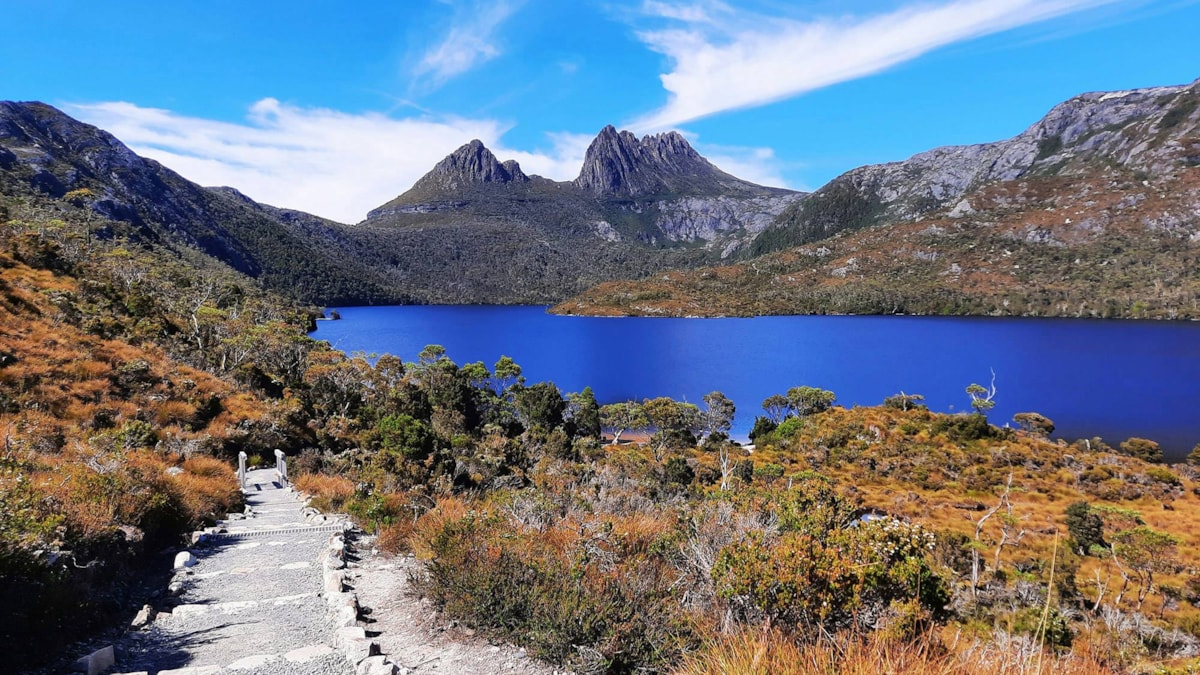
WHY GO: This is one of the last true temperate wilderness areas on Earth. Glacial valleys, alpine peaks, ancient rainforest and windswept plains create a landscape that feels untouched by time.
MUST DO: Cradle Mountain, Dove Lake circuit, sections of the Overland Track.
AUSTRALIAN FOSSIL MAMMAL SITES (QLD/SA)
WHERE: Queensland & South Australia
WHY GO: These fossil sites preserve an extraordinary record of Australia’s prehistoric wildlife, including giant marsupials and extinct megafauna. It’s a rare chance to see evolution written into stone.
MUST DO: Naracoorte Cave tours, Riversleigh Fossil Centre.
WILLANDRA LAKES REGION (NSW)
WHERE: New South Wales
WHY GO: This is one of the most significant archaeological landscapes in Australia, home to Mungo Man and Mungo Lady - some of the oldest human remains found outside Africa. The dry lake beds and sculpted dunes feel almost lunar.
MUST DO: Walls of China boardwalk, cultural tours.
PURNULULU NATIONAL PARK (WA)
WHERE: Western Australia
WHY GO: The Bungle Bungles is one of Australia’s most surreal landscapes - striped sandstone domes formed over millions of years. The scale and geometry of the landscape feel almost artificial.
MUST DO: Cathedral Gorge, Echidna Chasm.
NINGALOO COAST (WA)
WHERE: Western Australia
WHY GO: Unlike most reefs, Ningaloo is accessible straight from the shore. It’s also one of the best places in the world to swim with whale sharks, manta rays and migrating whales.
MUST DO: Snorkelling at Turquoise Bay, whale shark tours.
SHARK BAY (WA)
WHERE: Western Australia
WHY GO: Shark Bay feels otherworldly - home to ancient stromatolites, crystal-clear waters and marine life that thrives in isolation. It’s one of the oldest and most ecologically unique places on Earth.
MUST DO: Monkey Mia dolphin encounters, Hamelin Pool stromatolites.


