Discover Moree and why you should add this quaint country town to your itinerary.
While getting into hot water is usually something to avoid on a road trip, it’s one of the highlights when you pull into the outback New South Wales town of Moree.
At the crossroads of the Newell and Gwydir highways, you can take a wellness break in the artesian spa capital of Australia, where hot, mineral-rich water rises from around 720 metres below ground from the Great Artesian Basin. Not only does slipping into that hot water feel good, the naturally occurring calcium, magnesium, potassium and sulphur is believed to help with joint function, tissue repair, blood circulation and skin health.
And that’s just the beginning of what Moree has in store.
SOAK
Moree’s hot mineral baths were discovered in 1895 during a search for irrigation water. Today, you can get a thermal spa fix in pools in and around town, including at the Moree Artesian Aquatic Centre (pictured), which recently reopened after a $7 million redevelopment.
Here, you can find multiple indoor and outdoor baths, including an Active Thermal Pool and a Passive Thermal Pool, naturally heated to temperatures between 38 and 41°C.
At the Boomi Artesian Pool, about an hour’s drive from town, you can hop between the hot spa pool and 25-metre cold pool, while the Mungindi Hot Pool on the Queensland border is another chance to soak in the open air, about 120 kilometres north-west of Moree.

EXPLORE ON FOOT
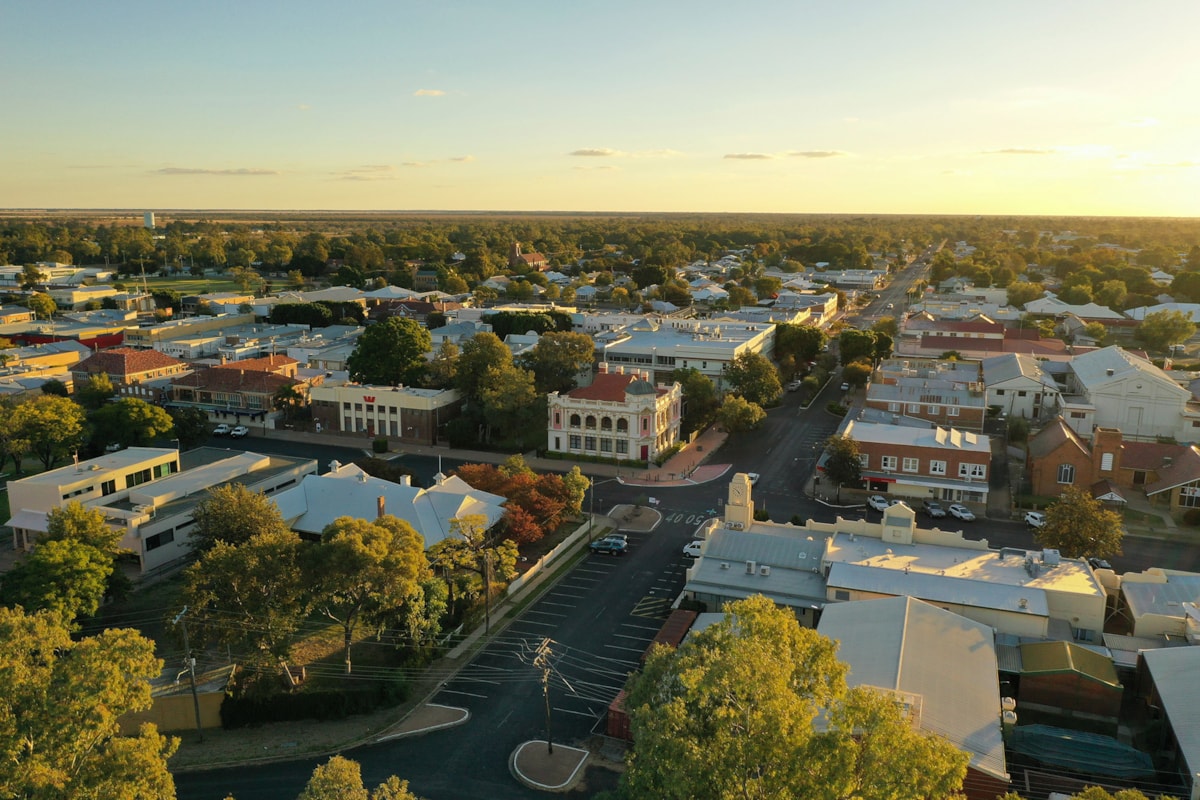
Discover Moree’s historical treasures on a self-guided heritage walk. See the Art Deco and Federation Freestyle banks, the Edwardian Moree Court House (one of the finest in New South Wales), and the 1920s-built War Memorial Hall.
Afterwards, trade pavement for parkland on the Moree River Walk, an accessible pathway tracing the Mehi River.
If you’re more of a runner than a walker, time your visit for September when you can join the Run the Plains festival, with events ranging from a short ‘kiddos dash’ to a 36.1-kilometre triple race combining a half marathon, 10-kilometre and five-kilometre events.
GET ARTY
Pick up a copy of the Art Trails map at the Visitor Information Centre or load it into Google Maps before setting off to discover murals, sculptures and art galleries around town.
Moree’s evolving public art scene includes contemporary and traditional works throughout the CBD and surrounding precincts. Be sure to visit the Bank Art Museum Moree (BAMM), where works by Gamilaroi and regional artists sit alongside touring exhibitions in a beautiful heritage bank building dating back to 1910.

CONNECT WITH COUNTRY
The Moree Plains are on the traditional lands of the Gamilaroi People, and at the Open Space Aboriginal Art Trail at Jellicoe Park you can see powerful artworks sharing stories of Country, culture and community.
Works by local Aboriginal artists along the Mehi River include scar tree paintings, carved logs, and engraved and painted sandstone rocks.
Take a drive out to Terry Hie Hie Picnic Area (pictured) to discover the history of this ancient meeting place and learn about the lives of the Gamilaroi People living at the mission in the early 20th century.
To learn more, visit the Dhiiyaan Cultural Centre, home to one of Australia’s largest collections of Aboriginal family records, featuring more than 100,000 artefacts and documents.
HIT THE ROAD
Moree is the gateway to quaint villages including Pallamallawa, or Pally as the locals call it, where you can get your rod out at the Pallamallawa Memorial Fishing Park and grab a bite in the bistro at the Pally Pub.
Head north on the Carnarvon Highway to Mungindi, the only border town in Australia to have the same name straddling two states. Here, you will find the One Ton Post (pictured), believed to be the biggest survey peg in the country, as well as a sculpture trail and history park.
In Boomi, you can meet friendly locals over a cold beer at the Pioneer Hotel between hot spring soaks, while at Boggabilla, the Wobbly Boot Hotel from Stan Coster’s famous song may be closed, but you can still try your luck fishing in the Macintyre River.
TEE OFF
Never played golf before or haven’t brought your clubs? Don’t let that stop you getting into the swing of things at the Moree Golf Club.
Situated on both sides of the Mehi River, the 18-hole course welcomes beginners and is easy to walk, while the challenging par-72 layout will test more experienced golfers. Staff are available for lessons, and you can hire clubs, pull-buggies and carts.
Meanwhile, at Mungindi Golf Club, the 18-hole sand greens course is available by appointment (email mungindigolf@gmail.com) and on its annual open weekend.

EAT AND DRINK
For a small country town, Moree has an impressive international dining scene.
The Moree Indian Restaurant is a standout, where all the authentic dishes are made from scratch. Try tandoori jumbo prawns, salmon tikka masala with Tasmanian wok-fried salmon, or one of the many vegetarian and vegan options.
At Art Deco café 61 Balo, you might score a vintage find with your coffee at their monthly market day stalls.
If you time your visit for the Moree on a Plate festival in May, you can join the fun with celebrity chefs, live entertainment and a great range of freshly grown fare to try and buy.
STAY
Start and finish your day with a hot springs soak at the Gwydir Thermal Pools Motel & Caravan Park.
The park has five tiled artesian thermal pools plus a lap pool, all for the exclusive use of guests at no extra cost. The property offers drive-through powered and unpowered sites, as well as poolside cabins, villas and motel accommodation.
Alternatively, the Tareelaroi Weir is a free camping ground on the banks of the Gwydir River, about 23 kilometres out of town, where you can relax beside cooler water surrounded by nature.